

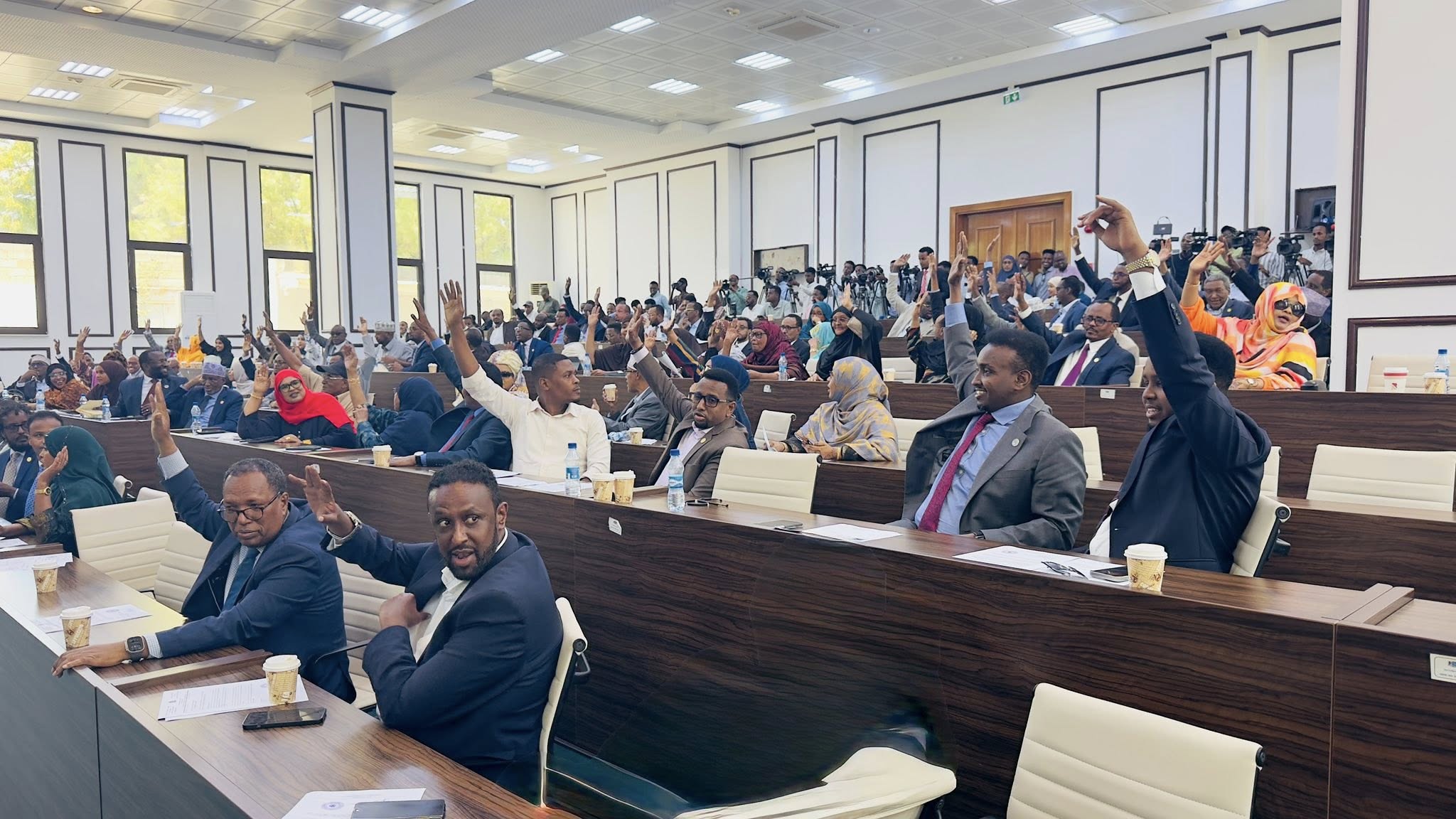

MOGADISHU (Kaab TV) — Somalia’s Federal Parliament has come under fire from human rights advocates after approving the African Charter on the Rights and Welfare of the Child with major reservations that exclude key protections against child marriage and sexual exploitation.
Lawmakers ratified the treaty with 130 votes in favor, 10 against, and 5 abstentions.
However, the government made reservations on five provisions, including those related to the definition of a child’s age, freedom of conscience and religion, protection of privacy, child marriage, and adoption of orphans.
Speaker of Parliament Aden Mohamed Nur (Sheikh Aden Madobe) announced the treaty was ratified with the exceptions of the five articles.
“Members of the House of the People of the Federal Parliament of Somalia voted on the African Charter on the Rights and Welfare of the Child, with 130 lawmakers approving, 10 opposing, and five abstaining,” said a statement released by Speaker Adan Madobe’s office.
Local youth activists have condemned the move, saying it effectively leaves Somali children — particularly girls — vulnerable to forced marriages and sexual abuse.
“This decision undermines decades of progress on child protection and women’s rights,” said Abdullahi Abdirahman, an activist in Mogadishu. “By refusing to ban child marriage, Parliament is failing to protect the most vulnerable.”
We are very concerned because, under this law, if an older man wants to marry you, you simply cannot say no,” says Aisha Mohamud, a nursing student at Banadir University.
Under Somalia’s Provisional Constitution, a child is defined as anyone under the age of 18. However, the reservations made to the African Charter on the Rights and Welfare of the Child, according to several members of parliament, are part of ongoing efforts to amend the country’s constitution.
For example, in the draft Somali translation of the African Charter, the Somali Cabinet wrote to Parliament stating that Somalia does not recognize anyone under 18 as a child, claiming that such a definition contradicts Sharia law.
But sources say the proposed amendment is being strongly pushed by extremist clerics who hold significant influence within the government.
Such an amendment, which would set the age of “maturity” at 15, would put girls at greater risk of child marriage—a practice that harms their health, particularly their reproductive health, and limits their access to education and protection from other forms of abuse, Human Rights Watch warned.
According to Girls Not Brides, an international organization working to end child marriage, 17 percent of girls in Somalia are married before the age of 15, and 36 percent before 18.
Abdalle Mumin, Secretary General of the Somali Journalists Syndicate (SJS), said the move reflects a worrying trend of shrinking rights and growing violence against women in Somalia.
“This is not just about child marriage—it’s about rolling back fundamental freedoms and human rights in Somalia,” Mumin said. “When lawmakers use the extremist version of interpretation to justify the exploitation of children, it sends a dangerous message and it shows that women and girls are not safe in Somalia.”
Journalists and activists who speak out against this risk intimidation or arrest, but Mumin says media must continue to expose these injustices.