

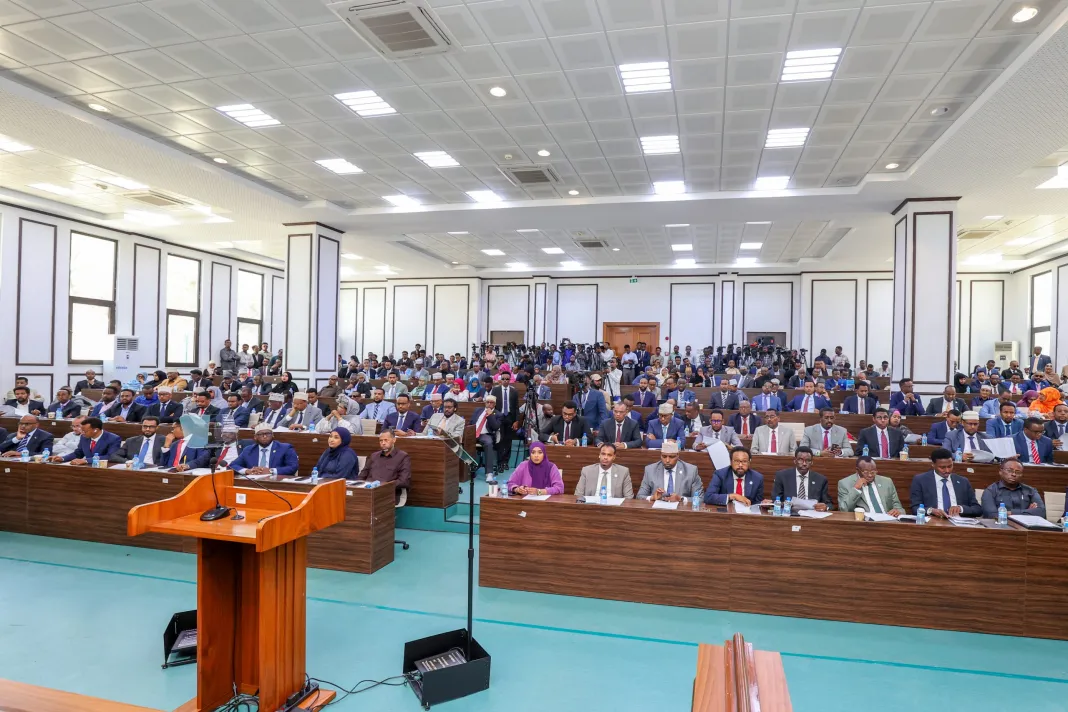
Mogadishu (KAAB TV) – The latest session of the People’s Assembly of the Federal Parliament of Somalia was adjourned due to a lack of quorum, after an insufficient number of Members of Parliament (MPs) attended the scheduled meeting.
The failure to meet the quorum requirement has sparked growing concerns regarding the commitment of some legislators to their parliamentary responsibilities.
Second Deputy Speaker of the House, Hon. Abdullahi Omar Abshirow, expressed disappointment over the poor attendance but remained hopeful about the future of parliamentary proceedings.
He stated that the session had included a significant item on the agenda: the first reading of the Government Accountability Report, a critical step in ensuring transparency and oversight of the executive branch.
Deputy Speaker Abshirow underscored the importance of full and active participation by all MPs, stressing that such involvement is not only a constitutional obligation but also essential for addressing the pressing challenges facing the nation.
“The duty of a Member of Parliament is not limited to holding the title,” he said. “Their foremost responsibility is to attend sessions and contribute meaningfully to debates and legislative processes. It is unacceptable for MPs to be absent from the capital during an active parliamentary term.”
He further noted that travel to the regions or other engagements should be reserved strictly for official recess periods or during electoral campaigns.
The ongoing absence of members during critical sessions, he warned, hinders the legislative process, delays key decisions, and undermines public trust in the institution of Parliament.
Abshirow appealed directly to the absent lawmakers, urging them to demonstrate greater accountability and responsibility by prioritizing their legislative duties.
He reiterated that active engagement is crucial for the smooth functioning of the Parliament and for advancing Somalia’s political, economic, and security goals.
The postponement of the session has drawn criticism from civil society groups and political analysts, who argue that the lack of consistent participation by elected representatives weakens Somalia’s fragile democratic institutions and slows progress on vital national reforms.
The Federal Parliament, which plays a pivotal role in drafting and passing legislation, overseeing government action, and representing citizens, has faced ongoing challenges with quorum issues, raising calls for improved mechanisms to enforce attendance and performance among its members.
As Somalia continues its path toward institutional development and state-building, the effectiveness of the Federal Parliament remains a cornerstone of the country’s democratic future.
The coming sessions will test whether lawmakers rise to meet their responsibilities with the urgency and seriousness required by the moment.