

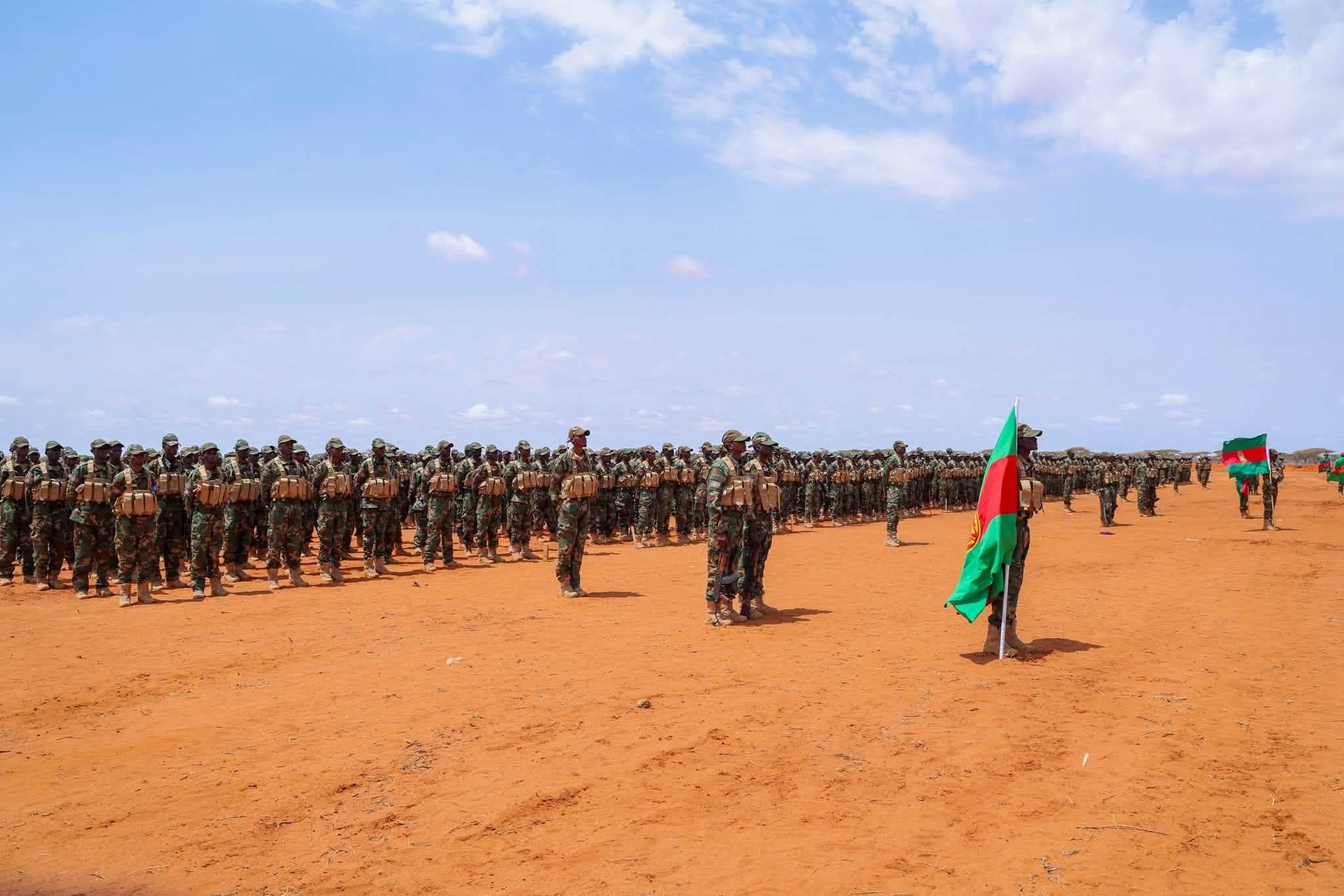

The Somali National Army’s Xananbuure-trained forces are facing renewed questions over cohesion and discipline after reports emerged that soldiers serving in Hiiraan region had abandoned their military positions, raising concerns about possible fragmentation within the units.
According to information from the region, soldiers stationed at a military base near Matabaan district reportedly left their positions after responding to a call from the traditional leader of the Hawadle clan, the Ugaas.
The reported withdrawal has triggered debate among other troops still deployed along the front lines.
Some soldiers are questioning why they should remain responsible for defending local communities while troops originating from the area have reportedly left the positions assigned to them.
The development highlights the difficulties facing military commanders in maintaining discipline and operational unity when soldiers are also subject to calls and influence from traditional clan leadership.
The first group of soldiers reportedly reached Farlibaax and other locations in Hiiraan after leaving their military positions.
Their movement has raised further questions about the intentions of other troops still stationed in the area and whether additional units could follow if their concerns are not addressed.
The situation also raises concerns about the ability of government forces to maintain security in areas where they are deployed if entire groups of soldiers withdraw from assigned positions.
The Xananbuure forces form part of the Federal Government’s broader programme to rebuild the Somali National Army, which has involved recruiting and training personnel inside the country to strengthen national security and support operations against Al-Shabaab.
However, the latest developments in Hiiraan have renewed questions about how these forces are being managed, the loyalty of individual soldiers and the ability of military commanders to enforce the chain of command.
In August 2026, the government presented troops who had completed training at the Xananbuure military training facility. Reports subsequently emerged that some of the soldiers had travelled towards Ethiopia’s Somali Regional State.
The National Security Adviser confirmed at the time that soldiers were there but said they had been granted permission to visit their families.
The earlier incident, combined with the latest reports from Hiiraan, has raised concerns about the political, administrative and social challenges facing efforts to establish a unified national military force.
One of the most immediate risks associated with the reported withdrawal is a weakening of security in areas where government troops and local forces are engaged in operations against Al-Shabaab.
Hawadle fighters and Macawiisley community forces have played a significant role in the campaign against the militant group in Hiiraan, particularly following the local uprising that began in 2022.
Their involvement helped government forces regain territory and put pressure on Al-Shabaab positions across parts of central Somalia.
Previous reports also indicated that Hawadle Macawiisley fighters had withdrawn from positions in Matabaan and Buulo Burde, raising concerns about the ability of local forces to defend those areas.
If political disagreements continue to affect the national army and local security arrangements, Al-Shabaab could exploit divisions among its opponents to regain influence or retake areas from which it was previously pushed out.
The Federal Government and the Somali National Army command now face the challenge of preserving military cohesion and maintaining a clear chain of command.
This requires investigating the grievances behind the reported withdrawals, improving communication between commanders and troops, and ensuring that political disputes do not interfere with military responsibilities.
The government also needs to clarify why some soldiers from the newly trained units are leaving their assigned positions, whether they are receiving their salaries and other entitlements regularly, and which authorities are responsible for approving or directing troop movements.
A national army is expected to serve all Somali citizens and remain institutionally independent of political rivalries and pressure from competing groups.
Its effectiveness depends not only on training and equipment but also on professional leadership, discipline and confidence among its personnel.
The developments in Hiiraan illustrate that rebuilding Somalia’s military requires more than training recruits and providing weapons.
It also depends on unified command structures, regular salaries, proper welfare arrangements and a functioning system of accountability capable of keeping troops committed to their assigned duties.