


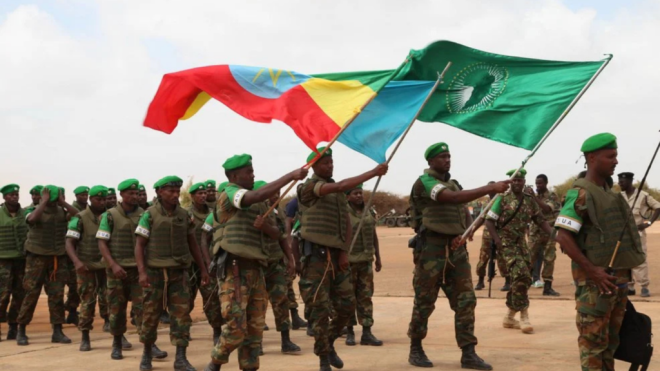


MOGADISHU (Kaab TV) – The Stockholm International Peace Research Institute (SIPRI) has warned that international peacekeeping operations, including the African Union Support and Stabilization Mission in Somalia (AUSSOM), are facing an unprecedented crisis driven by growing geopolitical rivalry, political deadlock, and widespread financial shortages.
In a new report released ahead of the International Day of United Nations Peacekeepers on May 29, SIPRI said the number of personnel deployed in global peacekeeping operations fell to 78,633 by the end of 2025 — a 17 percent decline compared to the previous year and the lowest level recorded in more than 25 years.
The institute warned that if the current trend continues, international organizations such as the United Nations could face a significant reduction in their role in managing global conflicts and peacebuilding efforts.


The report highlighted the launch of AUSSOM in 2025, which replaced the former African Union Transition Mission in Somalia (ATMIS). The new mission also included troops from Egypt at a time when diplomatic tensions had emerged between Somalia and Ethiopia following Ethiopia’s controversial 2024 maritime agreement with Somaliland.
Despite those tensions, Somalia and Ethiopia later restored security cooperation in 2025. SIPRI noted that military and intelligence officials from both countries reached an agreement in February on the framework for Ethiopian troop participation in AUSSOM following talks held in Mogadishu.
However, the report stated that AUSSOM continues to struggle with severe funding shortages. In September 2025, leaders from Somalia, Ethiopia, Kenya, and Djibouti held discussions focused on financing the mission amid delays in implementing a proposed United Nations-African Union cost-sharing mechanism.
The United Nations Security Council later extended AUSSOM’s mandate through the end of 2026 but warned that persistent financial uncertainty poses a major threat to the mission’s future operations. The Security Council also called on international donors to provide reliable and sustainable funding support.
SIPRI further noted that regional organizations such as the African Union, Economic Community of West African States (ECOWAS), and the Organization for Security and Co-operation in Europe (OSCE) are increasingly facing difficulties caused by political divisions and limited financial resources.
Senior SIPRI researcher Dr. Claudia Pfeifer Cruz said these organizations are struggling with weak peacebuilding capacity and budget constraints while confronting challenges similar to those affecting the United Nations.
The report also stated that Ethiopia remains among the top ten contributors to international peacekeeping operations, although the number of Ethiopian troops deployed abroad declined from more than 8,300 in 2012 to 3,446 in 2025.
SIPRI added that no new United Nations-led peacekeeping mission has been approved since 2014, reflecting growing divisions within the UN Security Council. UN peacekeeping operations reportedly faced a funding gap of nearly $2 billion in 2025, forcing cuts to staffing levels and operational activities.
Despite the mounting challenges, the report said international support for peacekeeping operations remains active. In April 2026, the European Union confirmed a €75 million support package for AUSSOM, reinforcing its role as the mission’s largest financial backer.