


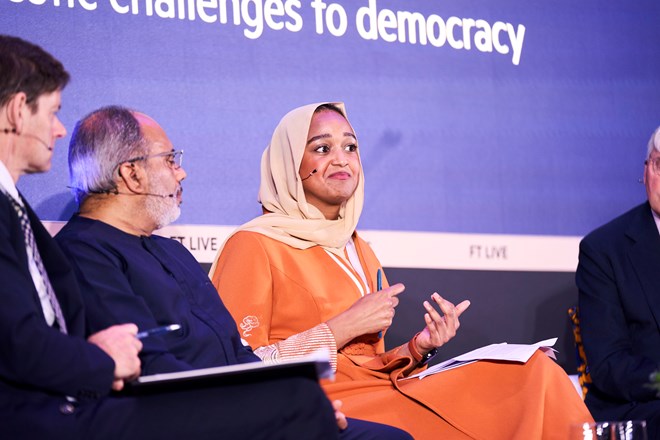


Mogadishu (KAAB TV) – The head of the Somali Development and Reconstruction Bank, Hodan Osman, has issued a strong warning that the suspension of aid by (USAID) earlier this year is having a major negative impact on Somalia’s economy.
Speaking at the Financial Times Africa Summit in London, she said the withdrawal of U.S. assistance is disrupting business, shrinking tax revenues and depressing gross domestic product (GDP).
Ms Osman pointed out that key sectors—including health, education and development programmes—have been particularly affected.
With fewer foreign-funded projects running, local businesses that depended on those projects are suffering, investment is stalling, and communities that relied on aid-related employment and services are especially vulnerable.
Government tax collections, particularly from consumption or sales taxes, have dropped as economic activity slows.
The economy’s growth trajectory is being pulled down, with the GDP impact described as “really impacted” in Somalia’s context.
The disruption is not limited to government-financed services; it feeds into the private sector, reducing contractor activity, employment and the business pipeline.
Ms Osman further said that the SDRB and the government must accelerate efforts to reduce dependence on foreign aid. She urged strengthening internal revenue systems, improving the business environment and attracting private investment so Somalia can build resilience.
She noted that the bank is planning new strategies to promote local business and investment, but also emphasised that rebuilding investor confidence will take time.
While the original text stated the help came from USAID being “closed,” more precise reports indicate that U.S. foreign aid was suspended or significantly reduced, and USAID’s programmes in Somalia were halted earlier this year.