


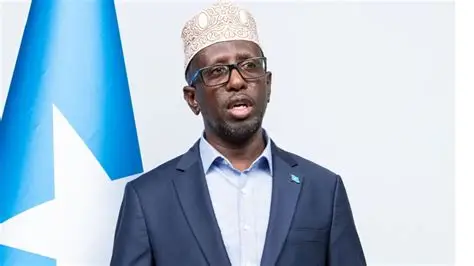


Former Somali President Sheikh Sharif Sheikh Ahmed has spoken about Somalia’s deepening political tensions, reported security deployments near his residence in Mogadishu, disputes over the federal election timetable and President Hassan Sheikh Mohamud’s remarks concerning his continued hold on power.
In an interview lasting more than an hour, Sharif called for political disagreements to be resolved through dialogue and an inclusive agreement.
He warned that decisions made without broad political consensus could deepen divisions between the federal government, opposition groups and federal member states.
One of the most contentious issues involves reports that government troops and military vehicles were deployed on roads near the residences of Sharif and former Prime Minister Hassan Ali Khaire in Mogadishu.
On October 11, Sharif’s office said security forces had restricted movement around his home and established checkpoints affecting access to the area.
It also alleged that some members of his staff had been abducted. Those allegations have not been independently verified.
The National Intelligence and Security Agency (NISA), meanwhile, accused Sharif’s security personnel of attacking agency officers and attempting to provoke an armed confrontation.
Sharif’s office rejected the allegations, saying his guards had avoided actions that could trigger fighting.
The two sides have therefore offered conflicting accounts of the security incidents in Mogadishu’s Wadajir district.
In the absence of independent verification, the competing allegations remain disputed, and the full circumstances of the events have yet to be established.
The electoral timetable is another major source of disagreement. The disputed National Independent Electoral and Boundaries Commission has announced plans to hold elections for both houses of the Federal Parliament on April 15, 2027, followed by the presidential election on May 15, 2027.
The federal government maintains that the timetable is grounded in the Constitution and electoral legislation. Opposition leaders and some federal member states, however, challenge the constitutional amendment process and the way preparations for the elections have been handled.
They argue that the country needs a political agreement involving the federal government, regional administrations and opposition groups before proceeding.
Sharif is among the opposition figures calling for a negotiated electoral framework and has supported referring the constitutional dispute to the courts for a legal determination.
The disagreement has raised questions about the legal basis of the proposed timetable, the authority responsible for administering the elections and whether the competing political camps can reach a common position.
Remarks by President Hassan Sheikh Mohamud about remaining in office have added to the debate. Opposition figures interpret such statements in the context of the dispute over the presidential term and the legitimacy of the proposed electoral process.
The government, by contrast, defends the constitutional amendments and planned elections, maintaining that state institutions are operating within a legal framework.
Sharif and other opposition leaders insist that Somalia’s political future cannot be determined by one side alone. They are calling for an agreement that commands broader support and provides a mutually accepted basis for the transition to the next government.
The dispute carries implications beyond the election process. Continued tensions could affect security in Mogadishu, preparations for the polls and the government’s ability to address other pressing challenges, including the fight against Al-Shabaab, humanitarian needs and economic difficulties.
Sharif has urged political leaders to return to meaningful negotiations, while opposition groups continue to demand an agreed electoral process.
The federal government has said it remains committed to dialogue while continuing preparations under the announced timetable.
Key questions remain unresolved, including how the constitutional dispute will be settled, which institutions will oversee the elections and what measures can prevent political disagreements from escalating into armed confrontation.
The outcome will depend largely on whether the federal leadership, opposition and federal member states can find common ground on the country’s constitutional and electoral future.