


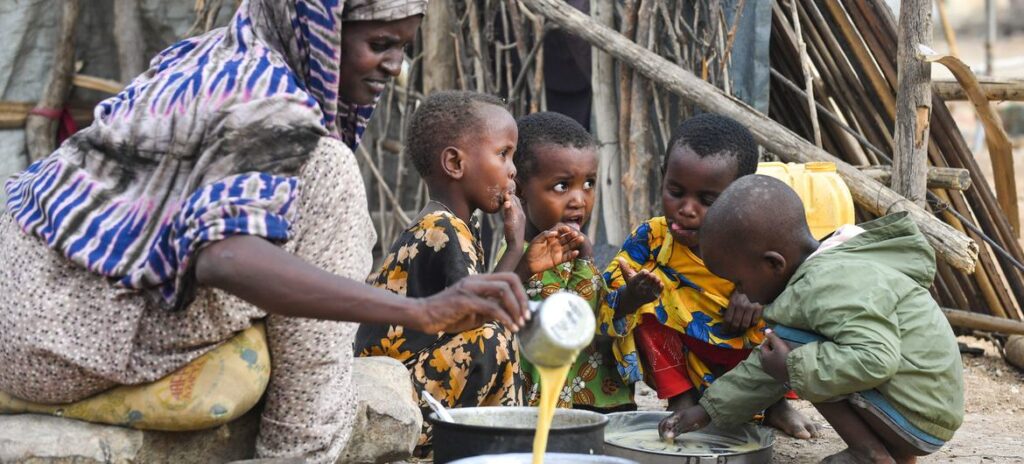


Mogadishu (KAAB TV) – A deepening humanitarian crisis is unfolding in Somalia as severe hunger threatens millions of people, driven by escalating international aid cuts, prolonged drought, and persistent conflict.
Humanitarian organizations warn that without urgent intervention, the country could face one of its worst famines in recent history.
According to the United Nations Office for the Coordination of Humanitarian Affairs (OCHA), more than 4.3 million Somalis are currently facing acute food insecurity, with at least 725,000 children suffering from severe malnutrition. The situation has deteriorated dramatically in recent months following reductions in donor funding and shifting global priorities.
“This is a crisis we can no longer ignore,” said Abdirahman Mohamed, a field coordinator for a local NGO in Baidoa. “Children are dying, families are being displaced in search of food, and we simply do not have the resources to reach everyone in need.”
International Aid Cuts Fuel the Crisis
Somalia has long relied on international humanitarian assistance to meet the basic needs of its population, especially in rural and drought-affected areas. But recent aid cuts—largely due to global economic challenges, competing crises in Ukraine, Gaza, and Sudan, and donor fatigue—have left aid agencies struggling to maintain operations.
In 2025, the UN Humanitarian Response Plan for Somalia requested $2.6 billion in funding to assist the most vulnerable communities. As of October, less than 35% of that amount has been received.
“Without immediate funding, critical food distribution programs, health services, and clean water access are at risk,” said Martin Griffiths, UN Under-Secretary-General for Humanitarian Affairs. “The international community must act now before the window for prevention closes.”
Drought and Conflict Compound the Emergency
Somalia has endured six consecutive failed rainy seasons, making it the longest and most severe drought in the country’s history. The drought has decimated crops, killed livestock, and displaced more than 1.7 million people, according to the International Organization for Migration (IOM).
In addition to climate shocks, continued violence by the militant group Al-Shabaab has made it dangerous for aid workers to reach isolated communities. Some regions, particularly in south-central Somalia, remain nearly inaccessible due to insecurity.
A Looming Famine?
While famine has not yet been officially declared, experts caution that several regions are already teetering on the brink.
“If current trends continue and aid doesn’t resume at scale, a famine declaration could be imminent in parts of southern Somalia,” said Dr. Layla Hassan, a food security analyst with the Famine Early Warning Systems Network (FEWS NET). “We are seeing all the warning signs: soaring malnutrition, mass displacement, and rising mortality.”
Hope Amid Crisis
Despite the grim outlook, local communities and humanitarian workers continue to respond with resilience.
Community-led feeding centers and mobile health clinics are operating in many areas, often with minimal support. Somalis in the diaspora are also sending remittances to support their families back home.
Still, experts say these efforts are not enough without a coordinated international response.
“Somalia has survived crises before, but we cannot keep expecting its people to bear the brunt of the world’s inaction,” said Ahmed Warsame, director of a Somali humanitarian advocacy group. “What we need now is solidarity—not silence.”
Organizations providing emergency assistance in Somalia include the UN World Food Programme (WFP), Save the Children, the Somali Red Crescent Society, and Doctors Without Borders. Donations can directly support food aid, medical care, and clean water efforts.