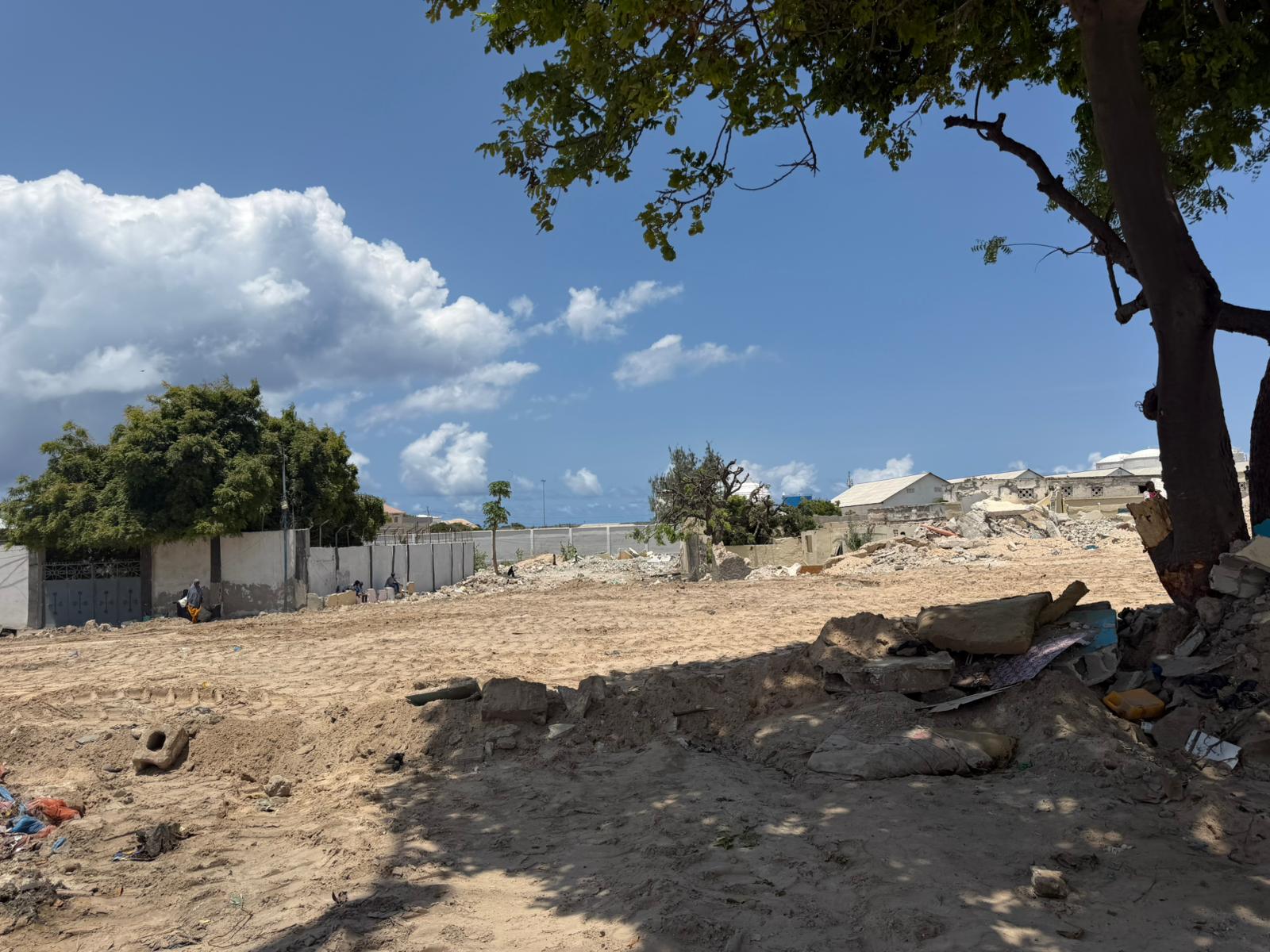


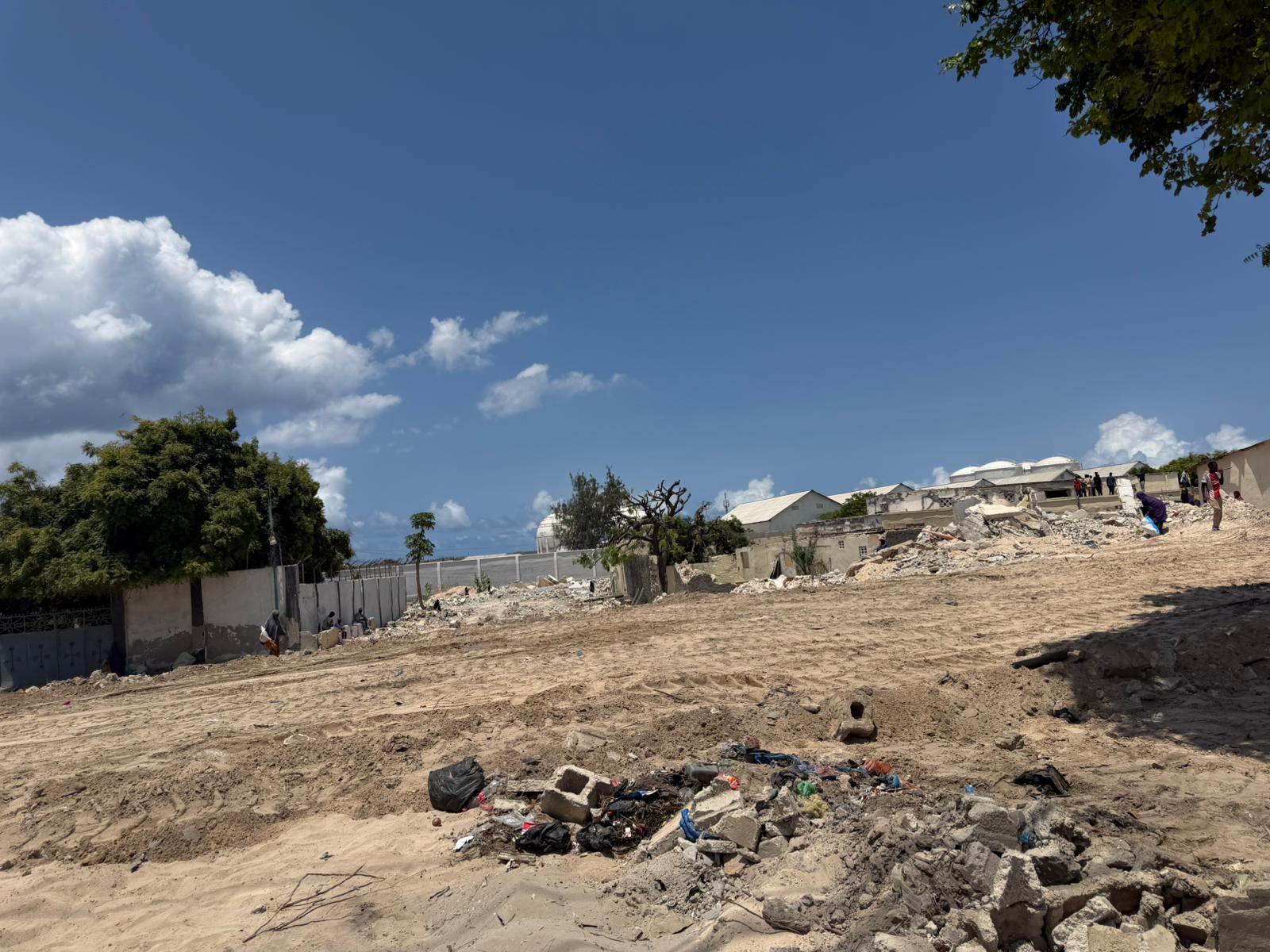
MOGADISHU (Kaab TV) – For four consecutive years, residents of Mogadishu have been subjected to repeated forced evictions widely attributed to the Federal Government of Somalia.
The office regarded as the highest authority has been accused of failing to act impartially and of overseeing actions that disproportionately harm civilians.
These practices have intensified in recent months, including in the past few days.
Across the districts of the Banaadir region and its outskirts, few areas have been spared.
Vulnerable communities have consistently faced eviction operations, some carried out in the middle of the night or at dawn, when residents are asleep, accompanied by security forces and demolition equipment.
Despite sustained and increasingly urgent outcries from affected communities, there has been no clear or direct response from federal authorities.
Some residents report being subjected to physical abuse including police using live bullets and caused deaths in particular area such Dayniile and other serious violations.
Prominent Somali religious scholars have strongly condemned the situation, describing the government’s silence in the face of continuous public appeals as deeply troubling.
Among those speaking out is Sheikh Bashiir Ahmed Salaad, a Somali cleric closely following developments in the country. He stated that forced evictions and the government’s silence have no basis in Islamic teachings, and criticized what he described as unjust conduct.
The Sheikh also called on President Hassan Sheikh Mohamud to avoid listening to individuals he characterized as misleading advisers, and instead heed the voices of well-intentioned and principled members of society.
“Forced evictions have escalated the suffering of the people,” he said.
He further noted that at a time when many Somalis are already struggling with hunger, drought, and economic hardship, the government lacks the capacity to support them—and should not compound their suffering with additional burdens.

President Hassan Sheikh Mohamud, who was sworn in following the May 15 election with a pledge to defend the country, its people, and their interests, is now facing growing public scrutiny.
Many citizens are questioning why he has remained silent over four years of recurring incidents involving the destruction of civilian homes and forced displacement.
Over 140,000 families are estimated to have been affected by forced evictions last year as local NGOs reported, with the number continuing to rise. The evictions are often carried out without prior notice to residents, with armed police demolishing homes and forcing families—including vulnerable groups—to vacate.
While around 90 percent of the evictions reportedly take place on government land that was under the ownership of the Somali government before 1990, there have also been cases where private land and homes have been destroyed or taken over. In such instances, complaints filed in the courts are often not accepted or are left unresolved.
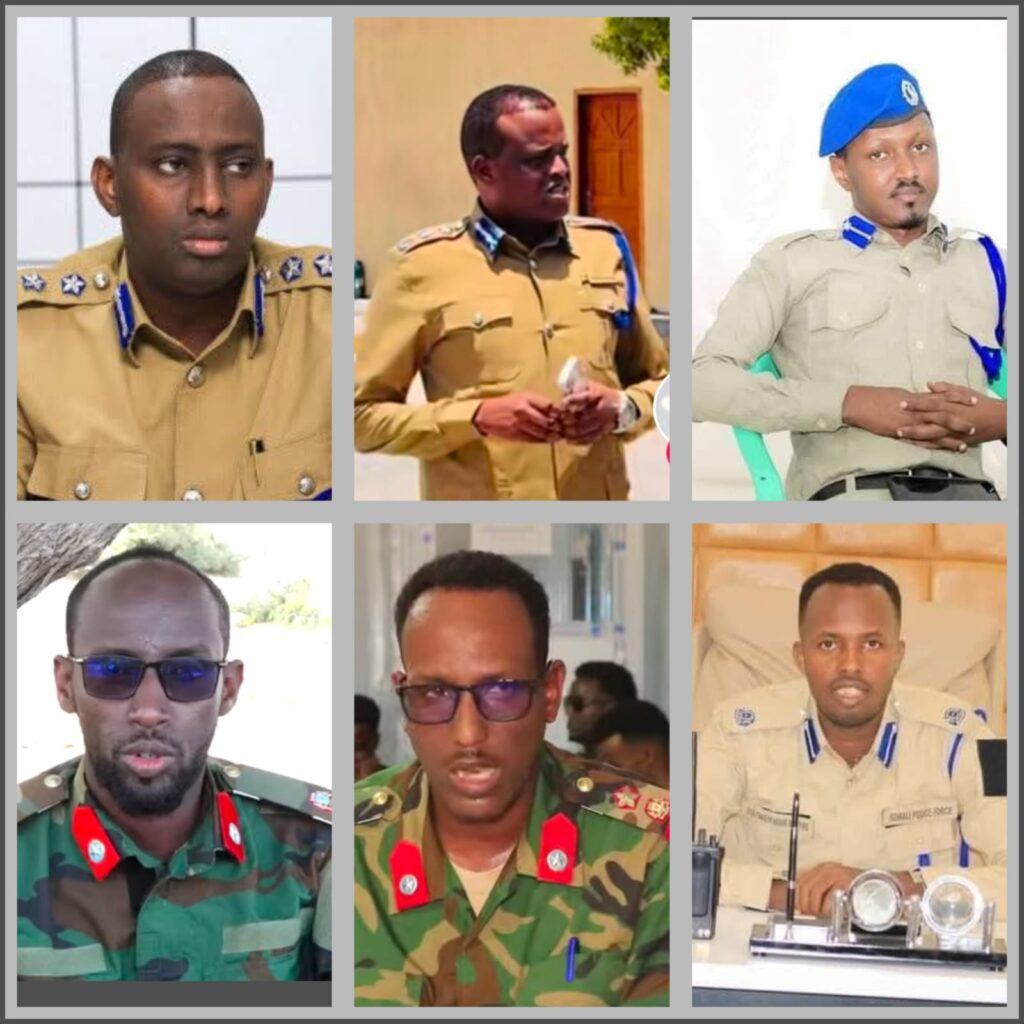
Security officers and unit commanders have been associated with forced eviction
certain security officers and unit commanders have been associated with forced eviction operations in Mogadishu carried out under the current federal security and city clearance campaigns.
The names most frequently mentioned in those reports include:
- Col. Macalin Mahdi (Commander of Banaadir Regional Police)
- Col. Ahmed Hussein Mohamed “Cirro” (Police Reconstruction / Reform Unit)
- Col. Macalin Aadan (Eastern District Police Command)
- Col. Abdirahman Mo’allim Mohamud “Timadheere” (Stabilization Forces / Military Police Brigade)
- Col. Aadan Jeelle (Stabilization Forces Unit Commander)
- Col. Yaasiin Nuur Kheyre “Yaasiin Ganeey” (Western District Police Command)
These individuals are often referenced in relation to eviction and urban security operations in Mogadishu. However, it is important to note that such claims largely come from public reporting and political accusations, and they are not independently verified as legal findings or court-established responsibility.
Widespread corruption
Meanwhile, some opposition figures have accused President Hassan Sheikh Mohamud—elected under the 4.5 power-sharing system—of having vested interests in the eviction campaigns and the alleged appropriation of public land.
Complaints from Mogadishu residents have sharply increased, with many alleging systematic land grabbing and displacement carried out by federal authorities.
The absence of effective oversight and accountability mechanisms has further exacerbated the situation. Critics argue that unlawful conduct by officials has eroded public trust in state institutions.
Additionally, new allegations point to the diversion of public revenues into private companies reportedly linked to individuals close to the president. These claims involve multiple sectors, including the Ministry of Finance, municipal authorities in Mogadishu, inland revenue, the airport, and the seaport—raising concerns about systemic misuse of public resources for private gain.