


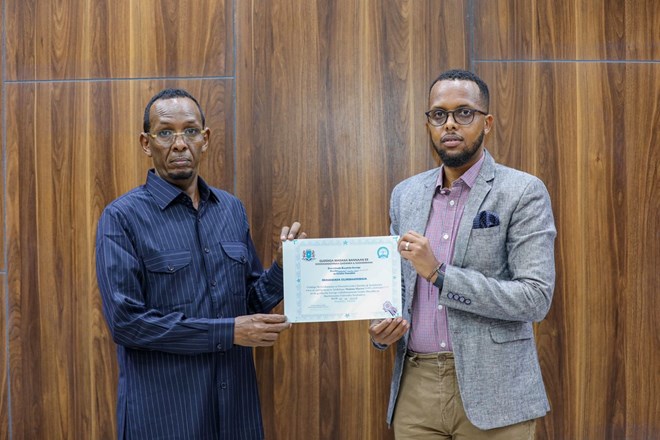


JOWHAR (KAAB TV) – Abdullahi Mohamed Ali, widely known as Sanbaloolshe, has been re-elected to Somalia’s 11th Federal Parliament, reclaiming seat HOP058 during an electoral process held in Jowhar, the capital of the Middle Shabelle region and administrative center of the Hirshabelle State.
Sanbaloolshe, the former head of Somalia’s National Intelligence and Security Agency (NISA), secured the seat unopposed. His main challenger, Ismail Warsame Farah, unexpectedly withdrew his candidacy prior to the vote, clearing the way for Sanbaloolshe’s uncontested victory.
This marks a return to Parliament for Sanbaloolshe, who had vacated his seat during his most recent term as NISA chief, a role he held for one year before being dismissed earlier this year. His re-entry into parliamentary politics had been widely anticipated, as observers noted his political base remained strong despite his controversial tenure at the helm of NISA.
Sanbaloolshe’s political journey has been marked by both high-profile appointments and dramatic setbacks. Under the administration of former President Mohamed Abdullahi Farmajo, he was removed from his NISA post and later failed in his attempt to retain his parliamentary seat. Nevertheless, he has remained a prominent figure in Somali politics for decades, known for his extensive experience in both intelligence and legislative affairs.
Notably, Sanbaloolshe is the only individual to have served as the head of NISA on three separate occasions—a testament to his enduring influence within Somalia’s security and political circles.
His most recent dismissal from NISA came at a politically sensitive time. In his native Hiran region, growing public dissatisfaction has emerged, with local communities accusing the federal government of neglecting the fight against the extremist group al-Shabaab. Sanbaloolshe’s departure from the intelligence service coincided with this wave of criticism, raising questions about the federal government’s commitment to restoring security in the region.
With his return to Parliament, it remains to be seen whether Sanbaloolshe will continue to play a significant role in shaping Somalia’s national security policies from a legislative standpoint or pivot toward broader political ambitions.