


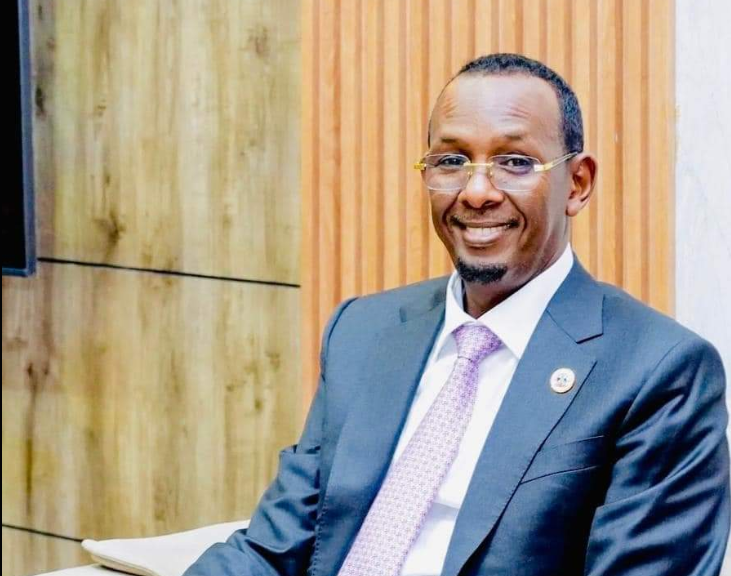


Former Somali intelligence chief Abdullahi Mohamed Ali Sanbaloolshe has claimed that he held meetings in the United Arab Emirates with the leaders of Puntland, Jubaland and Somaliland to discuss forming a political alliance opposing President Hassan Sheikh Mohamud.
Sanbaloolshe, who previously headed Somalia’s National Intelligence and Security Agency (NISA), made the claim in an interview circulating on Sunday.
He named Puntland President Said Abdullahi Deni, Jubaland President Ahmed Mohamed Islam Madobe and Somaliland President Abdirahman Mohamed Abdullahi “Irro” as participants in the discussions.
According to Sanbaloolshe, the talks focused on uniting political forces opposed to Mohamud’s administration and considering the proposed alliance’s objectives and next steps.
He did not provide publicly verifiable evidence that the three leaders had agreed to join an initiative aimed at removing the president from power. Deni, Madobe and Irro had not publicly responded to the claims as of Sunday.
The allegations emerge amid worsening relations between Mogadishu and Abu Dhabi, which maintains longstanding commercial, political and security ties with several Somali regional administrations.
Earlier this month, Somalia’s Defence Minister Ahmed Moallim Fiqi accused opposition politicians visiting Abu Dhabi of meeting individuals allegedly linked to Sudan’s paramilitary Rapid Support Forces (RSF).
He further claimed that the meetings were connected to efforts to organise armed groups against the federal government, but did not publicly present evidence substantiating the accusation.
The UAE has repeatedly denied allegations that it provides military support to the RSF, which has been fighting Sudan’s national army since April 2023.
A UN fact-finding mission reported in September that investigators had found grounds to believe a network involving individuals and entities in the UAE and several other countries supplied the paramilitary group with weapons, logistical assistance and personnel.
Abu Dhabi rejected allegations that it supports the RSF.
Relations between Somalia and the UAE deteriorated sharply in January, when Mogadishu announced the termination of agreements covering security and defence cooperation, federal institutions and arrangements involving the ports of Berbera, Bosaso and Kismayo.
The Somali government accused the UAE of actions it said undermined the country’s sovereignty.
Mohamud has also accused the UAE of encouraging Somaliland’s pursuit of independence, a claim Abu Dhabi has not publicly accepted.
Somaliland declared independence from Somalia in 1991 and has since operated separately, although its quest for broad international recognition remains a major regional issue.
The reported meetings also come against the backdrop of ongoing disputes between the federal government and Puntland and Jubaland over constitutional amendments, the distribution of political authority and the framework for national elections.
Both regional administrations have opposed key elements of Mogadishu’s constitutional and electoral agenda.
Sanbaloolshe has become increasingly critical of Mohamud’s administration since leaving government. He has also supported political protests in the Hiiraan region concerning political representation and the electoral process in Hirshabelle.
His latest claims, if substantiated, could point to efforts among some political figures to coordinate opposition to the federal leadership.
However, the extent of any such coordination remains unclear, and there is no independent confirmation that the leaders he named agreed to form an alliance or pursue the stated objective.