


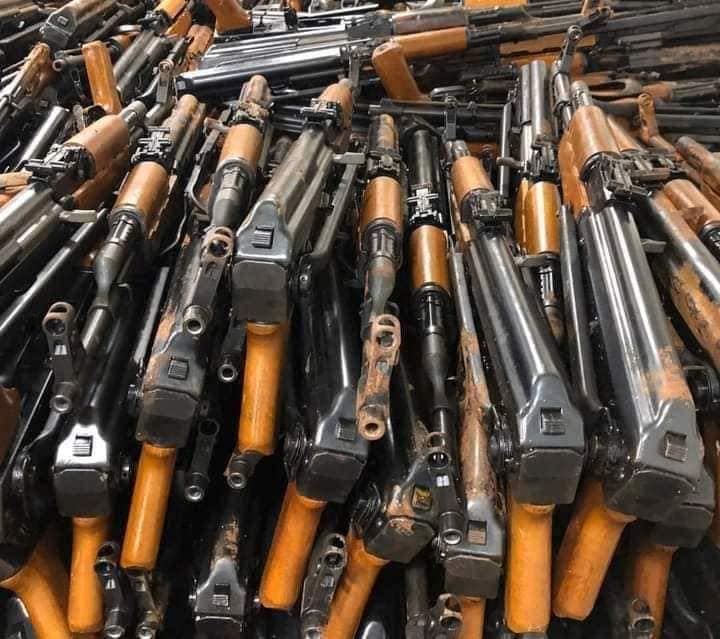


Mogadishu (KAAB TV) – In December 2023, the United Nations Security Council officially lifted the arms embargo on Somalia, which had been in place since 1992. The decision was seen as a significant milestone, providing the Federal Government of Somalia (FGS) with the authority to import weapons and military equipment directly, in an effort to strengthen its ongoing campaign against the militant group al-Shabaab.
However, the lifting of the embargo has also raised fresh concerns both domestically and internationally regarding the transparency, regulation, and security of weapons entering the country. With arms now flowing in, the question of who controls them has become a central issue.
Seized Shipment in Puntland Sparks Political Tensions
In a notable development, the Puntland Maritime Police Force intercepted a vessel named Sea World last week as it docked at Bareeda Beach in the Bari region. The ship, which had reportedly arrived from Turkey, was carrying a cache of military equipment including war vehicles and heavy weapons. According to Puntland authorities, the cargo was destined for Mogadishu and was scheduled to be transferred to the Turkish military training facility known as Turksom.
The Puntland administration launched an investigation into the military personnel onboard the ship and withheld its cargo. In response, the Federal Government condemned the seizure, labeling it a hijacking and demanding the immediate release of the vessel and its contents. This public disagreement has once again exposed the deep rift between the central government and the federal member states, particularly over matters related to national security.
Unmarked Weapons Seized in Galmudug
In a separate incident in central Somalia, local residents in the town of Abudwaq intercepted two vehicles transporting heavy weaponry. The origins and intended destination of the weapons were unclear at the time of seizure. On July 16, 2024, the Galmudug Ministry of Security issued a statement claiming that the weapons had been smuggled across the Ethiopian border into Somalia illegally.
Footage circulated on social media platforms showed civilians in possession of the weapons, raising alarms over the possibility of these arms falling into the hands of unauthorized groups or militias. The sight of advanced weaponry being handled outside government channels has intensified public concern about the risks posed by unregulated arms proliferation.
Weak Central Oversight and the Role of Regional Forces
Security analysts have interpreted these developments as symptomatic of a broader governance issue: the ongoing power struggle and lack of coordination between the Federal Government and the federal member states. While the FGS is recognized internationally as the legitimate authority responsible for arms control, the reality on the ground tells a different story.
Large swaths of Somalia remain outside the firm control of Mogadishu. Instead, power is often exercised by regional administrations or local militias. This decentralized structure has complicated the FGS’s efforts to implement a unified security policy and ensure that imported weapons reach only official state forces.
International Community Urges Accountability
The international community continues to collaborate with the Federal Government to promote national security, institutional reforms, and capacity-building. However, the lack of a cohesive federal system and competing political interests have stalled meaningful progress. Analysts warn that without a reliable mechanism to track and control arms imports, Somalia could once again become a hotspot for illicit weapons trade and instability.
Conclusion: A Fragile Balance
The lifting of the arms embargo was intended to empower the Somali government to confront al-Shabaab and other security threats more effectively. But the recent incidents in Puntland and Galmudug highlight the fragility of the country’s federal system and the risks of unchecked arms flows.
Unless urgent measures are taken to improve coordination among all levels of government, regulate the arms supply chain, and establish a transparent monitoring system, Somalia risks sliding further into insecurity. The world is watching closely—and with growing concern.