


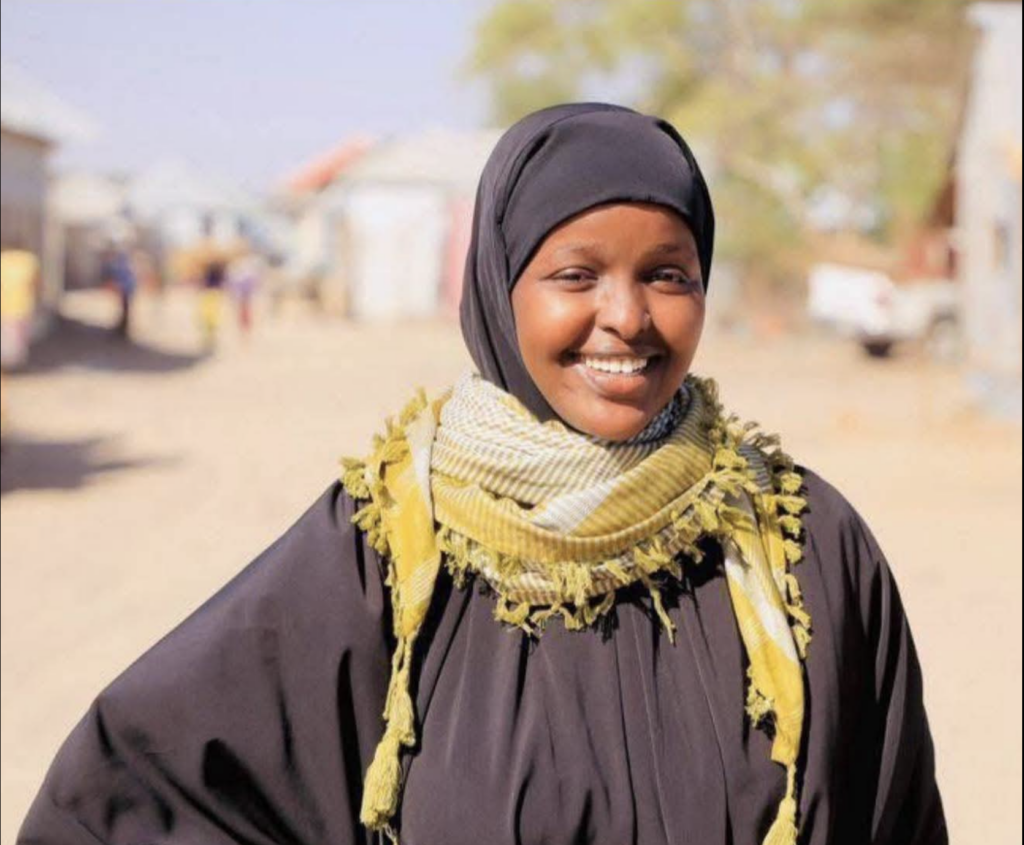


MOGADISHU (Kaab TV) – Amnesty International has called for the immediate and unconditional release of Sadia Moalim Ali, widely known as “Sadia Bajaj,” who has been detained in Mogadishu since 12 April over her expression of views.
“We call on you and your government to immediately and unconditionally release Sadia Moalim Ali, who has been detained solely for peacefully exercising her human rights,” Amnesty International said in a letter addressed to Somali President Hassan Sheikh Mohamud.
Sadia Bajaj was arrested on 12 April after being detained by officers of Somalia’s National Intelligence and Security Agency (NISA) in central Mogadishu.
Known for her work as a female Bajaj (three-wheeler taxi) driver, Sadia has been an outspoken critic of President Hassan Sheikh Mohamud’s administration, particularly on issues of corruption, nepotism, rising fuel prices, and the increasing cost of living. Through videos shared on social media, she highlighted grievances that also sparked protests by Bajaj drivers in Mogadishu in March this year.
Sadia Moalim Ali, 27, a Bajaj driver and social activist, was arrested in the Hodan district of Mogadishu by NISA officers on 12 April. She was initially held at Hamar Jajab Police Station before being transferred on 14 April to Mogadishu Central Prison, where she remains detained.
She has not been granted access to legal representation, and her family is unaware of any formal charges filed against her. However, informed sources told Amnesty International that police brought her before the Banadir Regional Court, which authorized her detention for up to 90 days pending investigation.
“Her detention stems solely from her peaceful expression of views shared on social media, particularly Facebook and TikTok,” Amnesty said. “She spoke about government criticism, alleged corruption within state institutions, youth unemployment, accusations of favoritism among senior officials, high taxation, and rising fuel prices. In one of her videos, she stated that the President of Somalia would be responsible for any harm that might come to her.”
Allegations of torture
Sources who spoke to Kaab TV, including members of Sadia’s family, said she faced harsh punishment after giving an audio interview to a local Mogadishu radio station in which she stated she had not eaten for four days while in detention at Mogadishu Central Prison.
The audio, broadcast on 20 April, quickly spread across social media platforms.
Following the broadcast, Sadia was reportedly subjected to further punishment and transferred to a disciplinary cell inside the prison, commonly referred to by detainees as the “death room,” where inmates are subjected to severe treatment.
The sources confirmed that she was held in that cell for 48 hours, stripped of her clothing. The punishment was allegedly carried out by prison guards and criminal investigation officers, who also threatened her inside the facility.
This is not the first time Sadia Moalim Ali has been detained over her activism. She was previously arrested on 12 March after participating in a protest against rising fuel prices. She was brought before a court and released four days later. The pattern suggests she has been repeatedly targeted for peacefully exercising her human rights.
Since President Hassan Sheikh Mohamud returned to office in mid-2022, Somalia has witnessed a series of human rights violations, particularly affecting freedom of expression, association, and peaceful assembly. Authorities have used arbitrary arrests, unfair trials, detention, threats, and intimidation to silence journalists and activists.
Since 2025, the government has intensified efforts to restrict and censor journalists reporting on public interest issues, particularly security operations and forced evictions in Mogadishu. On 16 March 2025, the Minister of Information issued a directive prohibiting the dissemination of “negative reporting” on government security operations or what authorities described as “false information” regarding such operations.