


One morning in early 2003, while reading Kaaha Bari, a daily local newspaper in Puntland which I greatly admired, I came across an article with a powerful title in Somali: “Nin geedo tiriyay oo qurax ka tagay, geedo ma tirin”.
It literally translates as “A man who counted the trees but left out the acacia tree did not count trees at all.”
It was a simple phrase, but it carried a profound lesson. It described the danger of focusing only on what is visible — numbers, names, reports, and events — while missing the deeper reality that gives meaning to everything else.
It was a reminder that sometimes the most important thing is not what attracts immediate attention, but the foundation that quietly provides shelter and stability — like the acacia tree whose shade protects everything around it.
Over the years, I have read thousands of articles by others. I had also written many myself. Yet that Kaaha Bari article and its title have remained in my memory. The phrase returns whenever I reflect on Somalia’s long and painful search for statehood and the way we measure political progress.
Twenty-eight years ago, few Somalis could have imagined that a functioning system of governance could emerge from a country that had lost its central state, where violence had become normal, and where armed factions competed for control.
The idea that a political order could be built away from the traditional centres of power — even beginning under the shade of a tree — seemed almost impossible.
Hope was fragile. Doubt was overwhelming.
Somalia was living through one of the darkest periods in its modern history. Mogadishu was devastated by conflict. My family had to flee several times from the capital due to the endless clashes that turned to ruthless and bloody.
That was following the civil war that began in 1990. The national government had collapsed and militias ruled the streets, towns and cities including Mogadishu. Institutions had disappeared. Militias and warlords shaped daily life. For many, the idea of rebuilding a state seemed like a distant dream.
That is why many had lost hope. With the exception of those who fled to refugee camps in Kenya, Ethiopia, and elsewhere, many others sought safety and stability in regional towns and cities such as Garowe, Bosaso, and Galkayo.
Two years later, in 1991, Somaliland announced its withdrawal from the rest of Somalia and began pursuing a separate political path.
Yet on 1 August 1998, Puntland declared its formation and began an ambitious experiment: rebuilding governance from within Somali society through consensus, local legitimacy, traditional structures, and emerging institutions.
The region laid the foundation for a new model of governance built around a localised political system, clan consensus, and institutional structures. It adopted a constitution, established a parliament selected through clan-based representation, and created a process through which a regional president could be elected.
Unlike Somaliland, which declared its separation from the rest of Somalia, Puntland’s founding vision was different. Its constitution clearly advocated for a federal Somalia and positioned Puntland as part of a united Somali state based on power-sharing, decentralisation, and regional autonomy.
Wait and see
Puntland did not seek secession. Instead, it presented itself as an experiment in rebuilding Somali statehood from the ground up — creating functioning institutions at the regional level while working toward the restoration of a federal national government.
It was an experiment that few believed could succeed.
At the time, many observers responded with a simple phrase: “Let us wait and see.”
Few could predict whether such an experiment would survive. There were no guarantees that a regional administration born amid insecurity and uncertainty could establish institutions, maintain order, and develop a political identity over decades.
But that is precisely what made Puntland’s journey significant.
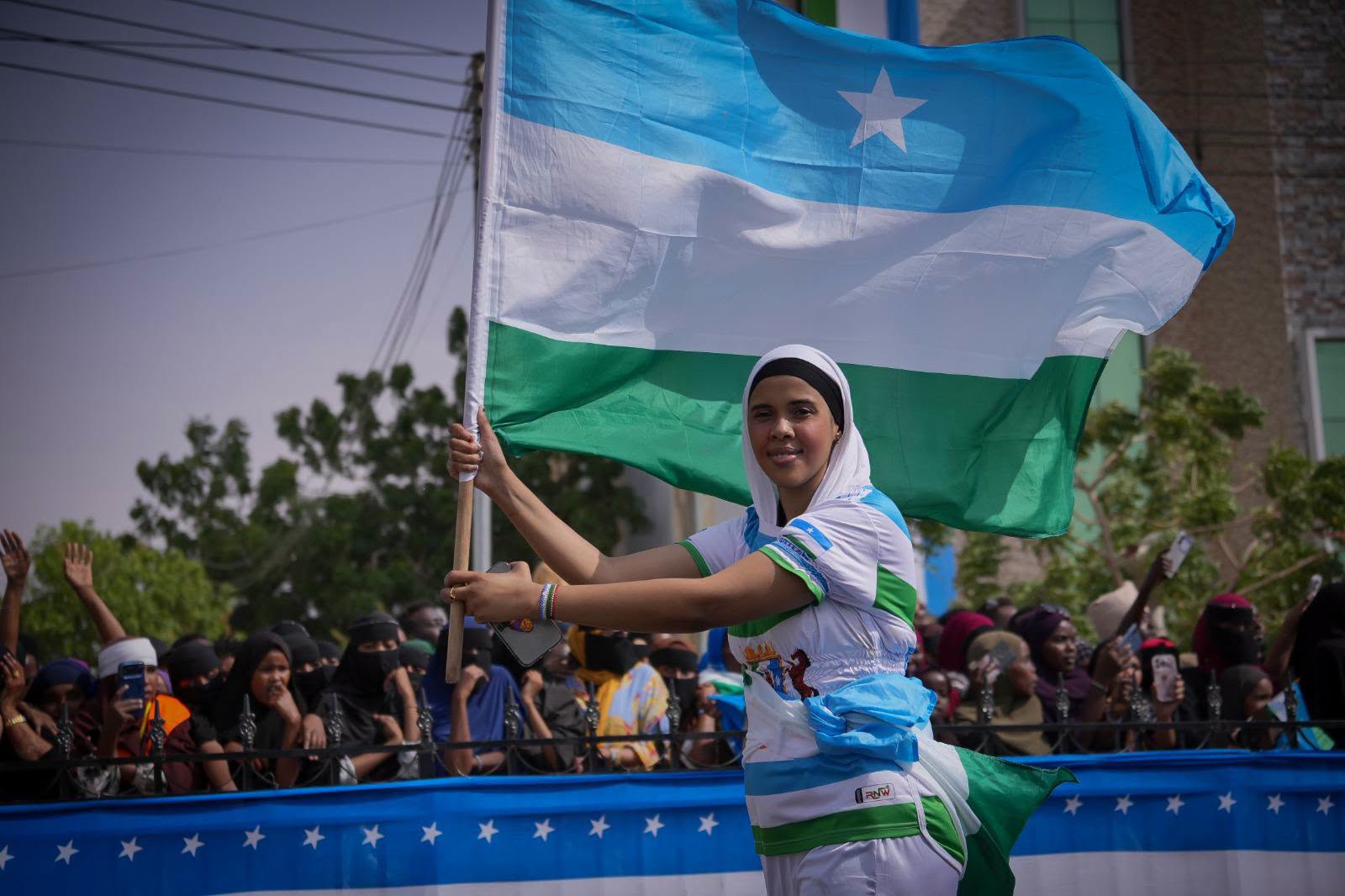
Today, Puntland marks its 28th anniversary — the fruit of a journey that began under the shade of a tree, built through local consensus, and shaped by the people whose lives it was created to serve.
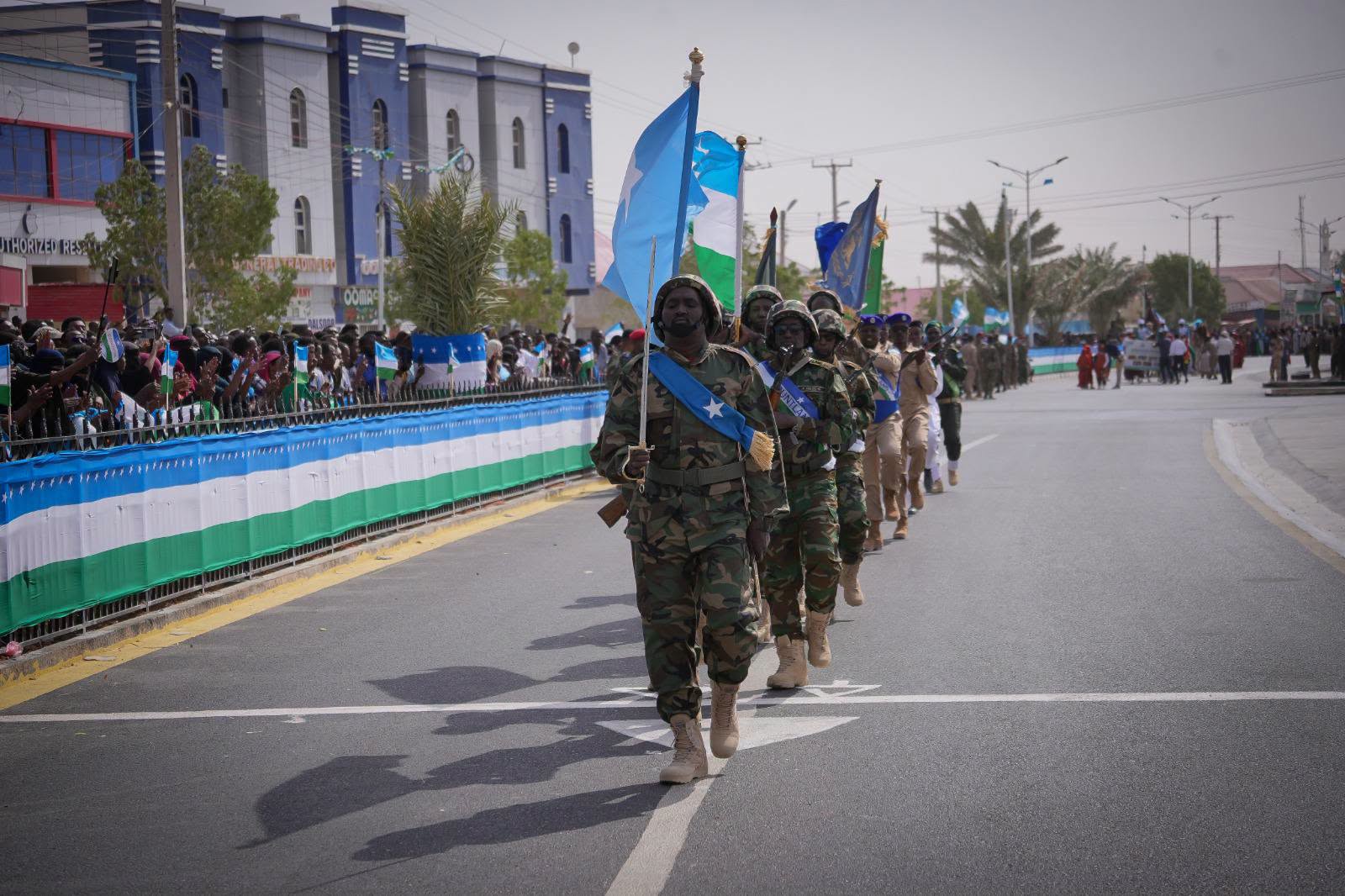
While much of Somalia continued to struggle with lawlessness, political fragmentation, corruption, and weak institutions, Puntland gradually developed a functioning system of administration. It built security structures, established government institutions, created a legal framework, conducted political processes, and for the first implemented a local government election based on direct vote by its people in 2023, and developed a level of continuity rarely seen elsewhere in Somalia.
Its achievements were not perfect, and Puntland has faced its own internal challenges, including political disputes, security threats, governance shortcomings, and debates over democracy and representation.
But history must be judged by comparison with the reality from which it emerged.
Ignoring Puntland’s experience would be a mistake
The question is not whether Puntland became an ideal state. The question is whether it demonstrated that Somalis could rebuild institutions after state collapse — and whether it provided lessons for the rest of the country.
In many ways, Puntland became a living example that Somalia was not incapable of governance. It challenged the assumption that state failure was permanent. It showed that political order could be rebuilt through Somali-led solutions, local ownership, and gradual institution-building.
The contrast with the wider Somali landscape remains difficult to ignore.
Decades after the collapse of the central government, many parts of Somalia continue to face insecurity, corruption, weak rule of law, political instability, and institutions that struggle to deliver basic services. Despite billions of dollars in international support and repeated attempts at national reconstruction, the country continues to wrestle with questions that Puntland confronted at its birth.
This does not mean Puntland holds all the answers, nor that its experience can simply be copied across Somalia. Every region has its own history, challenges, and political realities.
But ignoring Puntland’s experience would be a mistake.
Anyone trying to understand state-building in Somalia and the wider Horn of Africa without seriously examining Puntland’s 28-year journey is overlooking one of the most important chapters of the story.
They risk becoming the person who counted the trees but failed to see the acacia tree.
Because sometimes, the true measure of progress is not found in grand declarations or international conferences. It is found in the quiet growth of institutions — in places where people began with almost nothing and proved that rebuilding was possible.