


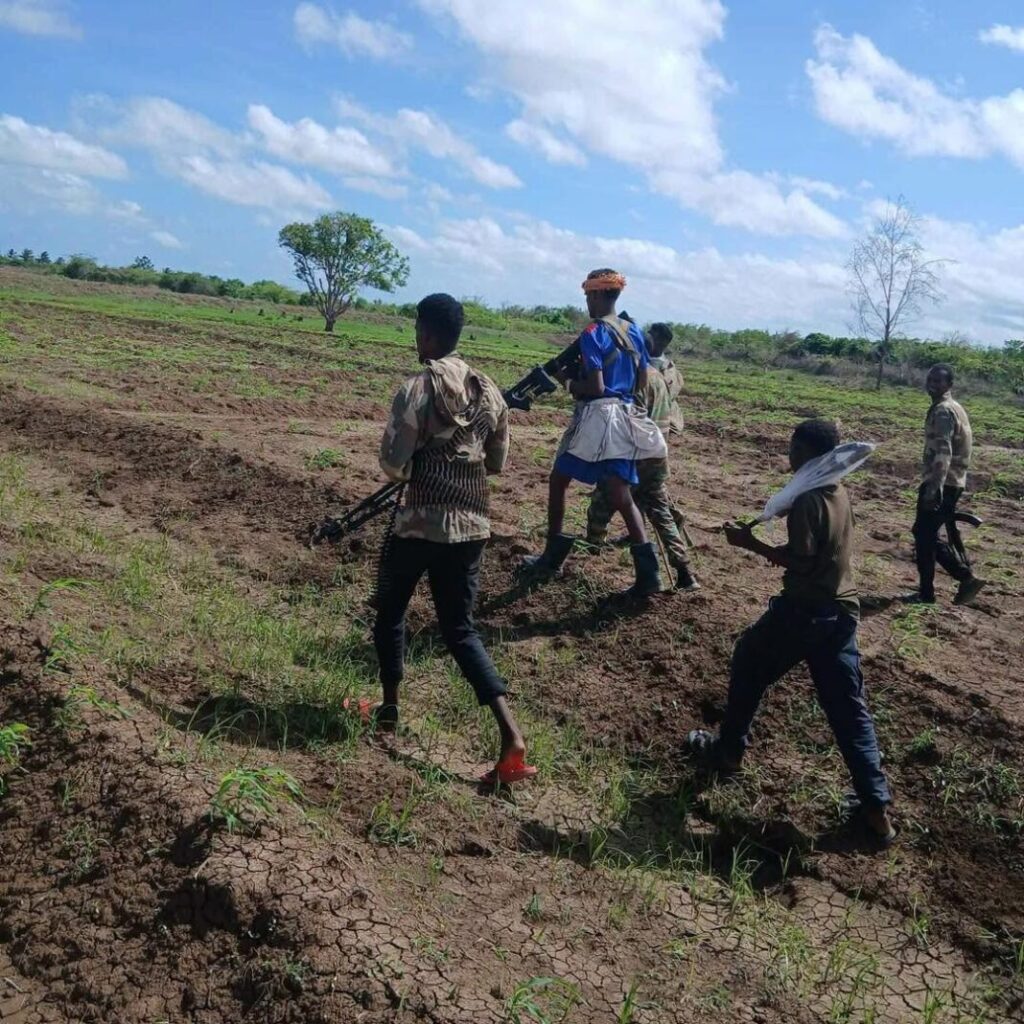


A bloody incident that occurred in Qoryoley district, Lower Shabelle region, has reignited concerns regarding the security situation and the fragmentation of local security forces, at a time when the district is experiencing political and military transitions.
Reports from Qoryoley indicate that two soldiers, reportedly belonging to local security forces, engaged in a shootout within the district following an argument between them.
According to security sources, the two soldiers clashed at a checkpoint known as Buulo Siidow, where the gunfire resulted in the death of one soldier and severe injuries to the other.
Informed sources also reported that the NISA Commander for Qoryoley district arrived at the scene upon learning of the incident, and the soldiers involved in the clash were reportedly removed from the area.
To date, no official statement has been released detailing the exact cause of the dispute, the identities of the soldiers, or the measures taken in response to the incident.
This development coincides with ongoing shifts in Qoryoley regarding the structural organization and alignment of local forces.
Reports concerning the situation in the district suggest that some local forces have transitioned to alignment with the Dervish forces loyal to Abdiaziz Laftagareen, while other units remain stationed within the town.
This situation has raised questions regarding how diverse forces within the district are administered, the chain of command governing them, and how inter-agency cooperation is maintained.
A prior report published on October 25 stated that forces loyal to Laftagareen assumed control in Qoryoley through agreement and dialogue, without major combat occurring.
One of the details worthy of closer examination is the dispute originating at the Buulo Siidow checkpoint.
Checkpoints in certain areas hold dual security and economic significance, as they directly impact vehicular transit and revenue collection from traders and transport operators.
If the soldiers’ dispute genuinely stemmed from the administration of the checkpoint and taxation, it could highlight persistent challenges within military administrative systems and accountability frameworks.
Nevertheless, no independent information has yet confirmed that tax revenues were the direct catalyst for the confrontation.
Qoryoley is among the localities affected by the political and military contestation unfolding among factions vying for influence in South West State.
Conversely, a report published on October 31 stated that the South West State administration succeeded in integrating some of Qoryoley’s local forces into regional administration units, providing them with their inaugural salaries.
However, these fresh reports regarding soldiers turning on each other in the district raise questions concerning the efficacy of cooperation among disparate security units and whether underlying disputes have been fully resolved.
The Qoryoley incident occurs at a time when parts of southern Somalia continue to experience active hostilities, military movements, and political friction.
Meanwhile, government forces persist in conducting counter-insurgency operations against Al-Shabaab, particularly across Lower Shabelle and connecting transit routes throughout the southern regions.
This overall environment demonstrates that security forces face concurrent multi-front responsibilities requiring tight coordination, unified command structures, and sustained operational cooperation.