

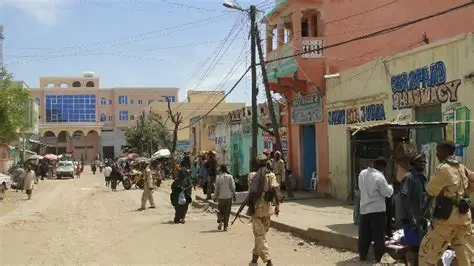

The political and security situation in Somalia’s Southwest State remains one of the country’s most closely watched developments, as tensions between the Federal Government and the Southwest administration continue amid growing uncertainty over the electoral process and the region’s political future.
Baidoa, the administrative capital of Southwest State, has increasingly become a focal point for both political maneuvering and security activity linked to the ongoing dispute.
The disagreement centers on key issues including elections, power-sharing arrangements, and the broader relationship between the Federal Government and federal member states.
Competing political actors hold differing views on how upcoming elections should be conducted and how authority should be distributed within the federal system.
These disagreements have contributed to a rise in political tensions, particularly in Southwest State, which plays a significant role in Somalia’s national political landscape.
In recent months, Baidoa and surrounding areas have witnessed increased military and political activity associated with the dispute.
Reports from the Bay region have also highlighted the impact of the unrest on civilians, including injuries, displacement, and disruptions to daily life.
Humanitarian and human rights organizations have repeatedly warned about the potential consequences of political and armed confrontations on civilian populations.
Residents of Bay and Bakool regions have already faced years of insecurity, displacement, and humanitarian challenges, and renewed instability could further worsen conditions for vulnerable communities.
The dispute in Southwest State reflects broader national disagreements over Somalia’s electoral framework and the balance of power between the central government and regional administrations.
Federal authorities have emphasized an election model in which the central government plays a prominent role, while some regional leaders argue that electoral arrangements should be based on a political agreement involving all major stakeholders.
These differences have periodically strained relations between Mogadishu and several federal member states.
Analysts warn that if political tensions evolve into armed confrontations, the consequences could extend beyond security concerns, affecting trade, transportation, public services, and economic activity across the region.
As Somalia moves closer to future electoral milestones, Southwest State remains a critical arena in the wider debate over governance, federalism, and political representation.
The trajectory of the crisis will likely depend on the willingness of political stakeholders to engage in dialogue and reach consensus on electoral arrangements and governance issues.
With Baidoa continuing to occupy a central place in national politics, developments in Southwest State are expected to remain closely watched by Somali leaders, regional actors, and international partners seeking stability in the country.