

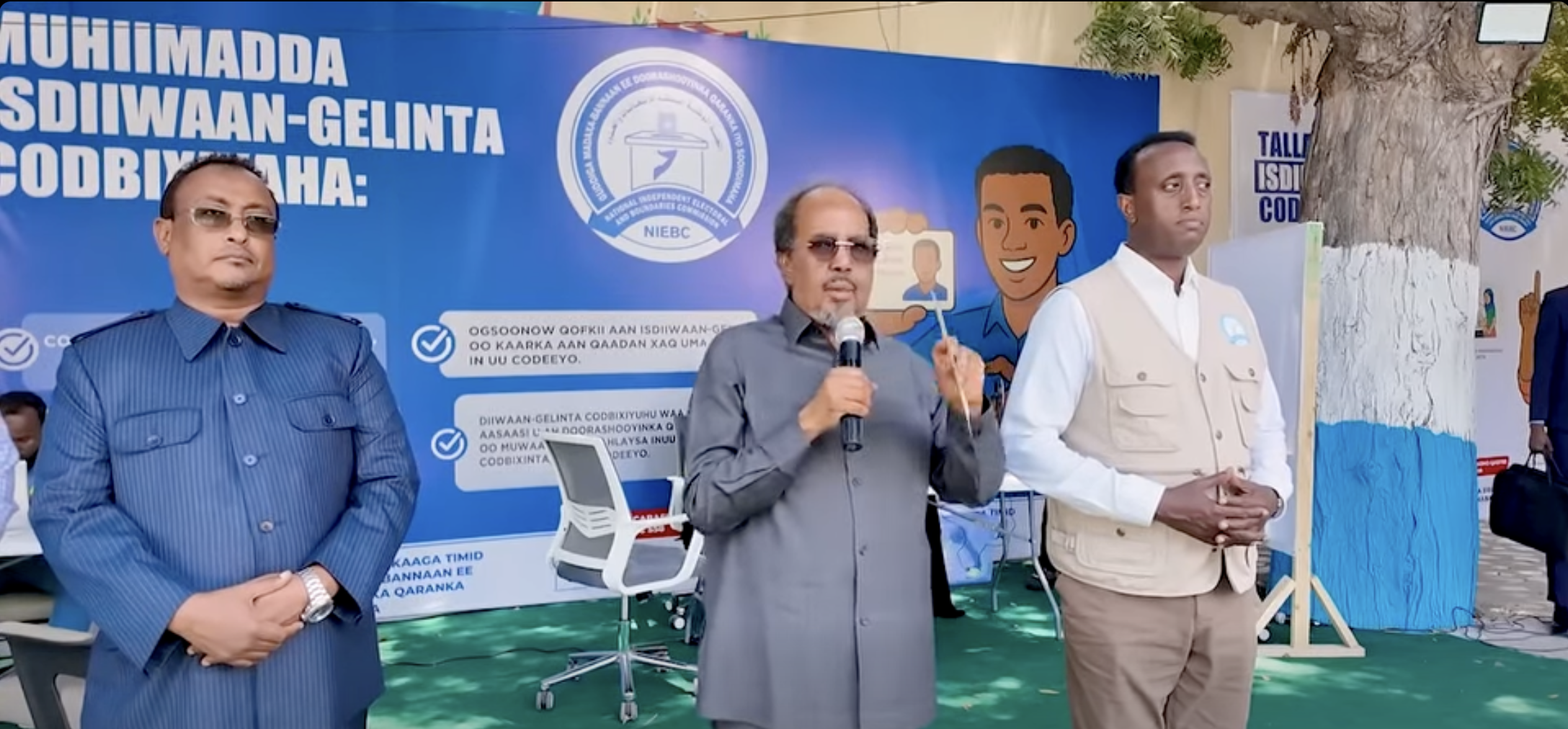
MOGADISHU (Kaab TV) – Police officers, hand-picked candidates and the exclusion of entire districts are casting a shadow over Mogadishu’s upcoming local council elections, as controversy deepens ahead of the December 25 vote.
Serving members of Somalia’s security forces, some with ties to the National Intelligence and Security Agency (NISA), have been seen openly campaigning for President Hassan Sheikh Mohamud’s ruling Justice and Solidarity Party (JSP), despite electoral laws that prohibit police and military personnel from engaging in political activity or contesting elected office.
Among them is Abdirahman Mohamed Aw Ali, a former deputy NISA commander in Middle Shabelle who currently serves as a police officer and district commissioner of Wadajir in Mogadishu.
Colonel Aw Ali was photographed participating in JSP campaign activities as the party competes for seats on the Mogadishu district council.
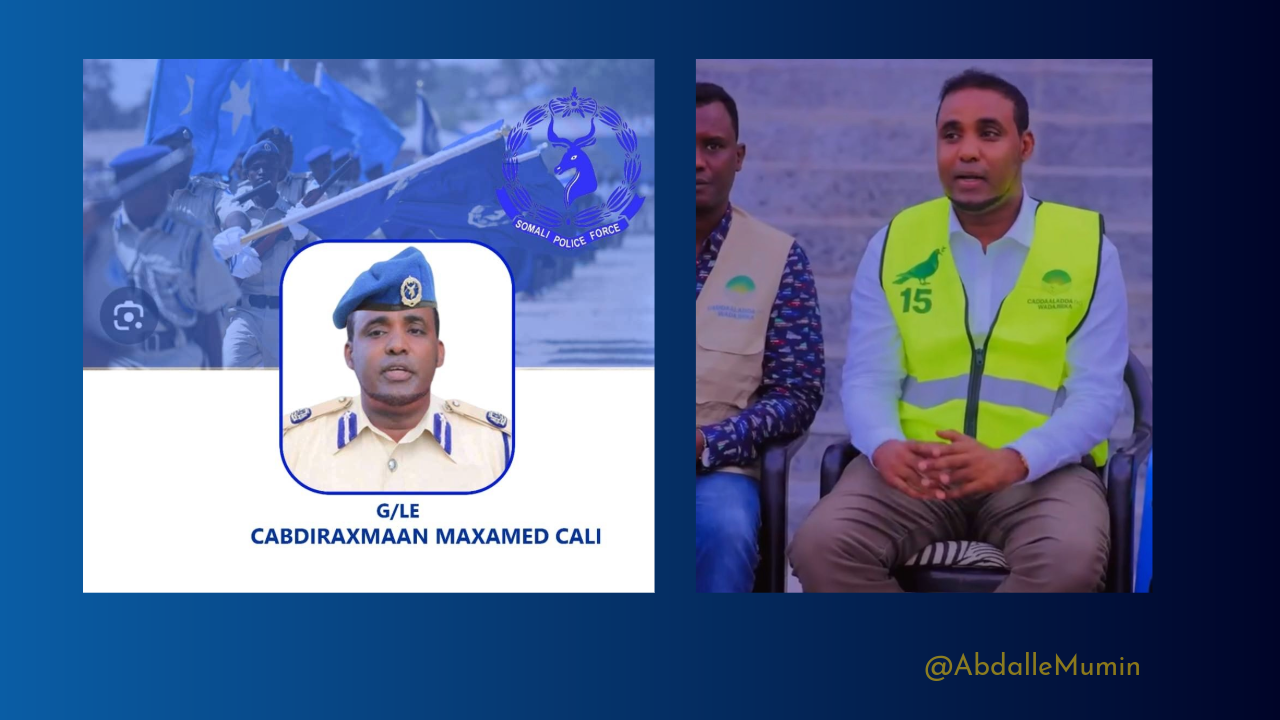
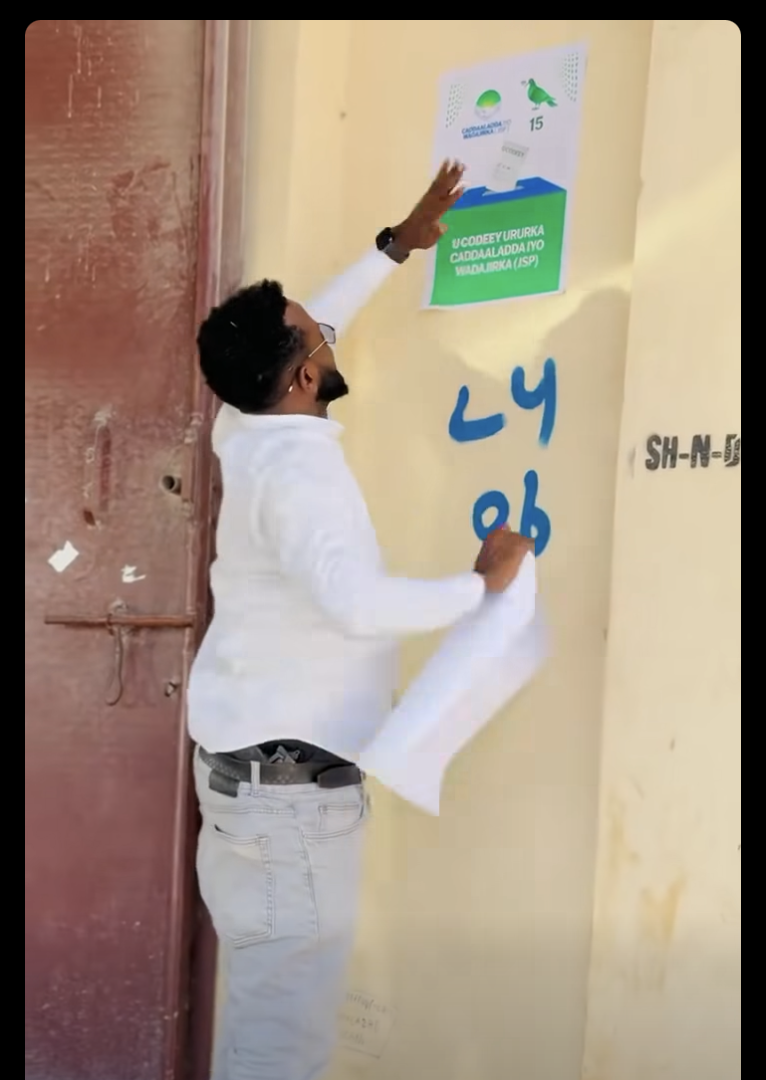
Days earlier, Captain Abdullahi Ali Siyad of the Somali Police Force was also seen campaigning for the JSP.
A video circulated on social media on December 15 showed the officer—who is also the deputy district commissioner of Hawlwadaag—carrying a pistol while placing a JSP campaign poster.
The developments have sparked widespread criticism and renewed questions over the neutrality of police and national intelligence officers.
Just last week, Abdikarim Hassan, chairperson of the disputed National Independent Electoral and Boundaries Commission (NIEBC), publicly stated that security forces are barred from participating in elections.
“The police and the military are not allowed to be involved in the election,” Abdikarim said, despite his own past affiliation with the JSP.
President Mohamud’s administration maintains that the elections represent a historic step toward implementing a one-person, one-vote system for the first time in more than 60 years.
However, opposition groups in Mogadishu, along with the regional states of Puntland and Jubaland, have boycotted the process, accusing the federal government of engineering the vote to entrench the president’s hold on power.
Opposition MP Abdirahman Abdishakur described the process as deeply flawed, saying the presence of armed officers in campaign activities undermines the credibility of the vote.
“This is one-vote one-gun, not a one-person, one-vote election,” he wrote on his official Facebook page.
Opposition leaders are currently holding a three-day conference in Kismayo, the capital of Jubaland, to coordinate their response to the electoral process.
Further controversy surrounds the structure of the election itself. Although 20 organizations have reportedly been registered to contest the polls, only 16 of Mogadishu’s 20 officially recognized districts are allowed to participate for the council election, with no clear explanation provided for the exclusion of the remaining districts.
Election officials have also been accused of quietly accepting nominations of pre-screened candidates allegedly drawn from only three clans, fueling accusations of manipulation and exclusion.
The NIEBC has yet to issue an official statement addressing the involvement of security officers or the broader concerns raised by opposition groups and civil society.
Observers warn that without political consensus and transparency, Mogadishu risks heightened tensions and possible violence, as rival clans and political actors grow increasingly distrustful ahead of the vote.