

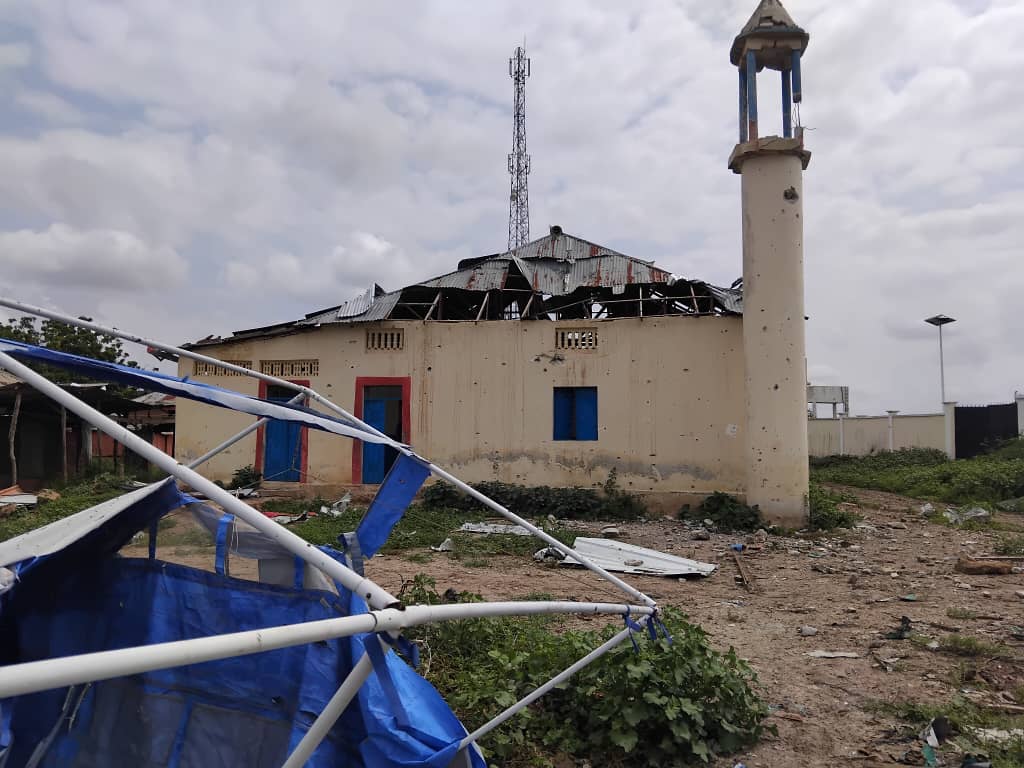

AFGOOYE (KAAB TV) – In August, the African Union Transition Mission in Somalia (AUSSOM), and the Somali National Army has successfully retaken control of the strategic Bariire district in the Lower Shabelle region from the militant group Al-Shabaab.
That was five months after the militant group took over Bariire.
The operation marks a significant victory despite Al-Shabaab has proven to be resilient and has been on a campaign to take over many rural towns across southern Somalia.
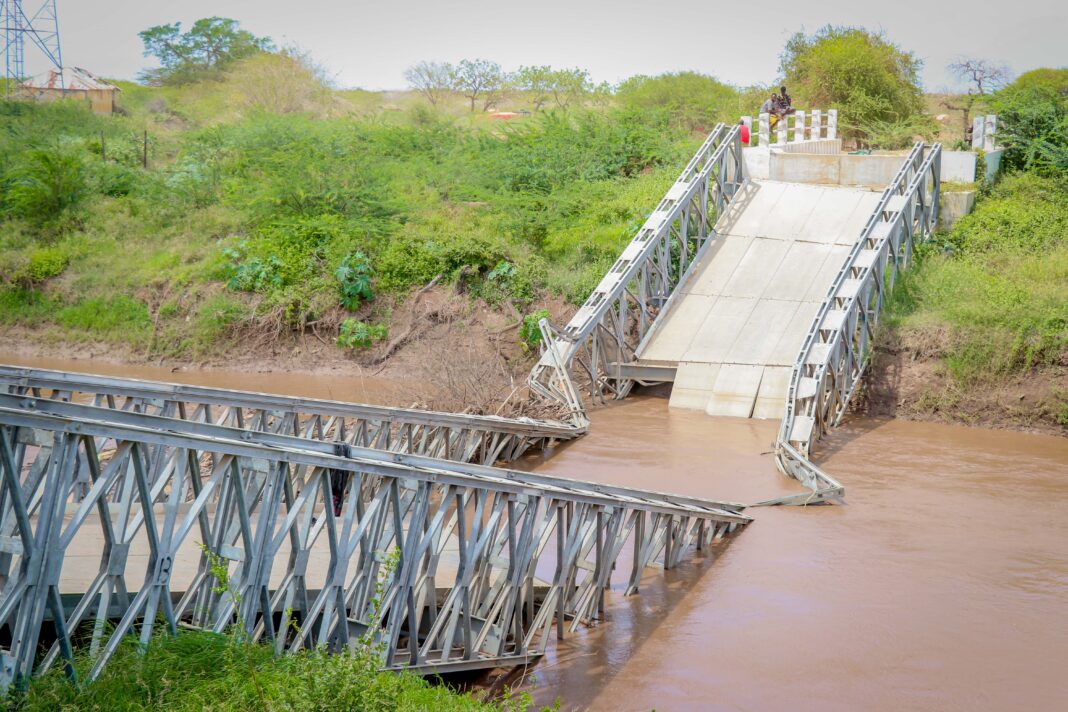
According to official sources, Bariire had been under Al-Shabaab control for several months. During their occupation, the militants reportedly destroyed the Bariire Bridge—an essential infrastructure project previously built with support from international development organizations assisting Somalia.
The destruction of the bridge severely disrupted civilian movement and humanitarian access to the region.
Kaab TV obtained the first images from the scene following the intense operation, which included heavy aerial bombardments and direct ground combat.
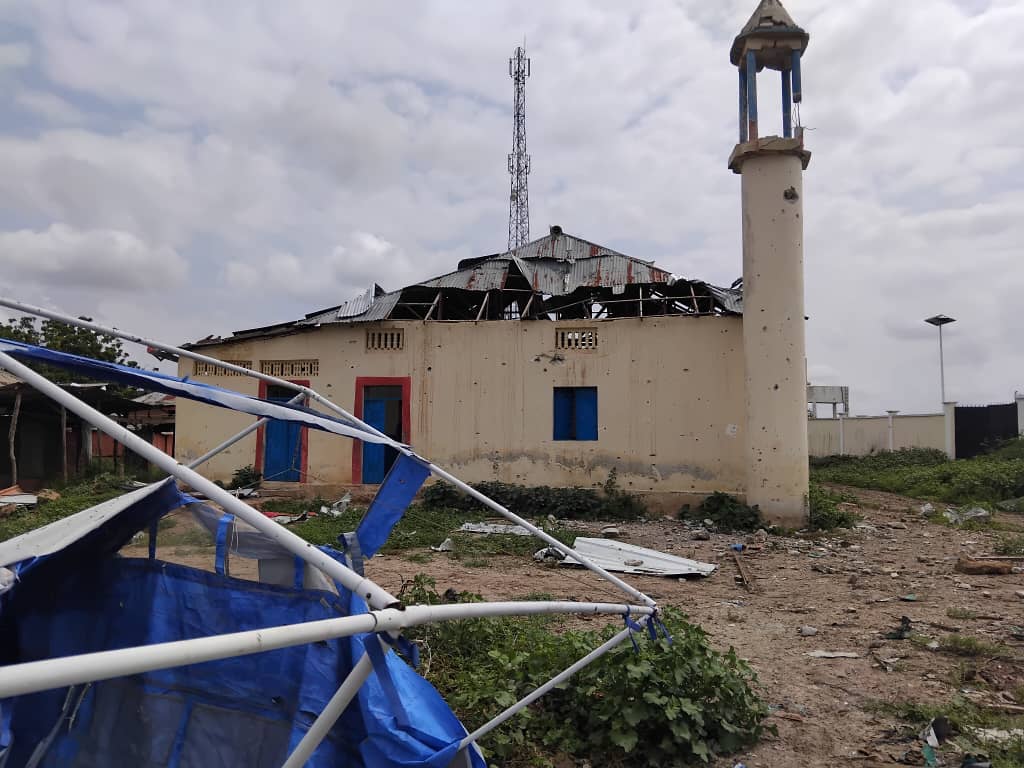
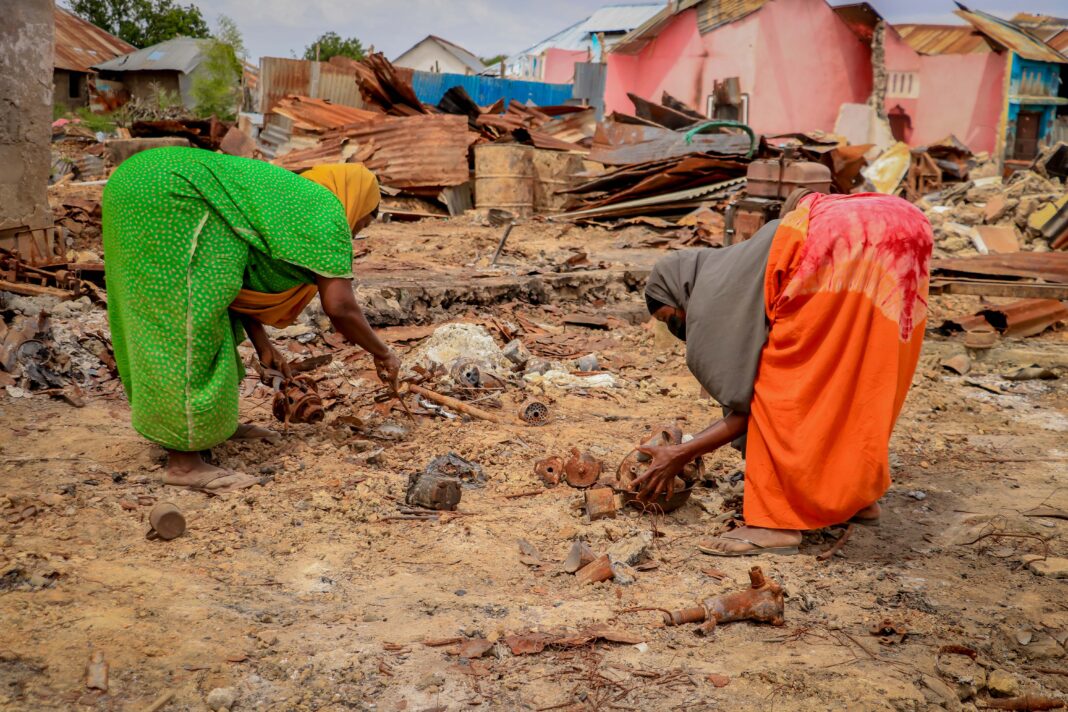
The photos show extensive damage in parts of the district, including what appears to be an airstrike near the Bariire mosque.
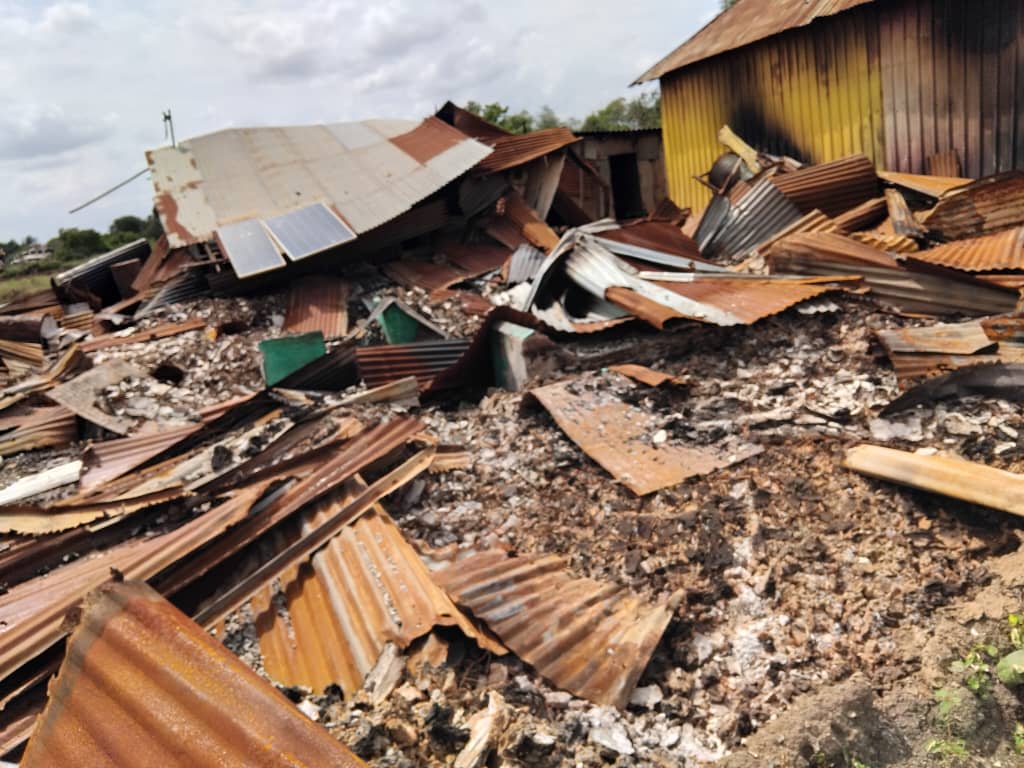
Sources within the Somali government confirmed that the strikes were conducted by pro-government drones as part of coordinated efforts to dismantle Al-Shabaab’s defensive positions.
Throughout their occupation, Al-Shabaab militants had attempted to isolate Bariire by blocking major supply and access routes leading into the district.
Joint AUSSOM forces—comprising primarily Ugandan contingents and Somali troops—launched a multi-front offensive that eventually overwhelmed the insurgents and restored government control.
Following the liberation, local residents who had fled the fighting have begun returning to their homes.
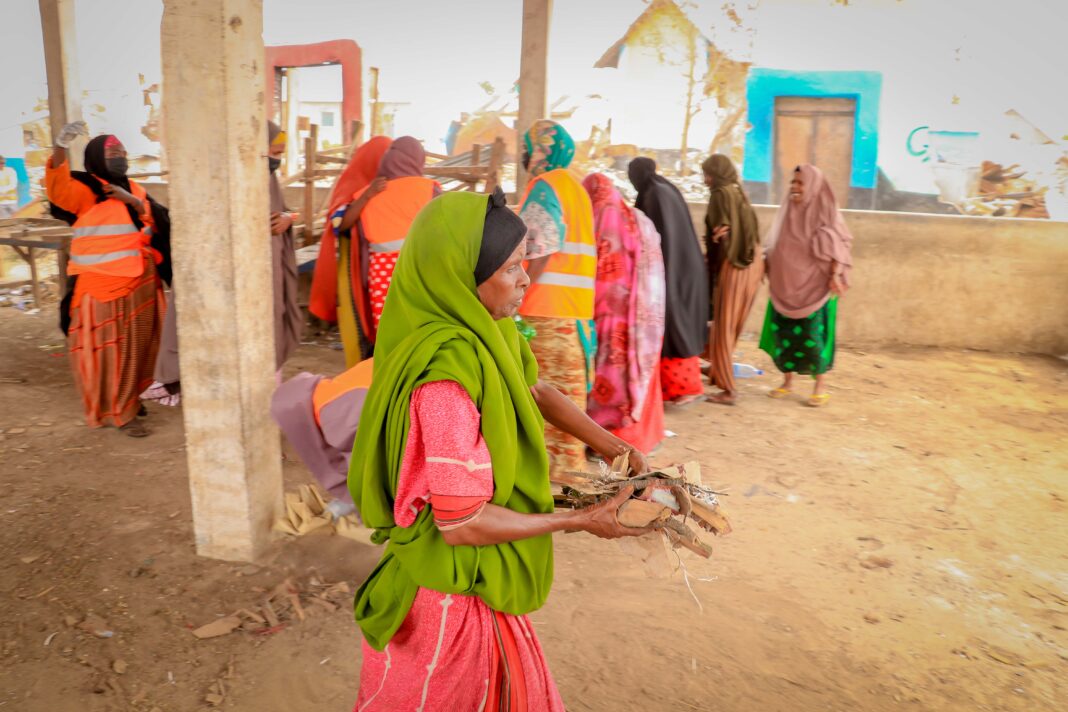
Barire women doing cleaning work in Barire. | Photo taken in October, 2025.
Women from Bariire have taken the lead in cleaning the district’s main market and public areas, helping to restore a sense of normalcy after months of instability and destruction.
Officials from both the Somali government and AUSSOM have pledged to continue stabilization efforts in the area, including the restoration of key infrastructure, the reopening of schools and health centers, and the provision of humanitarian assistance to displaced families.