


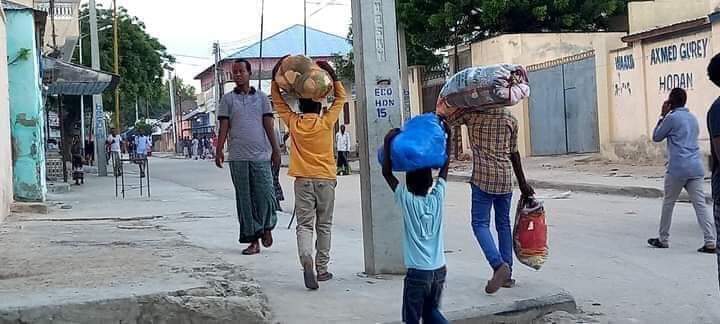


MOGADISHU (KAAB TV) – A staggering 142,000 people have been forcibly displaced across Somalia this year, with the vast majority — approximately 81% — having been evicted from neighborhoods in the capital city, Mogadishu, according to a report released by the United Nations Office for the Coordination of Humanitarian Affairs (OCHA).
The report highlights widespread evictions, particularly concentrated in the districts of Hodan, Yaaqshid, Wadajir, Bondheere, and Dayniile. Most of those displaced have been left homeless, with no access to alternative shelter, basic services, or livelihoods. Many now live in informal camps on the outskirts of the city, in conditions described by aid workers as dire and rapidly deteriorating.
The evictions were carried out under the current administration of President Hassan Sheikh Mohamud, reportedly to facilitate what government officials claim is the need to prepare the capital for upcoming democratic elections.
However, human rights organizations and civil society groups have criticized the government’s actions, citing a lack of transparency, legal oversight, and humanitarian planning.
According to the OCHA report, much of the land cleared through these evictions has been redistributed to private commercial interests.
Sources allege that businessmen were granted access to the vacated land for minimal fees, and concerns have been raised that these transactions bypassed national treasury protocols, raising questions about governance, corruption, and the rule of law.
Despite the scale of the displacement, no national policy or strategy has been introduced to provide for the resettlement or rehabilitation of the affected communities. Aid groups say this has left thousands vulnerable, particularly women, children, and the elderly.
On his return to Mogadishu yesterday, President Hassan Sheikh Mohamud was welcomed by supporters at the airport, arriving aboard an aircraft said to be donated by the State of Qatar.
While the president’s arrival was celebrated by some, critics note that there was no mention of the humanitarian crisis unfolding in the capital, nor any acknowledgment of the people left without homes due to government-backed evictions.
Humanitarian organizations are now calling on the Somali government and international donors to take urgent steps to address the crisis, ensure accountability in land redistribution, and develop a sustainable resettlement plan for the displaced population.