

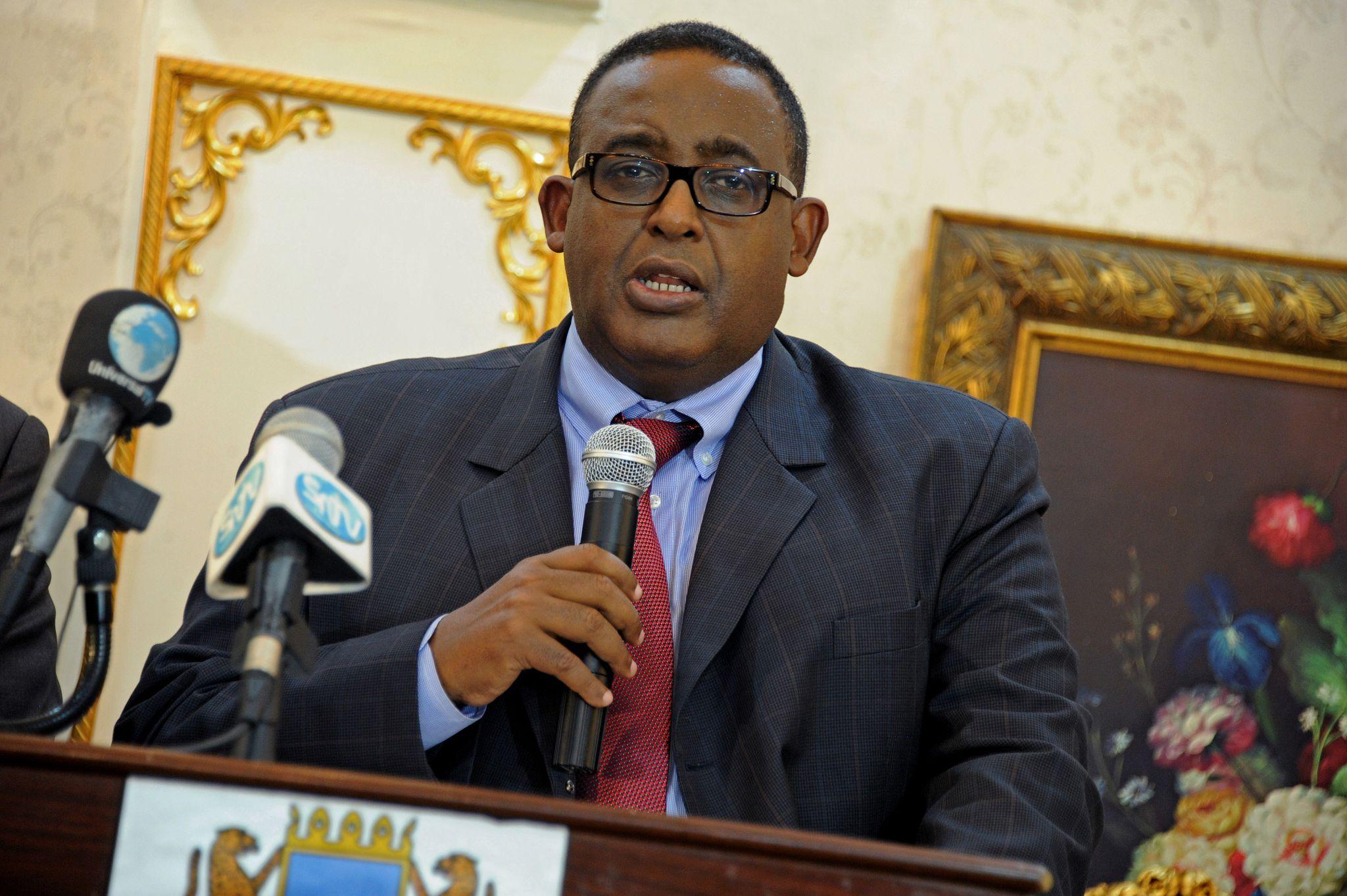

Former Somali Prime Minister Omar Abdirashid Ali Sharmarke has warned that the country’s escalating political divisions could lead to armed confrontation if political leaders fail to reach an agreement through dialogue.
He said Somalia’s greatest immediate risk was that disputes which could still be resolved politically might spiral out of control, triggering further instability, violence and deeper divisions.
Sharmarke placed primary responsibility on the Federal Government, urging it to assess the situation carefully and pursue a meaningful political settlement before domestic grievances and local conflicts become entangled with the broader campaign against militant groups.
The former prime minister’s remarks reflect growing concerns that Somalia’s political disagreements could move beyond negotiations and political rivalry into a security crisis involving government forces and other armed groups.
He argued that the current disputes are not beyond resolution but could become increasingly dangerous if political actors remain entrenched in their positions and abandon dialogue and compromise.
His warning comes as Somalia faces disagreements over constitutional amendments, the electoral framework, the powers of state institutions and relations between the federal government and several regional administrations.
The federal government and opposition politicians remain divided over the country’s political direction, the organisation of future elections and changes to the constitution.
These disagreements have also strained relations between Mogadishu and some federal member states, with political statements and actions highlighting the widening differences.
A report published by Chatham House on October 16, 2026, warned that domestic political divisions and competition among regional powers could further complicate Somalia’s situation and increase the risk of prolonged conflict.
It also highlighted the possibility that political instability could create opportunities for armed groups operating in the country.
Sharmarke specifically cautioned against allowing political grievances and local conflicts to become intertwined with the wider war against militant organisations.
The concern is particularly significant because Somalia continues to fight Al-Shabaab, a campaign that requires political coordination and security cooperation between the federal government, regional administrations and local communities.
If government forces or armed groups aligned with rival political interests turn against one another, resources and personnel intended for counterterrorism operations could instead be diverted towards internal confrontations.
Such clashes could also lead to civilian displacement, loss of life and property, disruption of public services and declining public confidence in state institutions.
A June 2026 report by the European Union Agency for Asylum documented security incidents and political violence in Somalia during the period covered by its assessment, identifying political and clan-related disputes among the factors contributing to conflict.
Sharmarke’s warning comes amid renewed debate over Somalia’s constitutional and political arrangements.
Recent developments surrounding the Supreme Court’s ruling on presidential term limits and constitutional changes have further highlighted the need for an agreement on the country’s political direction.
The ruling has added to tensions over the powers of government institutions and the arrangements for future elections, making negotiations between political stakeholders increasingly important.
Sharmarke has argued that the federal government carries the greatest responsibility for addressing the crisis and should take a balanced approach to finding a genuine solution.
However, a lasting settlement would also require opposition groups, federal member states, politicians and community leaders to engage in negotiations and demonstrate a willingness to compromise in the interests of national stability.
Political and constitutional disagreements must be resolved through legal and democratic processes rather than military force. The national security forces should also be kept out of political rivalries.
The central question is whether Somalia’s leaders will take practical steps to ease tensions or allow the disputes to continue, with potentially serious consequences for national security and political cohesion.
Sharmarke’s warning underscores the risks of allowing disputes that could be settled through political engagement to develop into armed confrontation.
Given Somalia’s history of prolonged conflict and state collapse, preventing a new cycle of violence remains a major challenge for the country’s political leadership.