


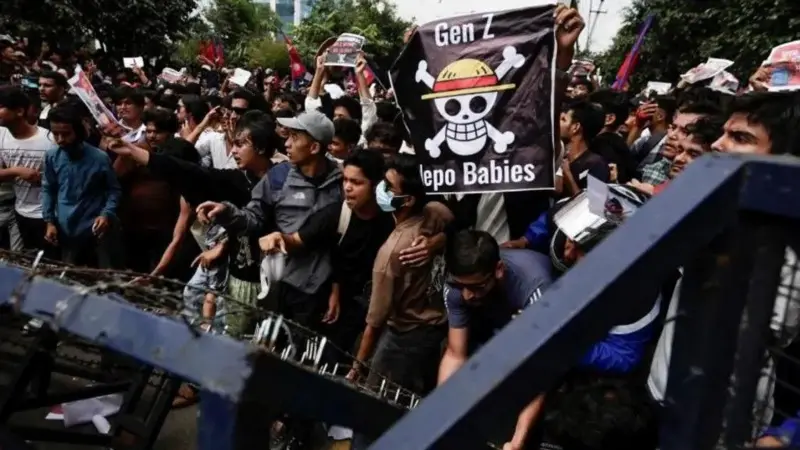


Nepal (KAAB TV) – In response to nationwide unrest following a controversial social media ban, the Government of Nepal convened an emergency meeting of the Council of Ministers on Monday. The decision to block access to popular platforms like Facebook, YouTube, and Instagram had sparked widespread protests, culminating in violent riots that left at least 19 people dead and nearly 100 others injured.
The protests, which began shortly after the ban was implemented last week, escalated quickly as demonstrators clashed with security forces in several major cities, including Kathmandu, Pokhara, and Biratnagar. The unrest has raised serious concerns about freedom of expression, government overreach, and the country’s fragile political stability.
Nepal’s Minister for Communications and Information Technology, Prithvi Subba Gurung, addressed the media following the emergency meeting. Expressing sorrow over the loss of life and the injuries sustained, Gurung offered a public apology and announced an immediate reversal of the ban.
“We deeply regret the violence that has unfolded over the past few days. Our intention was never to harm the people but to protect the nation from the spread of harmful and misleading content,” Gurung stated. “Effective immediately, access to social media platforms will be restored.”
The minister defended the government’s initial decision, citing concerns over misinformation, disinformation, and online incitement as primary reasons for the ban. Gurung emphasized the government’s responsibility to safeguard the moral and cultural values of Nepal, particularly amid rising instances of digital manipulation and online abuse.
However, the ban had far-reaching consequences, especially for young entrepreneurs, influencers, content creators, and small businesses that rely heavily on social media platforms for income and outreach. Many of these individuals had expressed outrage and frustration over the sudden move, which disrupted their livelihoods and daily communication.
“Social media is not just entertainment anymore — it’s an essential tool for education, business, and personal expression,” said Anil Thapa, a digital marketer based in Kathmandu. “Blocking it was like shutting down the economy for thousands of people.”
International human rights organizations and local advocacy groups had also condemned the ban, calling it an infringement on digital rights and freedom of expression.
While the government has now lifted the restrictions, many fear that this may not be the last attempt to control online activity in the country. Civil society groups are calling for clearer regulations and public consultation before any future digital policies are enacted.
The government has promised to launch an independent inquiry into the events that led to the fatalities and injuries during the protests and has urged citizens to exercise restraint and avoid spreading rumors as tensions begin to ease.