


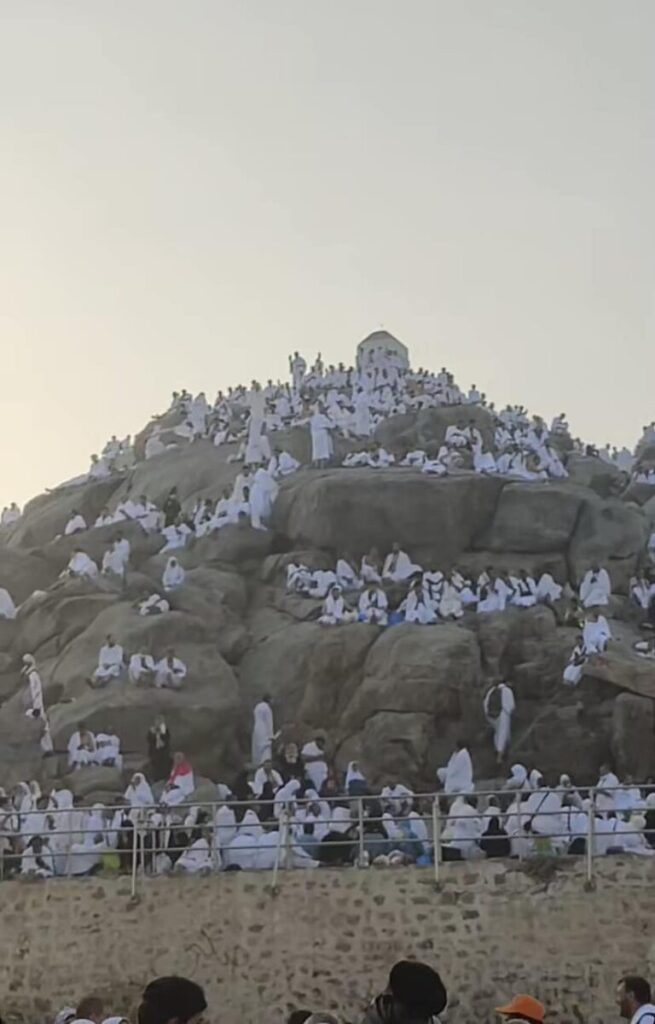


MECCA (Kaab TV) – Nearly two million Muslim pilgrims from around the world gathered Thursday at Mount Arafat to perform the most important ritual of the annual Hajj pilgrimage, marking the spiritual climax of one of the largest religious gatherings on earth.
Pilgrims dressed in white garments streamed toward the plains of Arafat from the holy city of Mecca, where they are expected to remain in prayer, reflection, and supplication until sunset on the ninth day of Dhul-Hijjah in the Islamic calendar.
The Day of Arafat is regarded as the holiest day of Hajj and among the most sacred days in Islam. It is on this day that Prophet Muhammad (Peace Be Upon Him) delivered his Farewell Sermon more than 1,400 years ago during his final pilgrimage.
Islamic tradition places immense spiritual importance on standing at Arafat, with the Prophet famously declaring, “Hajj is Arafat,” emphasizing that the pilgrimage is incomplete without this central ritual.
At midday, pilgrims are expected to combine and perform the Dhuhr and Asr prayers before listening to the annual Hajj sermon delivered to worshippers gathered on the plains. After sunset, pilgrims will leave Arafat and travel to Muzdalifah, where they will combine the Maghrib and Isha prayers and spend the night collecting pebbles for the symbolic stoning ritual in Mina.
Religious scholars describe the Day of Arafat as a day of mercy, forgiveness, and acceptance of prayers. Muslims believe it is among the days when Allah frees the greatest number of believers from Hellfire and forgives the sins of those who sincerely repent.
Pilgrims spent the day reciting verses from the Qur’an, making personal prayers, and seeking spiritual renewal. Muslims around the world who are not performing Hajj are also encouraged to fast on the Day of Arafat, a practice considered highly virtuous in Islam.
Saudi authorities have implemented one of the kingdom’s largest security and logistical operations to manage the massive crowds during this year’s pilgrimage. Thousands of police officers, emergency personnel, healthcare workers, and volunteers have been deployed across the holy sites to maintain order and assist pilgrims.
The Ministry of Hajj and Umrah said advanced technologies including artificial intelligence systems, crowd-monitoring cameras, multilingual digital guidance services, and smart transportation networks are being used to improve safety and facilitate the movement of pilgrims between the holy sites.
Authorities have also expanded medical and cooling services amid concerns over high temperatures, following deadly heatwaves during previous Hajj seasons that caused hundreds of heat-related illnesses and deaths.
This year’s pilgrimage marks one of the largest Hajj gatherings since the COVID-19 pandemic severely restricted attendance between 2020 and 2022. Saudi officials said more than 1.5 million pilgrims arrived from outside the kingdom, while hundreds of thousands more traveled from within Saudi Arabia.
The Hajj pilgrimage is one of the five pillars of Islam and is required once in a lifetime for all Muslims who are physically and financially capable of undertaking the journey.
The gathering at Arafat comes ahead of the global celebration of Eid al-Adha, which commemorates Prophet Ibrahim’s willingness to sacrifice his son in obedience to God’s command.
Pilgrims are expected to continue the remaining Hajj rituals in Mina over the coming days before concluding their pilgrimage with farewell prayers at the Grand Mosque in Mecca, home to the Kaaba, Islam’s holiest site.