

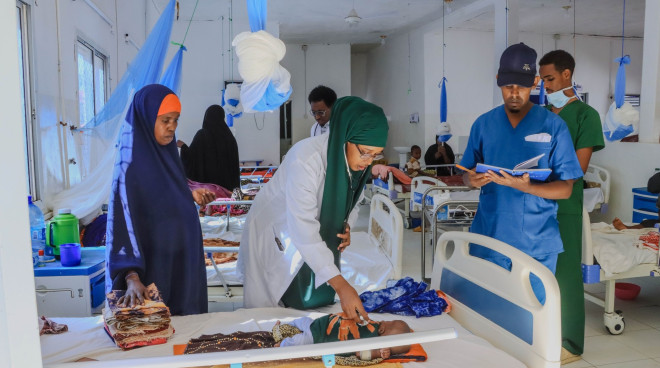
MOGADISHU (Kaab TV) – Doctors Without Borders (Médecins Sans Frontières, MSF) has warned that Somalia is facing a severe health and nutrition emergency driven by repeated droughts, soaring water prices, and a sharp decline in humanitarian assistance.
MSF said the combined impact of prolonged drought and dwindling donor funding has disproportionately affected internally displaced people and vulnerable communities in the Bay, Bakool, and Mudug regions, where the organization operates. MSF teams are reporting alarming increases in malnutrition and the spread of preventable diseases such as measles, diphtheria, and acute watery diarrhea.
In November 2025, the Federal Government of Somalia declared a national drought emergency after the country experienced four consecutive failed rainy seasons. United Nations reports indicate that by the end of 2025, around 4.4 million people could face severe food insecurity, including 1.85 million children under the age of five who are at risk of acute malnutrition.
MSF also noted that more than 3.3 million people have already been displaced from their homes, most of them living in overcrowded camps in Baydhabo and Mudug. The decline in humanitarian funding—now at its lowest level in a decade—has led to the closure of more than 200 health and nutrition facilities since the beginning of 2025.
In Baydhabo, MSF reported a 48 percent increase in cases of severe acute malnutrition among children in October 2025 compared to the previous month. During the same period, 189 children were treated for suspected measles, 95 percent of whom had never been vaccinated. In Mudug region, therapeutic feeding centers recorded a 35 percent rise in admissions.
“We are seeing children arriving at our hospitals in extremely critical condition after days-long journeys, without access to food or water,” said Allara Ali, MSF’s Project Coordinator in Somalia. “The drought has not only dried up water sources, but has also destroyed the livelihoods that families depended on.”
The drought has also severely limited access to clean water. MSF reported that the price of a 200-liter barrel of water has risen to between $2.50 and $4.00 in Baydhabo and Mudug—far beyond what many displaced families can afford.
“We cannot afford to buy water. Both food and water are scarce for us,” said Kaltuma Kerow, a 35-year-old mother living in an internally displaced persons camp in Baydhabo. “We are afraid of diseases like cholera.”
In response to the crisis, MSF launched an emergency water trucking operation in Baydhabo in December 2025, delivering more than six million liters of clean water to 17 displacement sites by mid-January. However, the organization stressed that current needs far exceed its existing capacity.
“This crisis was predictable and largely preventable,” said Elshafie Mohamed, MSF’s Head of Mission in Somalia. “The current humanitarian response is at its lowest level in the past ten years.”
MSF has urged international donors and Somali authorities to urgently release funding to scale up nutrition, vaccination, and water programs, and to invest in long-term, climate-resilient solutions to prevent widespread loss of life in the coming months.