


Mogadishu (KAAB TV) – Political tensions are rising across Somalia as opposition leaders and civil society organizations express growing concerns about the federal government’s commitment to holding nationwide elections based on a one-person, one-vote system—a long-promised shift toward greater democratic legitimacy. This system was expected to be implemented before the current government’s mandate ends in 2026.
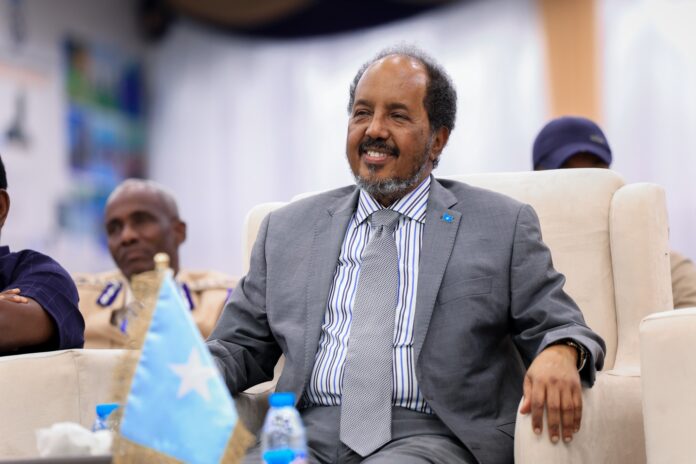
President Hassan Sheikh Mohamud has repeatedly emphasized his administration’s commitment to conducting elections within the current constitutional timeframe. He has publicly vowed that there will be no extension of his term beyond the stipulated period and that the next electoral process will mark a historic transition to universal suffrage.
Despite these assurances, critics argue that the government has yet to present a clear and actionable timetable for the electoral process, particularly the referendum required to adopt the new voting system. If held, it would be Somalia’s first such national referendum in over 50 years.
Opposition parties, along with leaders from the semi-autonomous regions of Puntland and Jubbaland, have accused the federal government—particularly Villa Somalia—of deviating from previously agreed political frameworks that were designed to guide the transition to the one-person, one-vote model.
They warn that time is running dangerously short. With roughly eight months remaining in the government’s term, key electoral milestones, including local government elections, have yet to commence. This delay has sparked widespread skepticism about the federal government’s true intentions.
Opposition leaders suspect that the administration is deliberately stalling election preparations under the guise of constitutional reforms and political consultations. Some even allege that the presidency may be covertly laying the groundwork for a potential extension of its term—a move that could ignite further instability.
“The ongoing discussions around constitutional amendments appear more like a distraction than genuine reforms,” one opposition spokesperson told KAAB TV. “We believe the government is using these debates to delay the real work needed for credible elections.”
The federal government has not officially responded to these allegations. However, the mounting mistrust and political friction have put Somalia’s fragile democratic transition at risk.
Political analysts interviewed by Shabelle Radio have voiced deep concern about the situation, warning that the failure to reach a broad political consensus soon could plunge the country into another prolonged period of political uncertainty and turmoil.
With national and regional leaders at odds, and no clear electoral roadmap in sight, Somalia finds itself at a critical crossroads. The next steps taken by President Mohamud and his government will likely determine whether the country advances toward democratic consolidation—or regresses into deeper political crisis.