

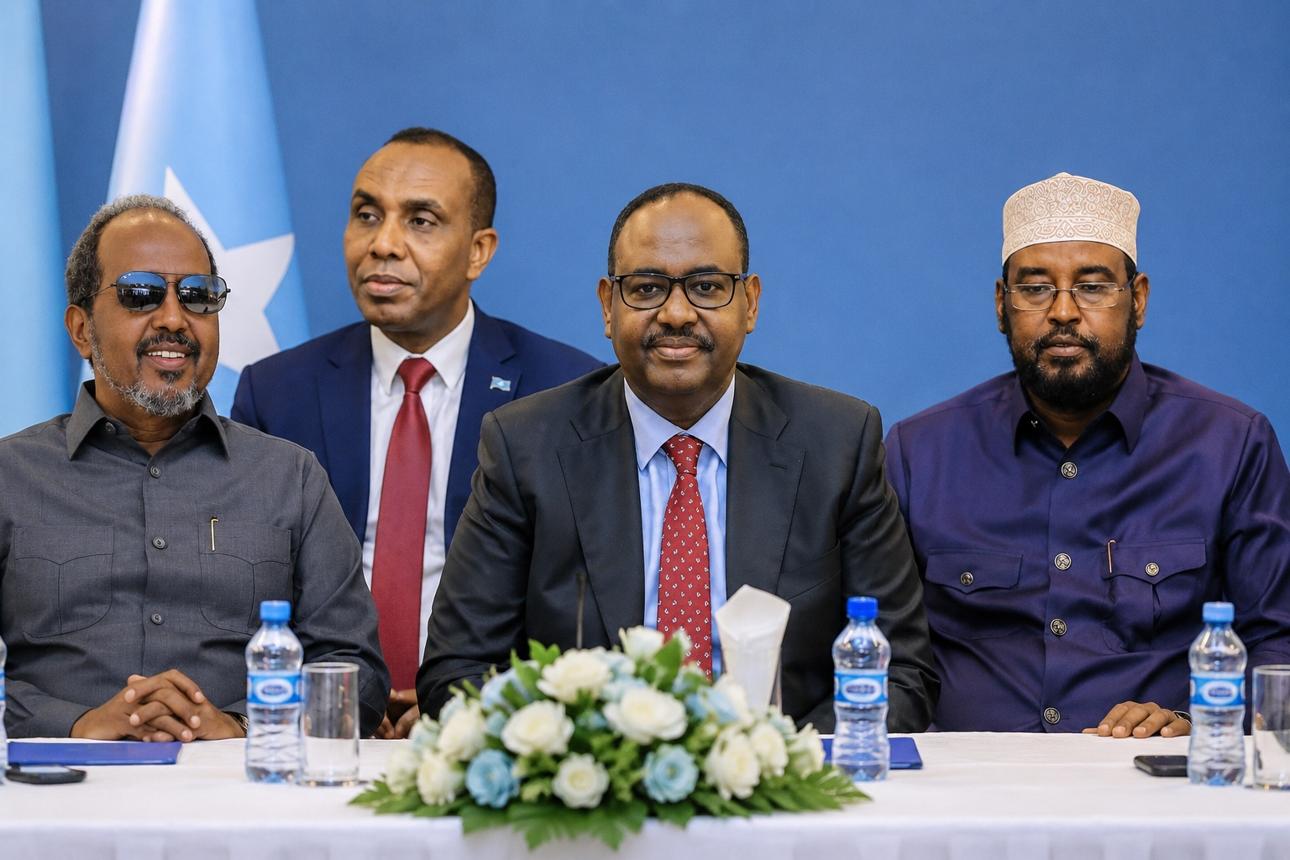

Political tensions between Somalia’s Federal Government and the regional administrations of Puntland and Jubaland are intensifying, with the three sides divided over constitutional amendments, elections and the distribution of powers between the central government and federal member states.
Puntland and Jubaland have opposed the Federal Government’s constitutional changes and proposed electoral framework, arguing that major national decisions should be based on an agreement involving all political stakeholders and regional administrations.
The Federal Government, meanwhile, maintains that constitutional reforms and the introduction of direct elections are necessary steps towards strengthening Somalia’s governance system and allowing citizens to choose their representatives through the ballot box.
The dispute has also weakened political cooperation between Mogadishu and the two regional administrations.
The presidents of Puntland and Jubaland have aligned their positions through the Somali Future Council, which is calling for an agreed electoral framework and inclusive negotiations involving the country’s main political stakeholders.
Disagreements over the terms of government institutions and the proposed electoral timetable have further complicated the situation.
The Federal Government has announced plans for elections in 2027, but opposition groups and the leaders of Puntland and Jubaland have questioned the legal basis of the timetable and the process through which it was developed.
The political rift could also affect national security, particularly cooperation between federal and regional forces fighting Al-Shabaab.
There are concerns that divisions among political leaders could undermine coordination and create opportunities for armed groups to exploit the situation.
Disputes over port agreements and relations with foreign countries have further exposed differences between Mogadishu and some federal member states.
These disagreements have reinforced calls for a clearer political and constitutional settlement defining the respective powers and responsibilities of the Federal Government and regional administrations.
Although the parties have at various times expressed willingness to engage in dialogue, no comprehensive political agreement has yet been reached to resolve the outstanding disputes.
Somalia faces growing pressure to establish a meaningful dialogue on constitutional arrangements, elections and power-sharing.
Without an agreed framework, the political dispute could place further strain on national security, political unity and the stability of the country.