


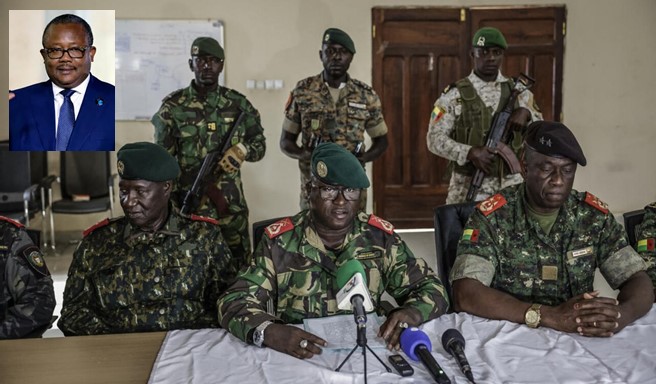


Conakry (KAAB TV) – On November 26, 2025, army officers in Guinea-Bissau announced they had seized power, deposed the sitting president, and suspended the ongoing electoral process.
The officers — calling themselves the “High Military Command for the Restoration of Order” — declared that all state institutions were suspended “until further notice.” Borders were closed, media and electoral-related operations halted, and a curfew imposed.\
Following the takeover, on Thursday November 27, 2025, Horta Nta Na Man was sworn in as transitional president. The swearing-in ceremony took place at military headquarters, with top army brass present, and the junta said he will lead for a 12-month transitional period.
The coup came just one day before provisional results were expected from a tightly contested presidential election held on November 23, 2025. Both the incumbent president Umaro Sissoco Embaló and main challenger Fernando Dias had declared victory — a deadlock that escalated political tensions.
On Wednesday, gunfire erupted near key locations including the presidential palace and the building of the national electoral commission, signaling a swift deterioration of security as troops advanced.
When announcing the takeover, military leaders accused certain politicians — as well as a “well-known drug-lord” and foreign actors — of plotting to manipulate the election outcome. They provided no evidence.
Regional bodies and foreign governments have condemned the coup. The African Union (AU), via its Commission Chair Mahmoud Ali Youssouf, denounced the military takeover, calling it an unconstitutional change of government, and demanded the immediate release of detained officials.
The election-observation missions of the AU and the Economic Community of West African States (ECOWAS), along with the West African Elders Forum, condemned the halt of the electoral process as a blatant disruption of the democratic path. They urged restoration of constitutional order.
Some neighbouring states including Ghana and the government of Nigeria have publicly expressed concern, warning that the coup threatens regional stability and undermines democratic norms.
With a transitional military-led government in place, the immediate future of Guinea-Bissau is unclear. The electoral process has been suspended, and provisional results that were expected are now delayed indefinitely — casting doubt on whether the vote will ever be completed or recognized.
There is concern that the coup may deepen political instability in a country long plagued by turbulence. Historically, state institutions have been fragile, and repeated coups have eroded trust in governance.
Regional pressure — from the AU, ECOWAS, and West African states — may increase, potentially leading to sanctions or demands for a return to constitutional rule. But much depends on whether the military junta will commit to a credible process for restoring democratic order.
African Union chairperson Mahmoud Ali Youssouf condemned the coup in a statement, and called for the release of Embalo “and all detained officials.”