


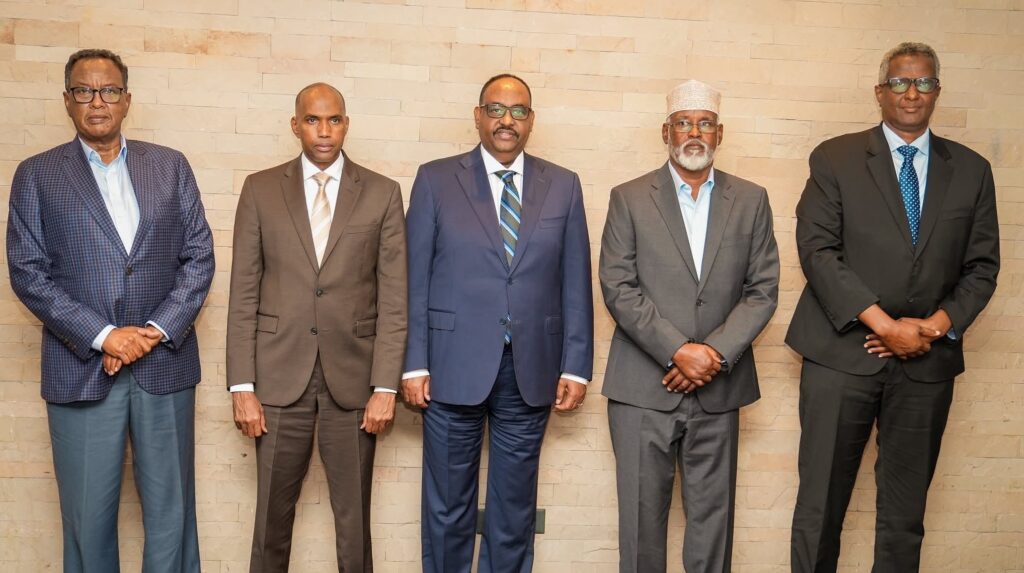


KISMAYO (Kaab TV) – Jubaland is hosting a major conference to discuss the future of governance and elections in Somalia, which will include participation from opposition groups, the Puntland regional administration, and various politicians.
Kaab TV has learned that politicians from the Samatabihinta Forum, which includes former national leaders, are also preparing the agenda for the Kismayo conference, which Jubaland has organized.
The Puntland administration has likewise prepared a high-level delegation that will travel to Kismayo ahead of December 10, the scheduled opening date of the conference.
2026 Elections
The main agenda of the Kismayo conference will be the announcement of a unified electoral committee for Somalia.
If announced in Kismayo, this electoral committee would differ from the one established by President Hassan Sheikh Mohamud, which is currently rejected by opposition groups and some federal member states.
Sources close to the Jubaland presidency told Kaab TV that the Kismayo conference will set the political direction for Somalia in 2026, at a time when the country faces significant political and security uncertainty, as the federal government is confronting strong opposition.
The Kismayo conference is not limited to the 2026 elections; sources say it will also review the federal government structure and power-sharing mechanisms.
This move comes after concerns that President Hassan Sheikh’s administration in Mogadishu has taken actions that could alter the provisional federal constitution.
Since 2004, Somalia has operated under a federal system with elections held every four years. However, opposition politicians and the Puntland and Jubaland administrations suspect that the current Villa Somalia leadership has become a threat to the federal system that allows clans to share power and gives each region its own autonomy.
Meanwhile, reports from Villa Somalia indicate that there are election-related activities underway to establish local councils in only 16 districts of the capital.
This election process is part of the controversial plan pursued by President Hassan Sheikh over the past two years, which he describes as the implementation of one-person, one-vote elections, even though not all eligible voters across the country have been registered.