


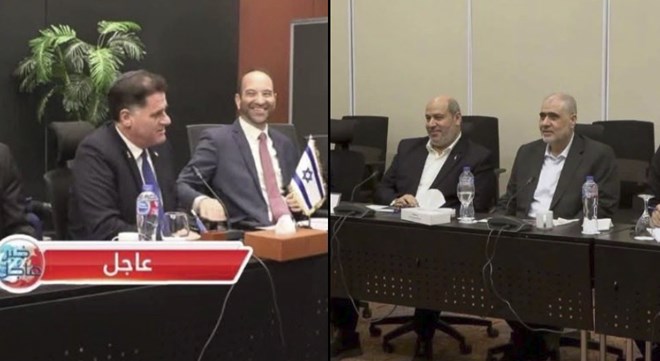


CAIRO (KAAB TV) – In a major diplomatic breakthrough, Israeli and Hamas negotiators have reportedly reached a preliminary ceasefire agreement following intensive mediation talks held in Sharm El-Sheikh, Egypt. The negotiations were facilitated by a coalition of international actors, including the United States, Egypt, Qatar, and Turkey.
The ceasefire marks a potential turning point in a devastating two-year conflict that has gripped the Gaza Strip, resulting in widespread destruction, thousands of casualties, and a dire humanitarian crisis.
While details of the accord remain limited, early reports indicate that the agreement includes two key provisions: a complete withdrawal of Israeli forces from the Gaza Strip and a large-scale exchange of prisoners between the two parties.
Details of the Agreement
According to a press statement issued by Hamas, the ceasefire was reached after prolonged and difficult negotiations with the Israeli delegation.
The talks are said to have focused on halting hostilities, easing the blockade on Gaza, and opening corridors for humanitarian aid.
Key components of the preliminary agreement reportedly include:
-
Full Withdrawal of Israeli Forces: The Israeli military is expected to gradually withdraw from areas it has occupied during the recent escalations in Gaza.
-
Prisoner Exchange: Both sides have agreed to exchange a significant number of detainees, including Palestinian prisoners held in Israeli jails and Israeli captives held by Hamas.
-
Opening Humanitarian Channels: The deal is also said to include provisions for the immediate entry of humanitarian aid and medical supplies into the Gaza Strip.
-
Continued Dialogue: Both parties have committed to further negotiations aimed at establishing a permanent truce and addressing core issues of the conflict.
Background and Mediation Efforts
The talks in Sharm El-Sheikh were part of a broader diplomatic initiative involving multiple regional and international stakeholders.
The United States, under its current administration, played a significant role in pushing for a ceasefire, with earlier frameworks inspired in part by previous proposals—some of which date back to the Trump administration’s regional plans.
Egypt and Qatar, longstanding intermediaries in Israeli-Palestinian matters, also played key roles in facilitating dialogue.
The recent escalation in Gaza began two years ago and has led to a catastrophic humanitarian situation. While exact casualty figures vary, estimates from humanitarian organizations suggest that tens of thousands of Palestinians have been killed or injured during Israeli military operations. The Israeli government, for its part, has reported ongoing rocket attacks from Gaza targeting civilian areas, which it cites as justification for its military campaigns.
Independent verification of casualty figures remains difficult due to restricted access to affected areas and conflicting narratives. However, international observers and human rights groups have repeatedly called for de-escalation and accountability for actions taken by both sides.
A Tentative Step Toward Peace
While the agreement represents a glimmer of hope, observers caution that it is only a first step in what is likely to be a long and complex peace process. Ceasefires between Israel and Hamas have historically been fragile, often collapsing under the weight of political pressures, mutual distrust, and acts of violence.
Nevertheless, the international community has welcomed the development as a critical opening for renewed peace efforts and for addressing the urgent humanitarian needs of the Palestinian population in Gaza.
UN Secretary-General António Guterres issued a brief statement calling on all parties to respect the terms of the ceasefire and to “seize this opportunity to move toward a comprehensive and lasting peace.”
Further talks are expected to continue in the coming weeks, with a focus on solidifying the ceasefire, rebuilding Gaza, and exploring broader solutions to the Israeli-Palestinian conflict.