

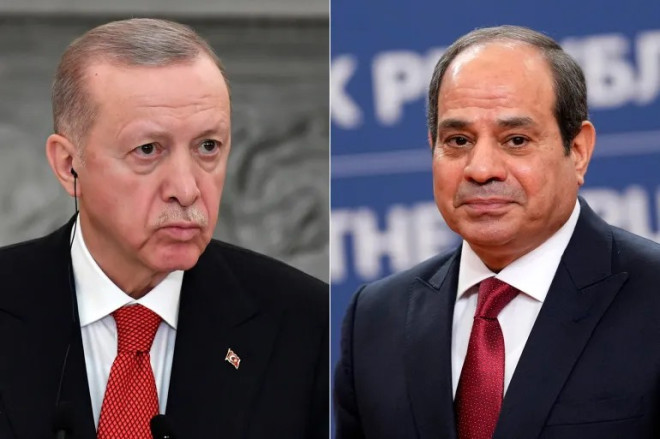

Somaliland President Abdirahman Mohamed Abdullahi “Irro” has accused several countries, including Turkey and Egypt, of conducting diplomatic efforts aimed at preventing Somaliland from gaining further international recognition.
Speaking in New York, President Irro claimed that both countries are among the governments actively opposing Somaliland’s campaign for international recognition and are working to discourage other states from following the path taken by Israel.
His remarks come as Somaliland intensifies its diplomatic outreach following Israel’s recognition of Somaliland in December 2025.
The move made Israel the first United Nations member state to formally recognize Somaliland and triggered strong reactions from Somalia and several countries, including Turkey and Egypt.
According to President Irro, Somaliland is facing a coordinated diplomatic campaign designed to block additional recognition from other nations.
“There are many African and non-African countries engaged in efforts to oppose Somaliland’s recognition,” Irro said, adding that diplomatic pressure had influenced some states that were allegedly considering recognizing Somaliland but have yet to take that step.
The Somaliland leader said Hargeisa would continue pursuing its recognition campaign and expressed confidence that more international support could eventually emerge.
President Irro specifically accused Turkey of lobbying African countries to oppose Somaliland’s recognition efforts.
The allegation comes against the backdrop of Turkey’s long-standing support for Somalia’s sovereignty, unity, and territorial integrity.
Ankara maintains close political, economic, and security ties with the Federal Government of Somalia and has consistently reaffirmed its support for a united Somalia.
In May 2026, Turkey joined other countries in reiterating its support for Somalia’s sovereignty and territorial integrity while opposing actions viewed as undermining the country’s unity.
As a result, the disagreement reflects two fundamentally different positions: Somaliland’s pursuit of international recognition and Turkey’s support for Somalia’s territorial unity.
Egypt’s Position
President Irro also named Egypt among the countries opposing Somaliland’s recognition efforts.
Cairo has repeatedly expressed support for Somalia’s sovereignty and territorial integrity and has publicly criticized Israel’s recognition of Somaliland.
Egyptian Foreign Minister Badr Abdelatty stated in July 2026 that Egypt fully supports Somalia’s unity, sovereignty, and territorial integrity and opposes any actions that could undermine them.
Earlier in May and June 2026, Egypt also criticized Somaliland’s move to establish what it described as an embassy in Jerusalem and reiterated its support for Somalia.
These official statements demonstrate Egypt’s opposition to Somaliland’s recognition. However, Irro’s specific claim that Egypt is actively lobbying other countries against recognizing Somaliland remains a political allegation that has not been independently verified.
A Wider Diplomatic Contest
Turkey and Egypt view the Somaliland issue through the lens of Somalia’s territorial integrity. Both governments argue that unilateral recognition of Somaliland could affect Somalia’s internationally recognized borders and sovereignty.
Turkey has maintained a close partnership with Somalia for more than a decade, while Egypt has significantly expanded its political and security cooperation with Mogadishu in recent years.
The debate over Somaliland’s status extends beyond Somalia and Somaliland themselves. The African Union has consistently supported Somalia’s territorial integrity and has opposed moves toward recognizing Somaliland as an independent state.
Following Israel’s recognition of Somaliland, the African Union Peace and Security Council reaffirmed its support for Somalia’s unity and rejected attempts to alter the territorial framework of the Federal Republic of Somalia.
This position remains particularly significant because Africa is widely viewed as the region where Somaliland hopes to secure broader political support for its recognition campaign.
Somaliland has long argued that its case should be considered unique, citing its separate administration, security institutions, and governance structures since 1991.
Somalia, however, maintains that Somaliland remains part of the country and argues that international recognition would undermine Somalia’s sovereignty and territorial integrity.
Israel’s recognition of Somaliland in December 2025 has pushed the issue into a new phase. Somaliland views the move as evidence that additional countries could eventually follow suit, while Somalia and its allies see it as a challenge to Somalia’s internationally recognized borders.
The recognition has therefore become one of the most contentious issues in regional diplomacy, drawing in governments across Africa, the Middle East, and beyond.
Despite describing what he sees as growing diplomatic resistance, President Irro expressed optimism that Somaliland’s efforts would ultimately succeed.
He claimed that some countries that had shown interest in recognizing Somaliland had delayed or reconsidered their decisions because of diplomatic pressure from opposing states.
His comments highlight the increasingly competitive diplomatic struggle surrounding Somaliland’s status. Hargeisa continues seeking new international supporters, while Mogadishu and its allies work to preserve international backing for Somalia’s territorial integrity.
The dispute is also becoming more closely linked to broader geopolitical competition in the Horn of Africa and the Red Sea region, an area of growing strategic importance due to maritime trade routes, ports, and regional security concerns.
Somaliland argues that its geographic position and security partnerships strengthen its case for recognition. Somalia and its supporters counter that strategic importance does not alter Somaliland’s legal status under international law.
Irro’s remarks underscore how the recognition debate has expanded beyond Hargeisa and Mogadishu, drawing in regional and international actors including Turkey, Egypt, Israel, the African Union, and other governments.
For now, Somaliland continues its campaign for broader recognition, while Somalia and countries supporting its territorial integrity remain committed to opposing further recognition efforts.
The outcome of this diplomatic contest is likely to remain a major issue in Horn of Africa politics for the foreseeable future.