


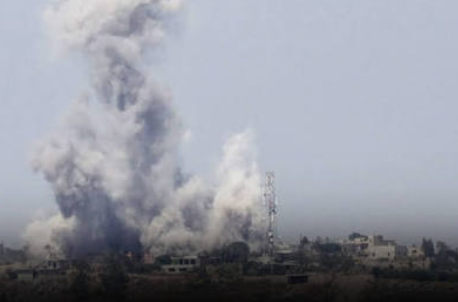


Iran launched retaliatory strikes targeting U.S. military facilities in the Gulf early Wednesday after the United States carried out what it described as “major strikes” against several sites inside Iran and reinstated sanctions on the country’s oil exports, sharply escalating tensions between the two longtime rivals.
According to Iranian state media, the Islamic Revolutionary Guard Corps (IRGC) targeted American military installations in Bahrain and Kuwait in response to the U.S. attacks, which Washington said were launched after Iran allegedly attacked three commercial vessels in the Strait of Hormuz, including oil tankers linked to Qatar and Saudi Arabia.
The IRGC also claimed it had shot down a U.S. military drone during the exchange of hostilities. U.S. officials had not immediately confirmed the claim, and the full extent of the damage from either side’s attacks remained unclear.
The latest military exchange has raised fears that the conflict could spiral into a broader regional war, threatening stability across the Middle East.
The Strait of Hormuz, a critical maritime corridor through which roughly one-fifth of the world’s oil supply passes, has once again become the center of international concern, with renewed violence posing risks to global energy markets and commercial shipping.
The escalation also cast fresh doubt on a fragile ceasefire that had been intended to halt the fighting. U.S. President Donald Trump suggested the truce had effectively collapsed, telling reporters, “For me, I think it’s over,” while adding that American officials would still be allowed to continue negotiations with Tehran. “They can talk, but I think they’re wasting their time,” he said.
Trump’s remarks fueled uncertainty over diplomatic efforts that had been expected to resume following the conclusion of the days-long funeral ceremonies for Iran’s Supreme Leader, Ayatollah Ali Khamenei, who was killed during the opening phase of the conflict on February 28. The mourning period had been viewed as an opportunity to lower tensions before formal negotiations began.
Although attacks had periodically threatened the already fragile ceasefire, Trump’s comments and the latest exchange of strikes have heightened concerns that hostilities could fully resume.
Analysts warn that a renewed conflict could draw additional regional powers into the crisis and once again disrupt energy shipments through the Strait of Hormuz, with significant consequences for the global economy.
Despite the deteriorating security situation, diplomatic channels remain open, though officials on both sides have given little indication that a lasting agreement is within immediate reach. International leaders continue to urge restraint and renewed dialogue to prevent a wider regional conflict.