

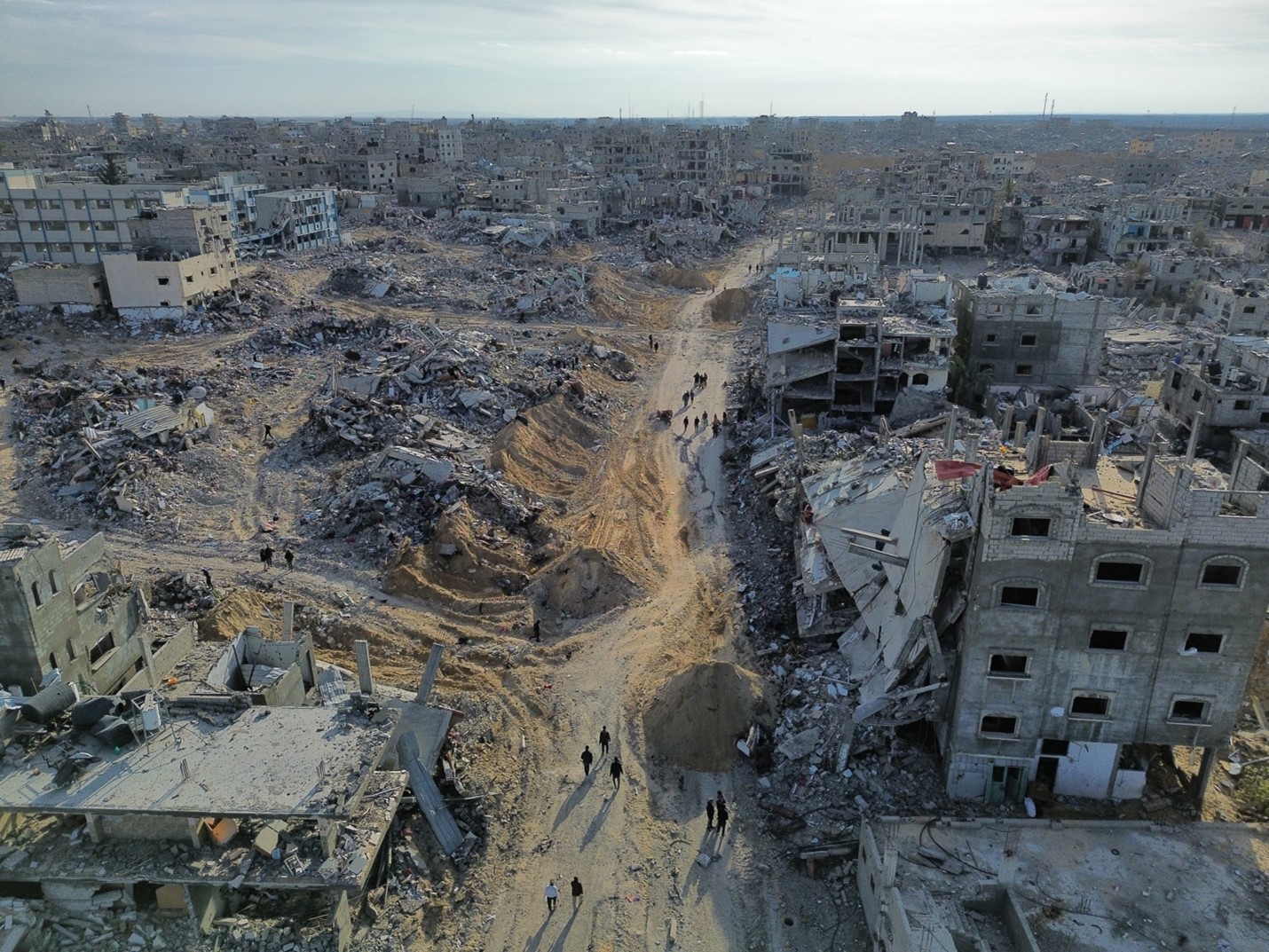
GAZA (KAAB TV) – In a significant development aimed at stabilizing the war-torn Gaza Strip, a multinational peacekeeping contingent consisting of approximately 200 soldiers from Egypt, Qatar, Turkey, and the United Arab Emirates has been deployed to Gaza City.
These forces are working in cooperation with American military personnel, who have arrived to support the implementation and enforcement of a recently brokered ceasefire agreement between Hamas and Israel.
The ceasefire comes after more than two years of continuous conflict that has devastated much of Gaza and led to severe humanitarian consequences. The truce was the result of extensive negotiations held in Cairo, with key regional and international mediators playing critical roles in bringing both parties to the table.
Hamas Leader Declares Victory and Peace
Khalil al-Hayya, a senior Hamas official and one of the leading figures involved in the Egyptian-mediated negotiations, publicly addressed the agreement, declaring the end of what he described as a “two-year war of resistance.” Speaking during a televised statement, al-Hayya asserted that the Palestinian resistance had successfully defended its people and territory against Israeli military incursions.
“Palestine has prevailed. We have defeated the invading forces without surrender. Today, we declare the end of the war,” said al-Hayya. “Our fighters, the Mujahideen, stood firm. This ceasefire is not a concession but a victory for the will of the people.”
He went on to express optimism about working with the international peacekeeping forces currently arriving in Gaza and emphasized the importance of Israel honoring its commitments under the ceasefire agreement.
“This agreement must be upheld by all sides, especially Israel. We expect full implementation of every clause, and we are closely coordinating with peacekeeping partners from across the region to ensure that happens.”
Call for a Sovereign Palestinian Government
In his statement, Khalil al-Hayya reiterated the longstanding position of Hamas regarding Palestinian sovereignty and governance. He emphasized the movement’s continued commitment to the rights of the Palestinian people and called for the establishment of an independent Palestinian government with its capital in East Jerusalem (referred to as Quds Sharif in Arabic).
“Peace to Gaza. Peace to our sons, daughters, our living martyrs, and all who have sacrificed. Our stance remains unchanged—we demand justice, sovereignty, and a Palestinian government based in Quds Sharif.”
Reopening of Rafah Crossing and Humanitarian Aid
As part of the ceasefire terms, the Rafah border crossing between Egypt and Gaza is being reopened. The Egyptian government has pledged to facilitate the entry of humanitarian aid and essential supplies into Gaza. Several countries have already committed to sending medical supplies, food, and reconstruction materials to support Gaza’s recovery.
The Cairo government has also announced its intention to coordinate aid efforts with international organizations to ensure timely and effective delivery to those most in need.
International Response and Monitoring
The ceasefire has been cautiously welcomed by the international community. Multiple governments and human rights organizations have called for close monitoring of the situation on the ground, particularly to ensure that Israel adheres to the terms of the agreement—an area where there has historically been skepticism due to previous ceasefires being violated.
Observers note that this ceasefire differs from past attempts in that it includes a multinational peacekeeping element and active participation from regional Arab powers, which could lend it greater credibility and enforceability.
This latest ceasefire marks a hopeful turn after years of violence and humanitarian crisis in Gaza. However, much remains to be seen in terms of long-term stability and political resolution.
The involvement of international peacekeeping troops and the reopening of key humanitarian corridors offer a rare moment of optimism for the region—though challenges persist, particularly around ensuring compliance, rebuilding infrastructure, and navigating the complex political future of the Palestinian territories.