


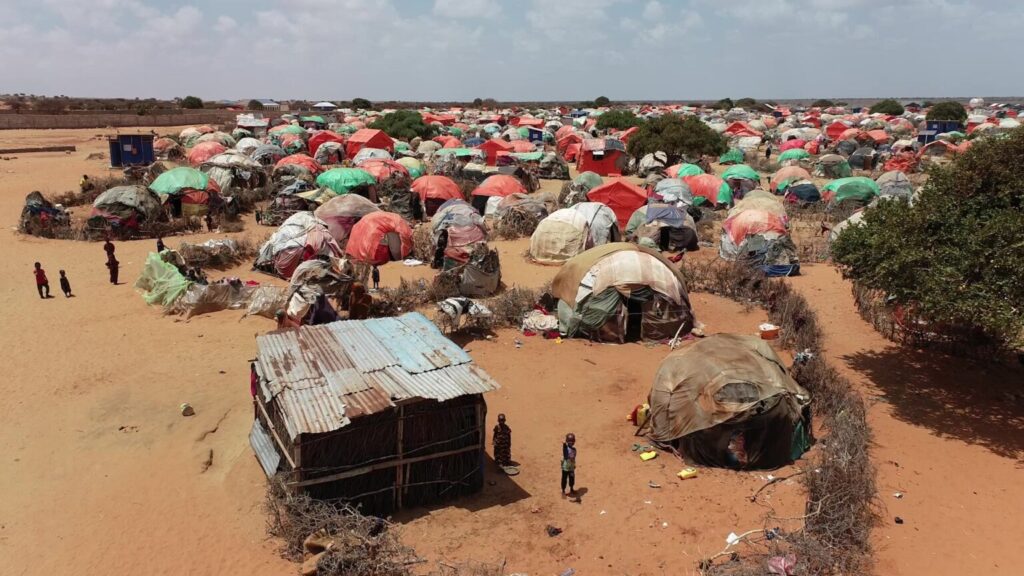


MOGADISHU (KAAB TV) – The Intergovernmental Authority on Development (IGAD) has revealed that more than 3.5 million people across its member states have been displaced due to climate-related events, highlighting the urgent need for coordinated regional action to address the growing nexus between climate change and forced migration.
According to IGAD’s Department of Health and Social Development, escalating droughts, floods, and other extreme weather events continue to compound existing humanitarian crises, triggering both internal and cross-border displacement in countries including South Sudan, Ethiopia, Kenya, Somalia, and Uganda.
The organization stressed that without immediate intervention, climate-induced displacement is expected to rise, further straining fragile communities and overstretched resources.
These findings were presented during a high-level political dialogue on climate change and mobility, convened under the theme “Climate Action for Displaced Communities in the IGAD Region.”
Delegates emphasized that climate change has become a leading driver of displacement, often exacerbating the vulnerabilities of populations already affected by conflict, poverty, and political instability.
At the 2023 International Refugee Forum, IGAD joined a multi-stakeholder commitment to climate action, pledging to Protect communities displaced by climate impacts, Strengthen early warning and response systems, Foster resilience and climate adaptation efforts, and Mobilize sustainable climate finance to support vulnerable populations.
Member states shared updates on their national initiatives. South Sudan highlighted newly launched community recovery projects, while Ethiopia and Kenya showcased renewable energy programs and drought response strategies.
Somalia and Uganda reported progress on climate adaptation measures and frameworks for managing displacement more effectively.
Delegates called for increased investment in early warning systems, stronger regional coordination, and the promotion of climate-resilient livelihoods to reduce the risk of future displacement.
“Climate change is not only an environmental challenge but also a human mobility issue,” IGAD stated. “Our collective response must prioritize the protection, inclusion, and resilience of displaced communities.”
The IGAD Secretariat reiterated its commitment to strengthening regional cooperation, ensuring that its climate and migration strategies are aligned with international frameworks, including the Paris Agreement and the International Refugee Convention.
By integrating climate action with humanitarian and development planning, IGAD aims to build long-term resilience for some of the world’s most vulnerable populations.