


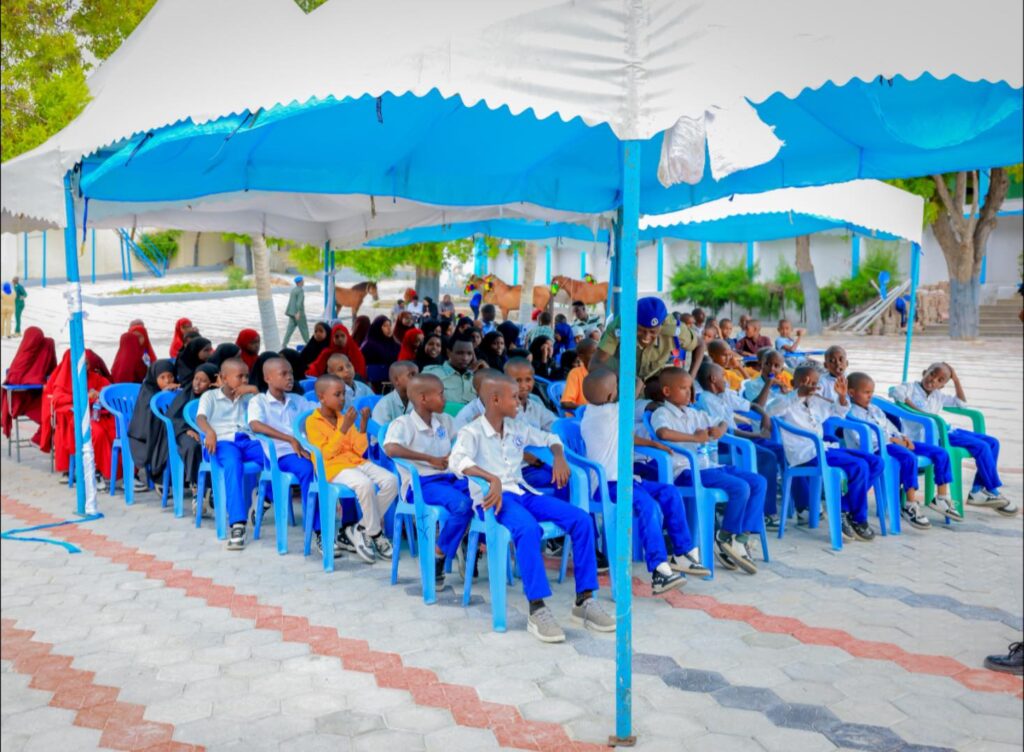


MOGADISHU, Somalia – Across the world, children’s rights are under strain, from conflict, displacement, poverty, climate shocks and weakened institutions. (Liefaard & Todres, 2026) The International Journal of Children’s Rights highlights a truth that Somalia cannot afford to ignore: protecting and advancing children’s rights is not an academic exercise. It is a global responsibility that demands leadership, collaboration and courage.
For Somalia, this message is urgent. We are rebuilding systems, strengthening institutions and imagining a different future. However, none of this is possible if we overlook the rights, voices and well-being of the youngest members of our society.
Children’s rights are not optional. They are the foundation of nation‑building.
Children’s Rights Are the Starting Point of Development
The editorial reminds us that children’s rights have a strong legal foundation in international human rights law, but their real power comes from how societies choose to implement them. Somalia is at a critical moment where choices made today will shape generations.
Children’s rights directly influence:
- school readiness and early learning
- health, nutrition and physical development
- safety, protection and psychosocial wellbeing
- participation, voice and agency
- long‑term human capital and economic stability
A nation cannot rise if its children are left behind. Moreover, Somalia cannot build a peaceful, prosperous future without investing in the early years.
Why Somalia Must Step Up Now
Liefaard & Todres (2026) call for greater global representation, especially from the Global South, and for stronger pathways that uplift children’s voices and lived experiences. Somalia fits squarely into this call.
Our children face layered vulnerabilities, conflict, poverty, displacement, and climate shocks, yet they also hold extraordinary resilience and potential. To unlock that potential, Somalia must:
- invest in early childhood development
- ensure safe, inclusive learning environments
- protect children from violence and exploitation
- strengthen community‑based systems of care
- amplify children’s voices in decisions that affect them
Children’s rights are not a Western concept. They are a Somali necessity.
Knowledge, Research and Local Leadership Matter
The editorial emphasises the importance of interdisciplinary research, cross‑regional collaboration and elevating early‑career scholars and practitioners. Somalia needs this too.
We need:
- Somali researchers documenting children’s realities
- Somali practitioners shaping policy
- Somali youth contributing to knowledge
- Somali institutions leading the conversation on rights
When we generate our own evidence, we shape our own solutions.
Somalia’s education and protection systems cannot rely solely on external frameworks. They must be informed by local knowledge, cultural understanding and lived experience. This is how we build systems that are both effective and trusted.
Children Are Not Just Beneficiaries, They Are Agents
One of the strongest messages in Liefaard & Todres (2026) is the need to treat children as co-creators rather than passive recipients. This aligns deeply with Somalia’s own traditions of community participation and collective responsibility.
In Somalia, this means:
- listening to children’s experiences in camps, schools and communities
- involving them in designing programmes
- recognising their capacity to contribute
- valuing their perspectives as part of national development
A child who is heard becomes an adult who participates. A child who participates becomes a citizen who leads.
Building a Somali‑Led Children’s Rights Agenda
Somalia has an opportunity to shape a children’s rights agenda that is culturally grounded, community‑driven and future‑focused. This requires:
1. Strengthening Early Childhood Systems
Early childhood is where rights become reality. Nutrition, safety, stimulation and early learning shape lifelong outcomes.
2. Investing in Teachers and Caregivers
People, not policies- implement children’s rights. Training, support and well-being for educators are essential.
3. Integrating Community Structures
Dugsi, women’s groups, youth networks and elders all play a role. Children’s rights must be embedded in the systems that communities already trust.
4. Protecting Children in Crisis and Displacement
Somalia’s most vulnerable children need safe spaces, psychosocial support and continuity of learning.
5. Elevating Somali Scholarship and Voices
Somali researchers, practitioners and youth must shape the narrative, not just participate in it.
A Call to Action for Somalia
If Somalia is to build a peaceful, stable and prosperous future, we must place children’s rights at the centre of national development, not as a slogan but as a strategy.
- Strong rights = strong foundations
- Strong foundations = strong learners
- Strong learners = strong communities
- Strong communities = a strong nation
Children’s rights are not a side issue. They are the blueprint for Somalia’s future.
Somalia’s next chapter depends on the choices we make today and the courage we show in protecting, nurturing and empowering every child.
_
Rahma Shire is a researcher specializing in leadership, inclusion, and systems improvement in education, with a focus on designing inclusive, scalable, and future-focused learning systems.