

NAIROBI, Kenya (Kaab TV) – The exchange between U.S Senator Ted Cruz’s letter, dated August 14, urging U.S. recognition of Somaliland and the Chinese Embassy’s fierce response on August 15 reveals a deeper reality: the Horn of Africa is no longer shaped by the will of its people, but increasingly dictated by the Chinese Communist Party (CCP).
What we all understand is that China’s aggressive intervention in Somali affairs is not limited to rhetoric—it reflects Beijing’s long-term strategy of embedding itself within weak, authoritarian regimes to undermine U.S. influence, control key maritime routes, and exploit instability for geopolitical gain.
Comments by Spokesperson of Chinese Embassy in Somalia on US Senator’s Baseless Attacks on China and China-Somalia Relations pic.twitter.com/qONy3O79jb
— Chinese Embassy in Somalia (@ChineseSomalia) August 15, 2025
For years, U.S. disengagement from the Horn of Africa has created a dangerous vacuum. Washington’s reluctance to support Somaliland—a democratic, stable, and pro-Western state—has only emboldened Beijing and its local proxies.
Today, China is firmly entrenched in Mogadishu’s corrupt political establishment, in Djibouti’s military and port infrastructure, and is steadily expanding across Africa with little resistance.
This neglect has given Beijing free rein to cultivate and empower autocratic regimes, further destabilizing the region and eroding democratic values.
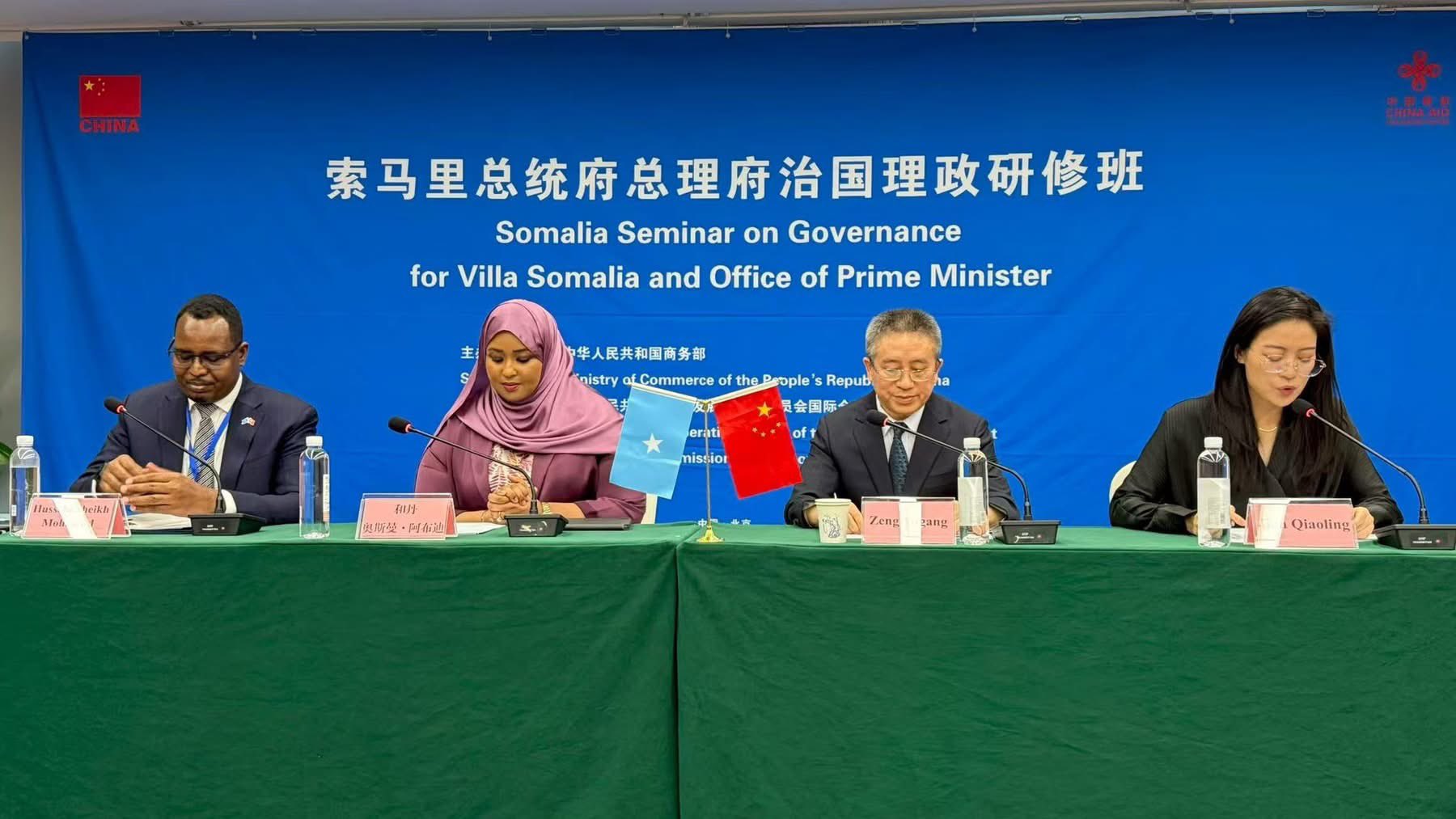
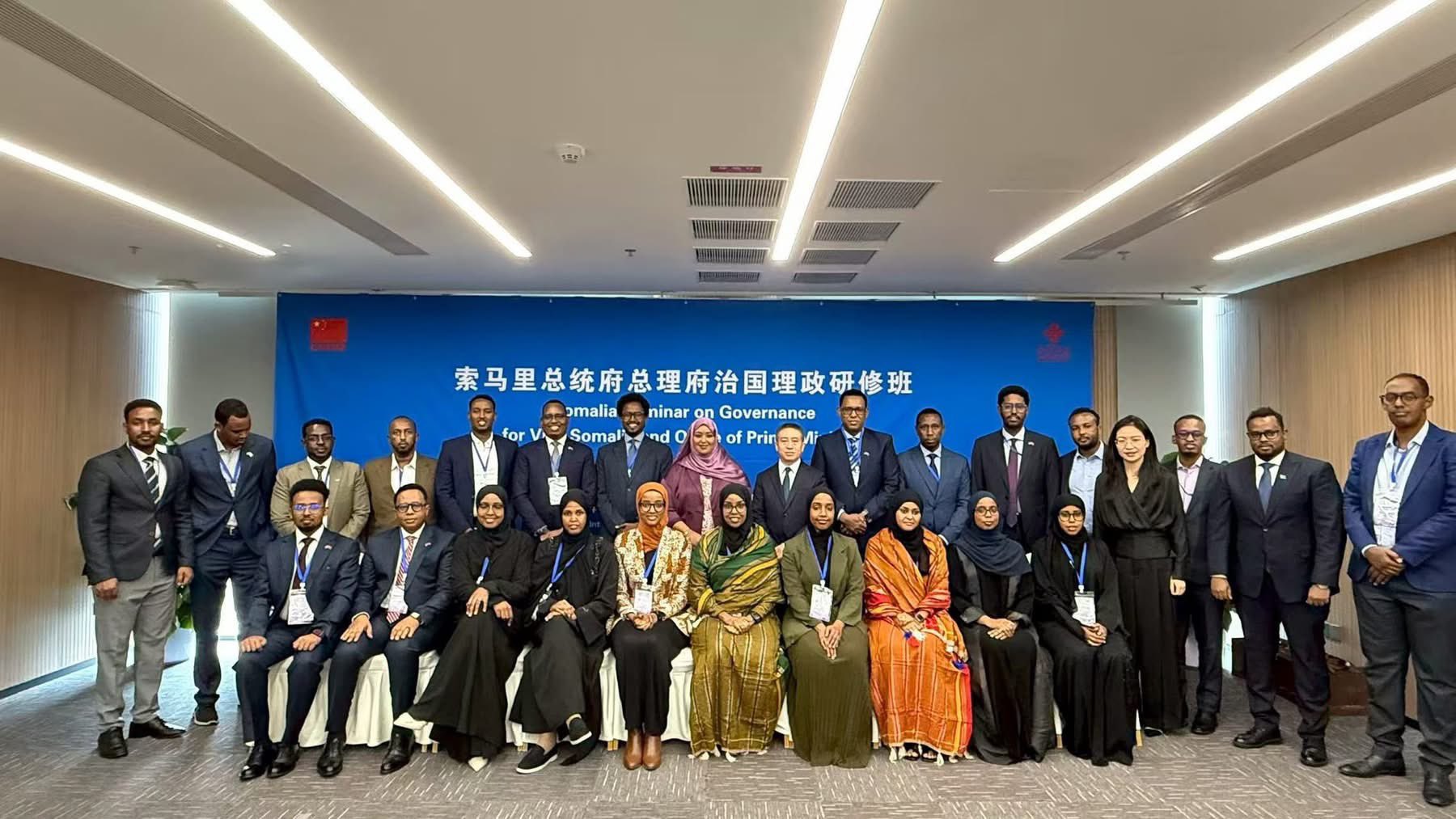
Last month, we reported that a group of Somali government officials from the Parliament, the Office of the President, and the Prime Minister’s Office were airlifted to China for what Beijing described as “a seminar on governance.” One can simply question: what type of governance were these men and women being taught, given that China itself is not a democracy?
We attempted to raise this question with several of the attendees, as well as with Somalia’s ambassador to Beijing, Hodan Osman—whom we have previously described as “a possible Chinese asset within the Somali government.”
However, everyone we reached out to refused to speak to us.
Alarming consequences
The consequences are alarming. In Mogadishu, China maintains deep ties with a government that harbors individuals with long, bloody histories in Al-Shabaab.
Sheikh Mukhtar Robow (Abu Mansuur), one of the most dangerous terrorists and Al-Shabaab’s co-founders responsible for terror against Somali civilians and East Africans including Kenyans, Ethiopians and possibly Americans, now serves as Minister of Religious Affairs—unprosecuted and rewarded with political office since 2022.
He is not an exception. Much of the Mogadishu security apparatus, including the Banadir police force, consists of former Al-Shabaab operatives loyal to Adam Hashi Ayrow, the group’s notorious co-founder killed by U.S. airstrike in 2008.
These men, once assassins, now wear the uniforms of the Somali state—with China’s embassy openly engaging them as political partners.
The threat does not end in Somalia. China’s partnership with Iran, and by extension its backing of the Houthis, poses a grave security risk. This support destabilizes the Red Sea, threatens global shipping, and risks spilling over into Somalia, where Al-Shabaab could benefit from new arms flows and financial channels.
The overlap of Chinese support for authoritarian regimes and extremist-linked officials inside Somalia creates fertile ground for terror to thrive under the protection of state legitimacy.
One particularly dangerous front is Somaliland’s eastern regions of Sool and Sanaag. Reports indicate that the Chinese Embassy in Somalia has actively sought to arm clan militias against Somaliland—an attempt to weaken one of the few democratic and stable entities in the region.
This covert campaign is not about “respecting sovereignty,” as Beijing claims, but about punishing Somaliland for its friendship with Taiwan, Israel, and the West.
The tone and language of the Chinese Embassy’s response to Senator Cruz are telling. Rather than reflecting the voice of Mogadishu, they reflect the dictates of Beijing itself. China’s aggressive defense of Mogadishu’s collapsing regime illustrates a simple truth: Somali leaders no longer dictate their own politics—the CCP does.
If the United States and its allies fail to act decisively, the Horn of Africa risks becoming yet another frontline of authoritarian expansion.
Recognition of Somaliland, deeper U.S. engagement in regional security, and a strong counter-strategy to Beijing’s interference are urgent steps. Without them, the Horn of Africa will remain captive to Chinese influence, to the benefit of dictators and terrorists alike.