


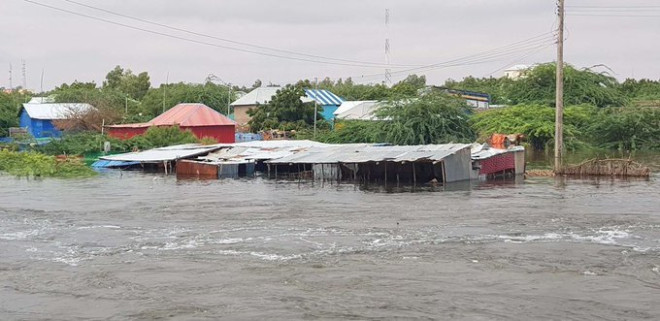


The International Committee of the Red Cross has warned that above-normal rainfall and anticipated flooding across Somalia could severely compound the food crisis, threatening millions with escalating hardship.
The ICRC stated that the El Niño climate phenomenon is projected to heavily impact the upcoming Deyr seasonal rains from October through December 2026, elevating flood risks—particularly along riverine areas bordering the Shabelle and Juba rivers.
The organization cited farmers in Bayahaaw village on the outskirts of Jowhar, who face a agonizing dilemma: whether to plant crops and risk total destruction from flash floods, or leave their fields fallow out of fear of catastrophic financial losses.
According to the ICRC, the severe floods that struck Somalia in 2023 impacted nearly two million people and forcibly displaced over 500,000 individuals from their homes.
The Red Cross further warned that heavy rainfall-induced flooding threatens to breach river embankments, destroy community livelihoods, and submerge entire rural villages.
The latest Integrated Food Security Phase Classification assessment indicates that above-average rainfall and ensuing floods will significantly exacerbate national food insecurity.
The ICRC added that approximately 3.3 million individuals residing across displacement camps face severe new compounding crises.
Aid agencies have initiated contingency measures in preparation for impending floods, leveraging lessons learned from the 2023 disaster.
However, the ICRC stated that humanitarian operational capacity has been constrained due to significant reductions in international relief funding.
Antoine Grand, head of the ICRC delegation in Somalia, noted that readiness and data-gathering capabilities are markedly superior to 2023 levels, yet expressed deep concern over shrinking financial commitments and diminished relief delivery capacity.
The ICRC and the Somali Red Crescent Society are coordinating joint flood readiness operations, including distributing sandbags, stockpiling emergency shelter materials, mosquito nets, and hygiene kits, as well as prepositioning medical and nutritional supplies across clinics in high-risk zones.
Furthermore, Somali Red Crescent volunteers in Kismayo, Luuq/Bardhere, Jowhar, and Beledweyne have received specialized watercraft navigation training to conduct search-and-rescue operations in the event of catastrophic inundation.
El Niño is a recurring global climate phenomenon originating in the Pacific Ocean that induces severe weather anomalies worldwide.
In Somalia, it threatens to unleash torrential Deyr seasonal rains and severe flood risks over the coming months.
This emergency warning comes at a critical juncture when millions of Somalis are already struggling against displacement, acute food insecurity, and severe economic hardship, escalating the urgent imperative for rapid preparedness and adequate humanitarian relief.