


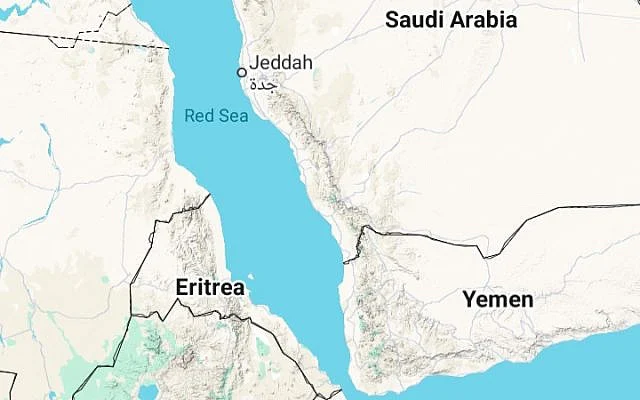


The Bab el-Mandeb Strait, linking the Red Sea to the Gulf of Aden, has become one of the world’s most strategically contested waterways, where global trade, energy supplies, and maritime security converge.
As competition among regional and international powers intensifies, supporters of Somaliland’s recognition argue that its location and relative stability could help reshape the region’s security landscape.
Backers of Somaliland’s independence contend that recognition would introduce what they describe as a stable and democratic partner into a region dominated by geopolitical rivalry.
They argue that Turkey and Qatar have expanded their influence through Somalia, while Egypt seeks to safeguard the Suez Canal’s strategic importance, Djibouti continues hosting multiple foreign military bases, and Saudi Arabia balances Red Sea security alongside its wider regional interests.
China has also emerged as a major player through its Belt and Road Initiative and its military base in Djibouti, strengthening Beijing’s presence along one of the world’s busiest maritime corridors.
Proponents say Somaliland offers several strategic advantages, including the Port of Berbera, a long coastline overlooking the Gulf of Aden, and a willingness to cooperate on maritime security.
They argue these assets could help combat piracy, terrorism, arms trafficking, and illegal migration while strengthening security along the Bab el-Mandeb.
Israel’s interest is also viewed through a maritime security lens.
Analysts supporting closer ties argue that cooperation with Somaliland could improve surveillance of Red Sea shipping lanes, strengthen deterrence against regional threats, and provide Israel with another strategic partner as attacks on commercial shipping continue to threaten maritime trade.
Supporters further contend that countries that signed the Abraham Accords—including the United Arab Emirates, Bahrain, Morocco, and Sudan—could complement such cooperation through investment, diplomatic support, intelligence sharing, and naval coordination.
They argue that a broader security partnership could improve monitoring of the Red Sea and Gulf of Aden while protecting international shipping routes.
Among the proposals advanced by advocates are expanded maritime surveillance using radar, drones, and satellite technology, joint intelligence centers in Berbera and Port Sudan, coordinated naval patrols, stronger logistics networks linking regional ports, and diplomatic efforts to increase international recognition of Somaliland.
Supporters conclude that recognition of Somaliland should be viewed not only as a diplomatic issue but also as part of a broader Red Sea security strategy.
Critics, however, argue that such a move would risk escalating regional tensions, undermine Somalia’s territorial integrity, and further intensify geopolitical competition in the Horn of Africa, where rival powers are already competing for influence.