

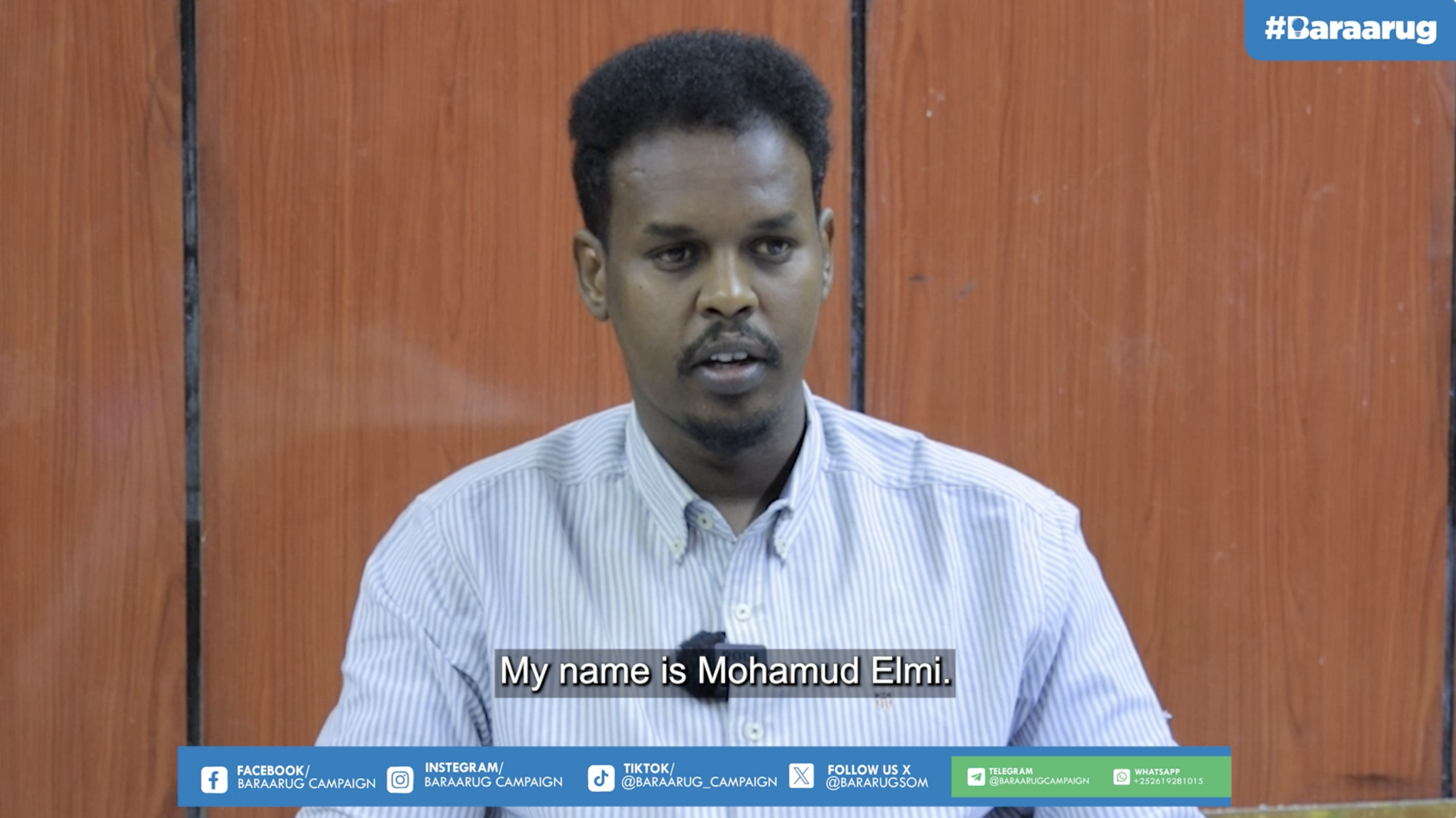

GAROWE, Puntland (Baraarug) — Mohamud Elmi is a young man living in Garowe, the capital of Puntland. He graduated from university several years ago, having studied technology.
However, finding a job has proven extremely difficult, pushing him to think about creating work for himself in order to support both himself and his family.
“I tried to open a small agency, using the knowledge I studied, to design advertising billboards, posters, and wall stickers,” Mohamud said.
Young people make up the largest segment of Somali society. Various estimates in Somalia indicate that nearly 70% of the population consists of young people under the age of 24 or 30. However, available job opportunities do not match this rapidly growing number.
The youth unemployment rate among those aged 15–24 reached approximately 33.9% to 34.1% in 2024, according to a study published by The Global Economy. This highlights a major challenge in Somalia’s labor market. Other reports also indicate that more than 60% of young people are not engaged in education, employment, or vocational training (NEET), further deepening the economic and social risks facing the future of Somali youth.
Puntland’s policies to address severe unemployment crisis
According to Mohamed Sheikh Ahmed, Senior Advisor at Puntland’s Ministry of Youth and Sports, the Puntland government is implementing policies aimed at addressing the severe levels of youth unemployment in the region.
“Puntland has several policies, including the Puntland Youth Policy and five-year strategic plans, all of which support job creation and youth development in Puntland,” Mohamed Sheikh Ahmed told Baraarug.
There have also been discussions and forums related to youth policy, involving young people, government institutions, and civil society organizations.
These discussions examined youth needs such as education, job creation, skills development, access to health services, and financing.
Feedbacks emerging from these forums emphasized the need for youth policies to genuinely address existing challenges and to ensure that young people are given a visible voice and a meaningful role in decision-making.
The Senior Advisor at the Ministry of Youth and Sports acknowledges that there are major obstacles hindering youth development and job creation.
Mohamed Sheikh Ahmed stated that Puntland’s Five-Year Development Plan currently focuses on building and strengthening youth skills by improving education and vocational training needed to access employment opportunities.
“The plan also emphasizes increasing investment in youth skills to reduce unemployment. This five-year plan also includes support for community programs, sports, and youth participation in social affairs,” adds Mohamed Sheikh Ahmed.
Meanwhile, Abdirisaq Abdinuur, Head of the Academic Department at ADMAS University in Garowe, believes that the quality of education plays a major role in enabling young people to benefit from the labor market.
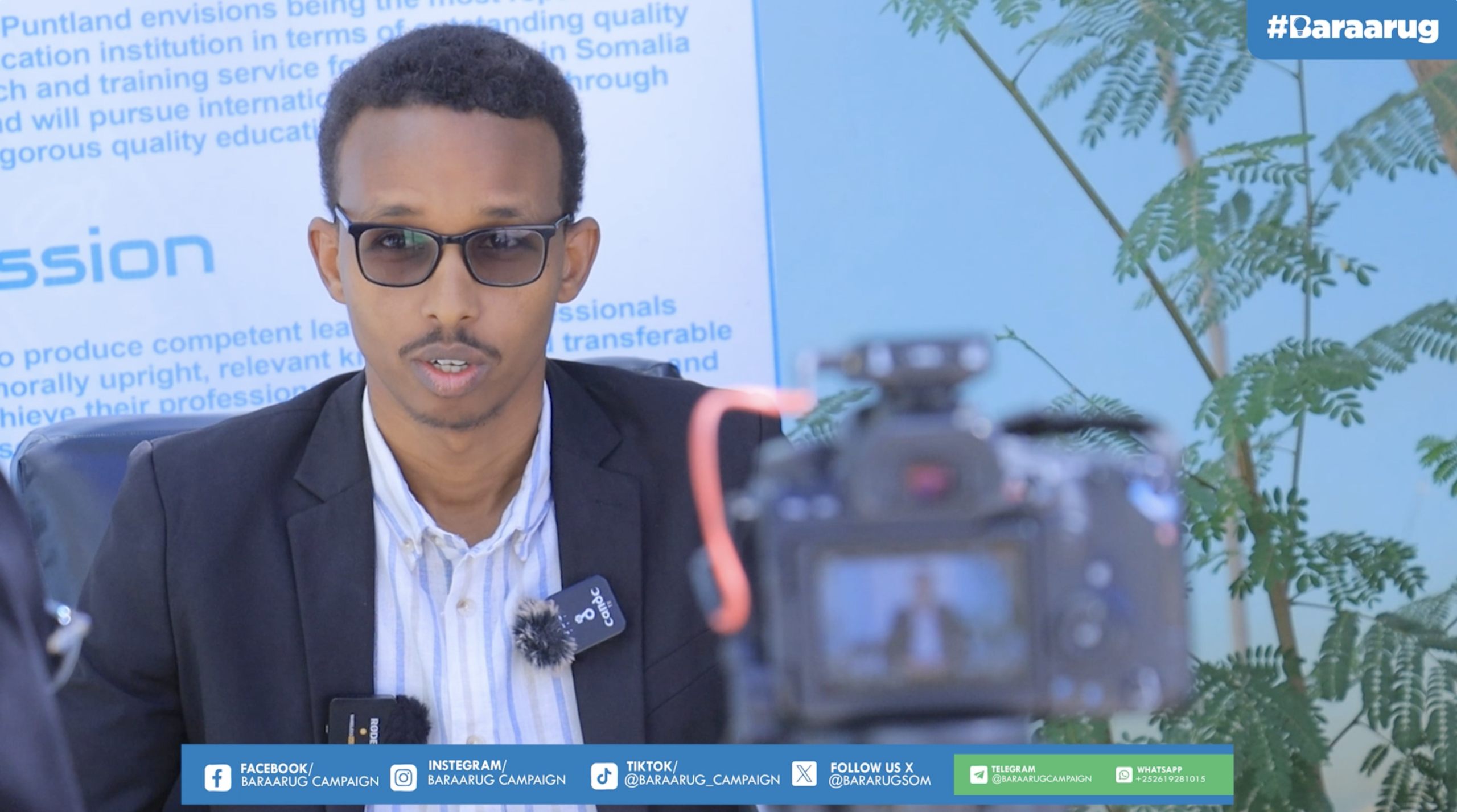
He strongly criticizes the quality of education at some institutions in the country, arguing that it results in universities producing graduates who lack skills relevant to the job market.
“What is missing is a shift away from the mindset that young people should only become employees,” Abdirisaq Abdinuur said. “If graduates from educational institutions are unable to apply their knowledge in practice, that responsibility lies with the education institutions themselves.”
For many young people, like Mohamud Elmi, starting their own business is far from easy.
Access to local financing for university graduates remains a major challenge, making it difficult for them to turn their business ideas into reality.
“Design work requires high-quality equipment such as computers and printers. An office is also essential. Banks make loans very difficult. The only option is to seek support from family or relatives. There is no other source of financing,” Mahmoud said.
Government jobs are limited, further increasing the importance of the private sector’s role as an employer.
Mohamed Sheikh Ahmed also acknowledges this, noting that expanding domestic economic opportunities could lead to the creation of new jobs.
“Job opportunities can be increased by strengthening our economy in various ways. For example, high electricity costs and expensive rent are major obstacles to the development of small industries. If electricity becomes more affordable and rent is reduced, it would be possible to attract both local and foreign investment,” Mohamed Sheikh Ahmed said.