


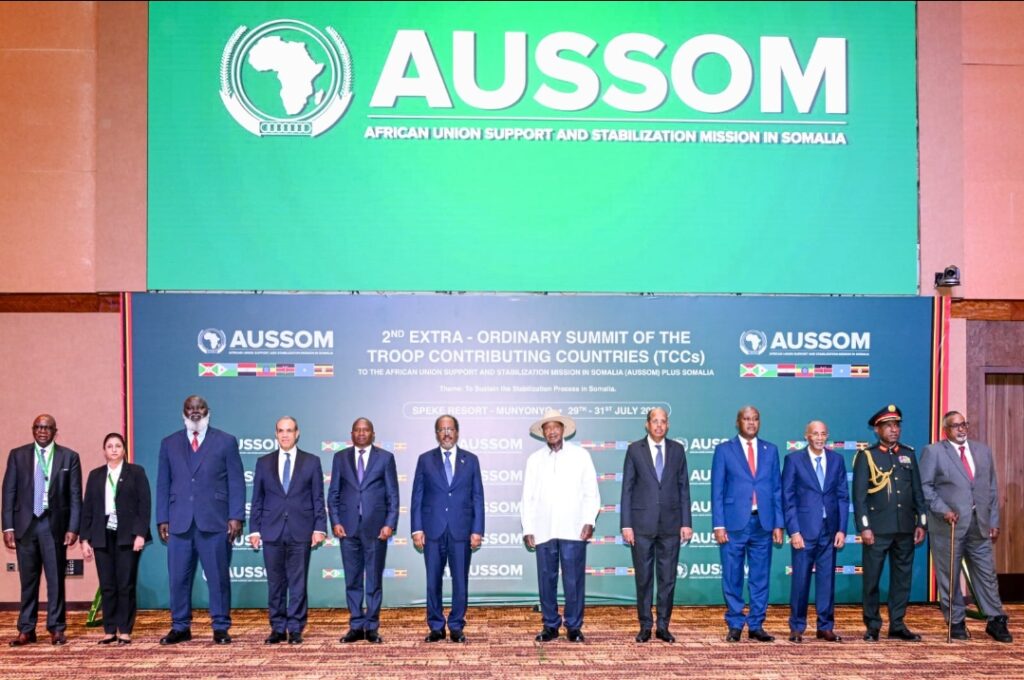


What was meant to be a diplomatic breakthrough to rescue Somalia’s struggling African Union peace mission instead ended in stalemate.
Behind the official photographs and carefully worded speeches at last week’s African Union Support and Stabilisation Mission in Somalia (AUSSOM) ministerial meeting in Kampala, a deeper disagreement unfolded—one that diplomats and regional officials say prevented the conference from addressing what many believe is the single greatest obstacle to Somalia’s security: its unresolved political crisis.
The two-day meeting, held on 30–31 July, brought together ministers and senior military officials from AUSSOM troop-contributing countries (TCCs), alongside representatives from the African Union, IGAD, the United Nations and international partners. It followed a meeting of Chiefs of Defence on 29 July that focused on the deteriorating security situation and the mission’s worsening financial crisis after the United States withdrew its financial support earlier this year.
The expectation among many delegates was that Kampala would not only discuss military operations but also pave the way for renewed international confidence—and potentially unlock future funding for AUSSOM.
Instead, according to multiple diplomatic sources familiar with the negotiations, the conference became bogged down over a single paragraph in the draft communiqué.
Uganda’s proposal
Uganda, the largest troop contributor to AUSSOM, proposed language calling for an inclusive political dialogue among Somalia’s federal government, regional administrations and other political stakeholders.
Officials present at the meeting say the proposal reflected growing concern that military gains against Al-Shabaab cannot be sustained while Somalia remains politically divided.
The proposal reportedly received backing from representatives of IGAD, Kenya, Ethiopia, the United Nations Transitional Mission in Somalia (UNTMIS), the UN Support Office in Somalia (UNSOS) and several AU officials.
But Somalia objected.
During the ministerial session on Friday, outgoing President Hassan Sheikh Mohamud publicly insisted that the paragraph be removed from the final communiqué.
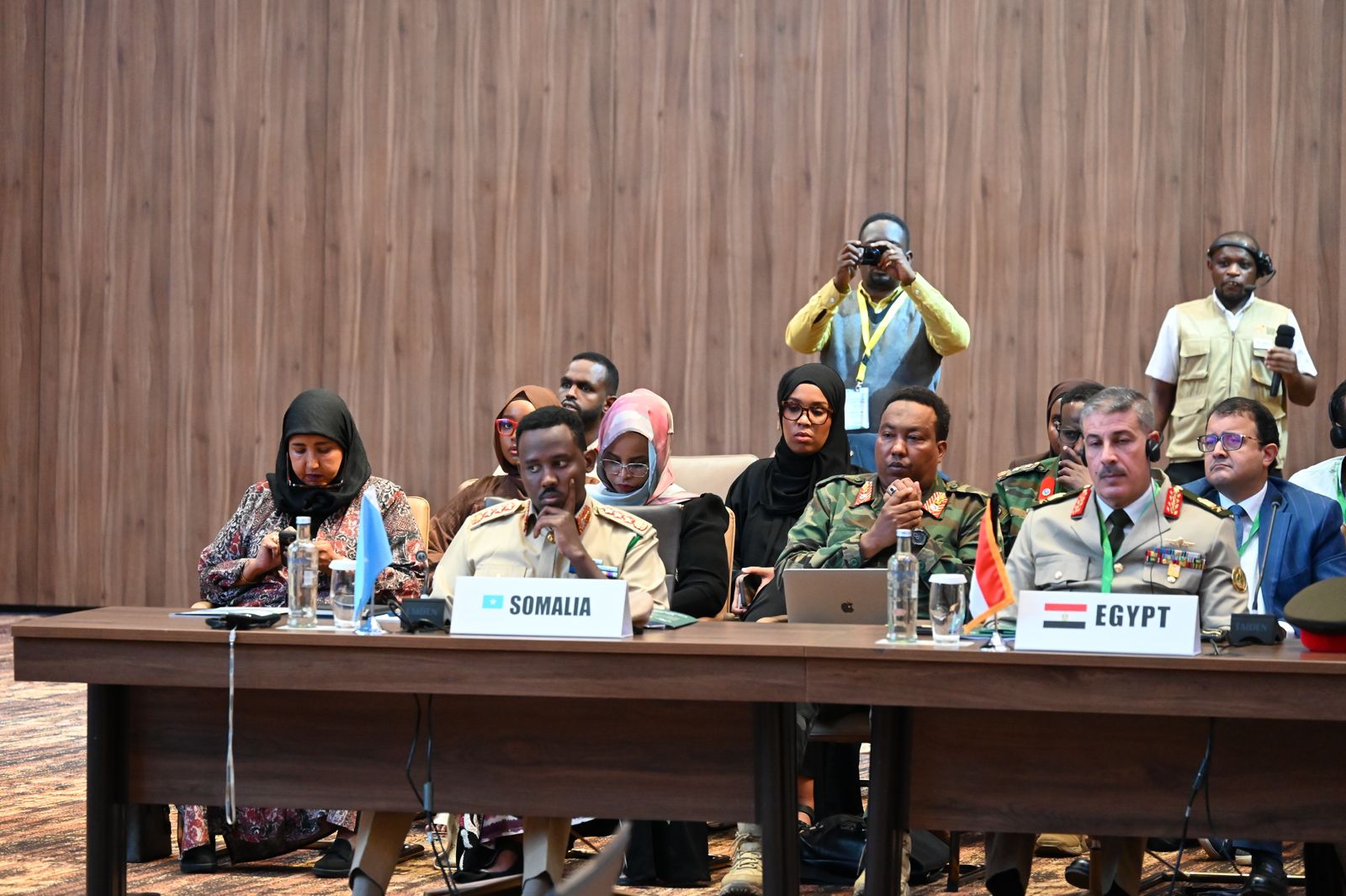
“I cannot accept the communiqué to include that paragraph,” he said during the meeting, according to delegates who attended the session.
The disputed paragraph—Paragraph Four in the draft document—called for political dialogue aimed at restoring consensus between the federal government and Somalia’s federal member states.
Its removal effectively ended hopes that the conference would produce a broader political roadmap alongside its security recommendations.
“The most critical moment”
One senior African Union official described the outcome as a missed opportunity.
“Somalia is facing one of the most critical moments in its recent history,” the official told Kaab TV.
“The AU mission is running out of funding following the U.S. withdrawal. Kampala was intended to help prevent an eventual withdrawal of AU forces that could create conditions for Al-Shabaab to expand. Without political agreement inside Somalia, that objective becomes far more difficult.”
Military officials privately acknowledged that financing was only one part of the crisis.
Several participants argued that donors have become increasingly reluctant to finance a mission operating amid growing political fragmentation in Somalia.
IGAD’s warning
IGAD Deputy Executive Secretary Mohamed Abdi Ware echoed those concerns during his address to delegates, stressing that political reconciliation was essential for lasting security.
His remarks, however, reportedly drew criticism from the Somali delegation.
Days later, Ware defended his position publicly.
2/2https://t.co/df9HExRRpu transition security of Somalia to its indigenous forces in the shortest possible time, and send the men and women of the AUSSOM Mission back to their home countries as the heroes they are. When the mission is successfully completed, They should go back… pic.twitter.com/VRyjJh73QE
— Mohamed Abdi Ware (@MAWareSO) August 3, 2026
Writing on X on Monday, he said the objective was straightforward: to enable Somalia’s own security forces to assume responsibility while allowing AUSSOM peacekeepers to return home “as heroes.”
“When the mission is successfully completed, they should go back to their home countries with their heads held high, and depart Somalia basking in glory and enjoying the undying gratitude of the Somali people,” he wrote.
Responding to criticism from Mogadishu, Ware added:
“I have no clue how such sentiments would offend anyone, let alone the government we are all trying to help avoid a precipitous, premature, and disorderly exit of peacekeepers—an eventuality that, unless avoided, would hand Al-Shabaab an enormous strategic advantage now, and for a long time.”
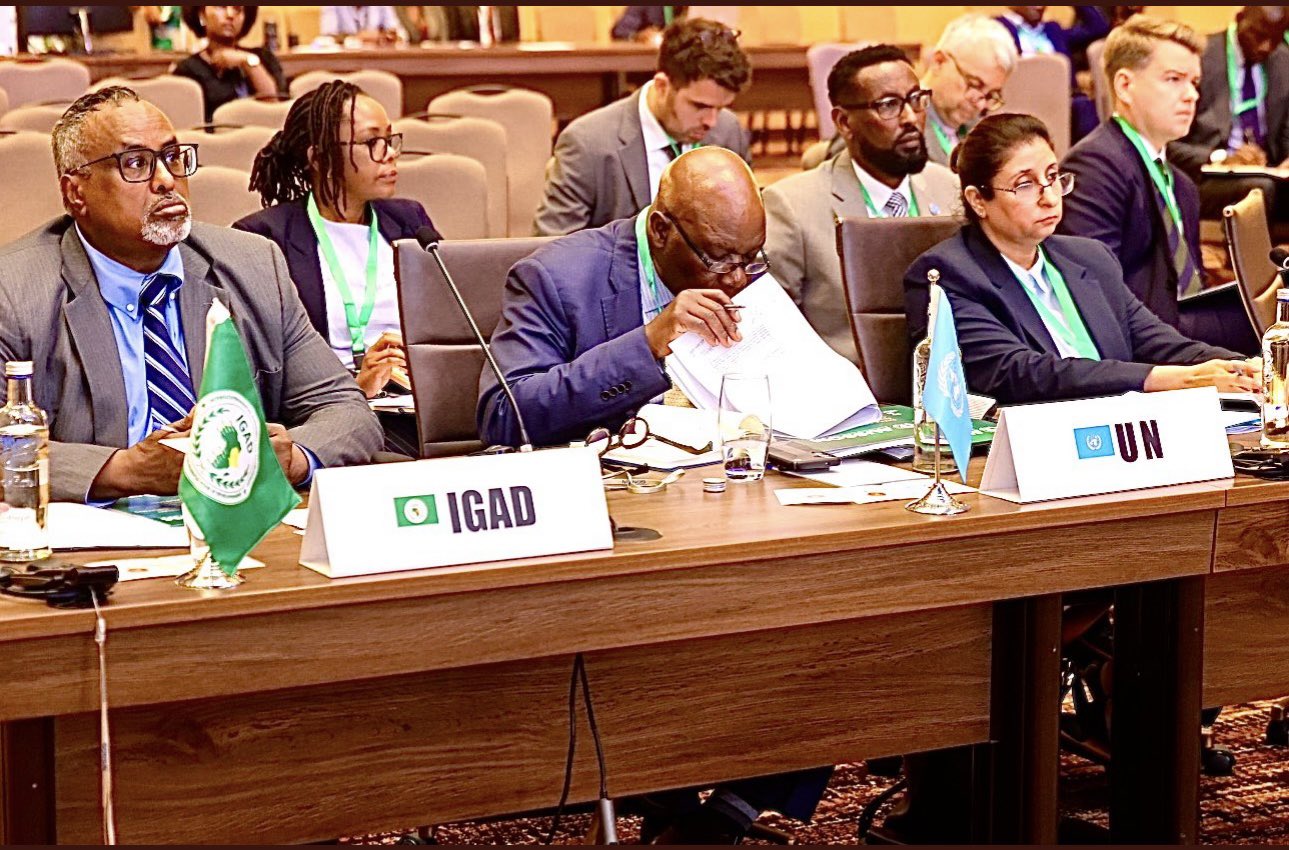
He also repeated a warning increasingly heard among diplomats involved in Somalia.
“Security without political legitimacy cannot endure. Political progress without security is impossible.”
A political crisis years in the making
The disagreement in Kampala reflected divisions that have been widening since 2024.
The crisis intensified after President Hassan Sheikh Mohamud pushed through amendments to Somalia’s provisional constitution, arguing that the country needed to complete the constitutional review process.
Puntland and Jubaland rejected the amendments, accusing the federal government of acting unilaterally and violating previous political agreements.
Relations between Mogadishu and both regional administrations have remained effectively frozen since then.
The dispute deepened further after the term of the Federal Parliament expired earlier this year. Parliament subsequently extended its own mandate by one year, a move that also effectively prolonged President Mohamud’s tenure until May 2027.
In June, armed clashes erupted in Mogadishu between forces aligned with the federal government and opposition groups, leaving more than ten people dead and forcing civilians to flee parts of the capital. International mediation efforts continued for weeks but failed to produce a lasting political settlement before stalling in late July.
Just before travelling to Kampala, President Mohamud also met senior U.S. AFRICOM and U.S. Embassy officials at Mogadishu’s Aden Adde International Airport. According to officials familiar with the discussions, American representatives again stressed the need for broader political consensus while warning that continued divisions were strengthening Al-Shabaab’s position.
A communiqué missing its central issue
The conference ultimately adopted a 15-point communiqué focused on security cooperation, the threat posed by Al-Shabaab, the gradual transfer of security responsibilities to Somali forces and AUSSOM’s severe funding shortfall.
Absent, however, was any reference to political dialogue between Somalia’s federal leadership and the federal member states—the very issue many delegates had hoped the meeting would confront.
Analyst Hassan Mudey believes that omission undermined the conference’s wider purpose.
“This is one of the reasons international support has weakened,” he told Kaab TV.
“The Kampala conference was supposed to address both the political and security crises. Instead, it concluded without resolving the issue that lies at the centre of Somalia’s instability.”
President Mohamud defended his position after returning to Mogadishu.
Opening Parliament on Saturday, he maintained that Somalia’s political disagreements are domestic matters and reiterated that they should not be internationalised.
“We believe the political matter is an internal issue, and we take that as homework,” he said.
Yet for many diplomats leaving Kampala, the concern was not simply what appeared in the communiqué, but what was left out. As AUSSOM confronts an increasingly uncertain financial future and Al-Shabaab continues to exploit political divisions, the conference underscored a growing consensus among Somalia’s international partners: military operations alone are unlikely to secure lasting stability without an inclusive political settlement at home.