

Somalia’s political life today feels less like a stage set by outside hands and more like a crowded, energetic workshop where Somalis are building the institutions they now need.
Across Mogadishu and the federal member states — from council chambers to front-line bases, from party offices to community halls — decisions, campaigns and reforms are increasingly conceived, led and executed by people living and working inside Somalia.
This is not a quiet transition: it is visible in concrete laws, consultative forums, regional pacts and military operations that were planned and carried out by Somali actors on Somali soil.
Two portraits of homegrown leadership
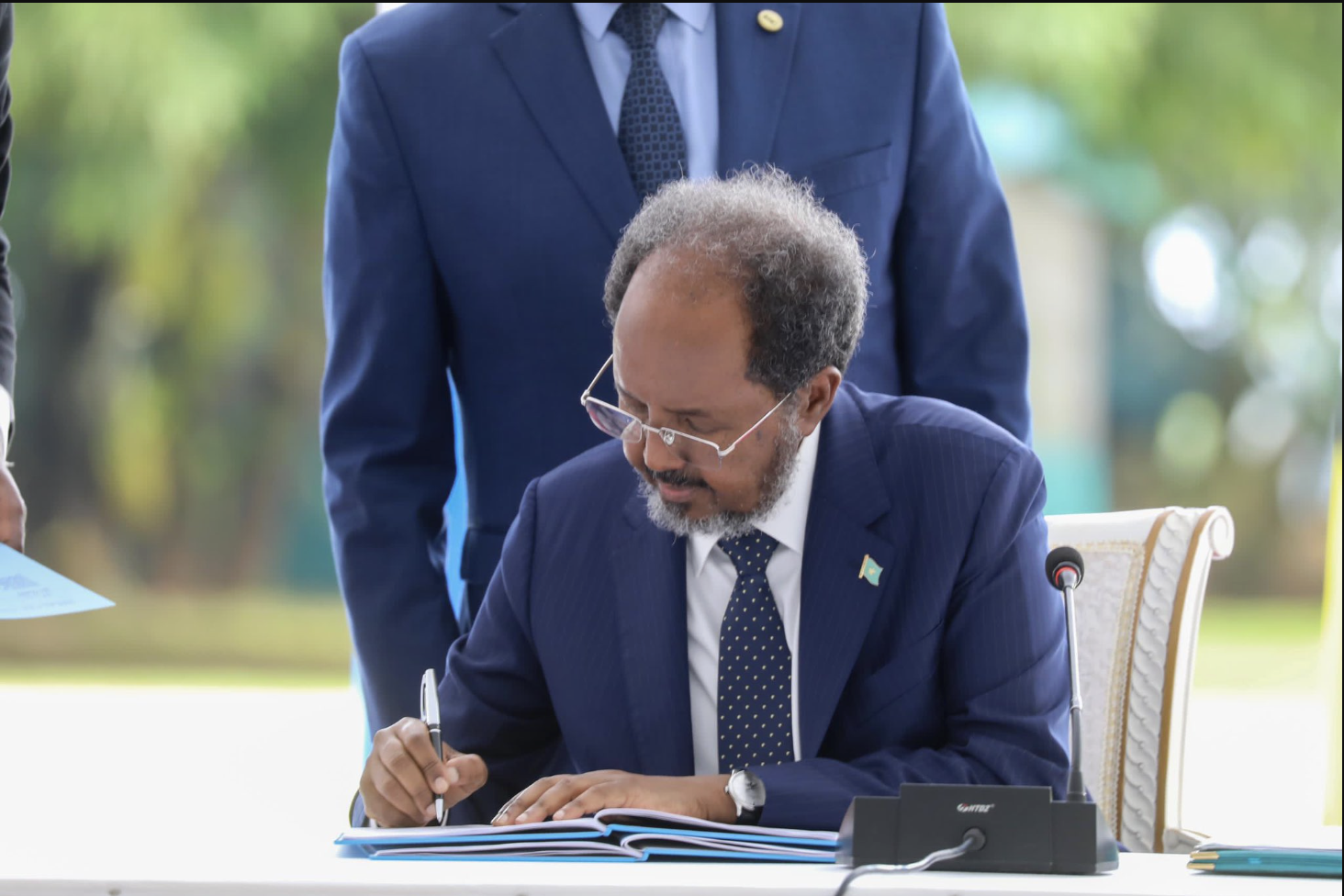
Hassan Sheikh Mohamud. A civic leader who co-founded SIMAD University and re-entered the presidency in May 2022, President Mohamud today represents a brand of leadership that draws legitimacy from domestic institutions and parliamentary coalitions.
His Union for Peace and Development grouping holds sway in the federal legislature, and Mohamud has repeatedly foregrounded national consultation and institutional reform in public remarks and government programs.
The “New Blood” (Damul Jadiid) current. Rooted in Somalia’s own political and religious debates, the movement known as Damul Jadiid (literally “New Blood”) arose within Somali political life and has evolved over time from a militant offshoot into a recognizable strand of domestic political influence.
Its history is complex and entirely Somali in origin, and its present role is part of the broader story of forces that were formed within Somalia and continue to operate inside it.
Constitutional and electoral reform — decided at home
One of the clearest signs of homegrown momentum is the federal cabinet’s move in August 2024 to endorse legislation steering Somalia back toward universal suffrage — a one-person, one-vote model — for future national elections. That decision, championed and advanced through Somalia’s own institutions, set a domestic pathway toward broader enfranchisement and altered the terms by which political alliances will form.
The National Consultative Forum (held in Mogadishu in May–June 2025) and subsequent national council meetings brought together Somali federal and regional leaders, elders and political stakeholders to debate the constitution, the electoral calendar and security coordination. Those gatherings produced communiqués and technical roadmaps that reflect Somali priorities and tradeoffs — negotiated inside Somalia, by Somalis.
Regional power arranged by Somalis, for Somalis
Across the federal footprint, regional leaders have asserted their authority and negotiated directly with each other. The high-profile consultations between Puntland and Jubaland leaders in Garowe (June 2025) are an exemplar: presidents from those federal member states met and issued joint statements about governance, constitutional safeguards and the mechanics of cooperation — a political choreography conducted among Somali actors inside Somalia. Those dynamics matter because regional coalitions and state-level alignments will be decisive in the run-up to any presidential contest.
Meanwhile, Somaliland’s internally convened presidential election and transfer of power in 2024–2025 show another domestic political system operating on Somali ground — its contest, turnout and consequences were run locally and shaped by Somaliland’s own institutions.
Security: Somali forces and local alliances taking the lead
Security operations over the past two years underscore the same point. Somali National Army brigades, supported by federated state forces and local militias aligned to regional administrations, have planned and executed offensives and area-clearance operations in Lower Juba, Hiiraan and other contested regions.
Operations that took Bulo Haji (June 2024) and a string of village recoveries in Lower Juba (July 2024), and coordinated actions in Hiiraan (June 2025), were led and described publicly by Somali commanders and state authorities. These are not abstract initiatives: they are Somali uniforms, Somali command posts and Somali logistical plans carried out inside Somalia.
That reality — local forces planning, local forces moving, local commanders briefing citizens — strengthens the argument that security is increasingly being enforced, contested and negotiated by domestic actors. The field remains contested and outcomes mixed, but the operational impetus is homegrown.
Public policy and services — Somali ministries and technical teams at work
Rebuilding education, updating sector strategies, and reconstituting basic public services are also primarily Somali undertakings. The Ministry of Education’s Education Sector Strategic Plan (2022–2026) and the Joint Education Sector Review process are examples of Somali technical teams drafting priorities, standards and budgets to reopen classrooms and professionalize teaching inside the country. These efforts — designed and debated by Somali ministers, educators and technical committees — show policy formation happening within Somali bureaucracies.
Why the next president will likely be decided at home
Put these pieces together and a clear logic emerges: constitutional and electoral reforms change the rules; regional leaders are organizing and bargaining; political movements and parliamentary coalitions are the instruments of power; security actors are Somali-led on the ground; and ministries are producing the policy frameworks that govern everyday life.
With universal-suffrage legislation on the books and the National Consultative Forum shaping the electoral roadmap, the mechanics of who governs will be decided by Somali voters, party coalitions, parliamentary blocs and regional alliances — not by external appointments. In short: the decisive bargaining now takes place inside Somalia’s institutions and communities.
Caveats, challenges and why this is still cause for quiet optimism
The picture is not without difficulty: security contests are ongoing, the militant threat remains real in many districts, and disagreements between center and regions can slow implementation. Domestic processes sometimes exclude key interlocutors and require broader outreach to avoid stalemate. But those are growing pains of a polity reclaiming agency — problems that are better solved by Somali negotiators who understand local grievances, clan balances, and historical context. The fact that debates, compromises and operational plans are being drafted inside the country is itself an institutional gain.
Final word — pride in homegrown agency
Somalia’s story in this moment is a civic one: a society reassembling the levers of power — law, ballot, security and administration — with Somali hands on the wheel. President Mohamud, regional presidents, parliamentarians, party organizers, commanders and technical teams are not waiting for an external script; they are writing it themselves. The result is a politics and governance architecture that, while imperfect, is rooted in Somali experience, Somali negotiation and Somali determination. If hope can be measured in institutions that answer to their people, then Somalia’s present movement toward locally made solutions is not merely pragmatic — it is patriotic.
–