




The killing of a Somali National Army soldier in the El Baraf area of Middle Shabelle has once again raised serious questions about security, social cohesion, and the ability of the Hirshabelle administration to resolve long-standing clan conflicts.
The incident has renewed concerns that clan-based violence and revenge killings remain among the most significant challenges facing Hirshabelle, despite repeated promises by political leaders to strengthen security and reconciliation efforts.
Reports indicate that the soldier, Ahmed Shire Hussein, was serving in the Somali National Army and had been on leave from his military duties when he was allegedly killed in the Ceel Baraf area.
Local sources have linked the incident to a clan-related dispute, although authorities have yet to officially confirm the motive.
For many observers, the killing is a troubling reminder of similar incidents that have occurred in the same area. In late 2024, seven Somali National Army soldiers were reportedly killed in El Baraf after returning from front-line operations.
That incident sparked widespread outrage across the country, and the soldiers were later buried in Beledweyne. At the time, Hirshabelle President Ali Guudlaawe condemned the killings and pledged that those responsible would be brought to justice.
The latest incident inevitably raises a difficult question: what has changed since then?
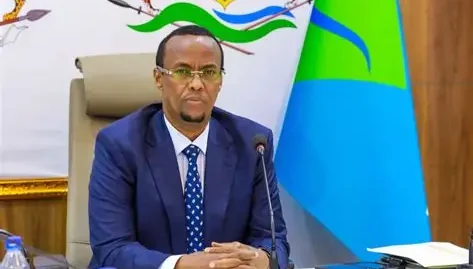
President Ali Guudlaawe has led Hirshabelle for nearly six years, governing a federal member state that has long struggled with political divisions, clan grievances, and disputes over power-sharing between its two constituent regions, Hiiraan and Middle Shabelle.
One of the greatest challenges facing his administration has been maintaining the confidence of communities in both regions.
Hiiraan, in particular, has remained a source of political tension for the Hirshabelle leadership. Beledweyne, the regional capital of Hiiraan, has often been at the center of those disputes.
Over the years, political disagreements and public dissatisfaction have created periods during which President Guudlaawe faced difficulties visiting the city.
In August 2026, Hirshabelle Vice President Yusuf Dabaged publicly discussed plans for Guudlaawe to travel to Beledweyne and engage directly with local residents and community leaders, acknowledging the need to address longstanding grievances.
Reports at the time noted that previous efforts to visit the city had faced obstacles.
These tensions illustrate that Hirshabelle’s challenges extend beyond clan violence. They are deeply intertwined with politics, governance, representation, and public trust.
A central political question remains whether a regional leader can effectively govern when a significant portion of the population continues to feel politically marginalized.
Beledweyne is not only the capital of Hiiraan but also one of the most important cities within Hirshabelle.
The regional administration officially operates there, and government ministries have continued implementing programs in the city throughout 2026.
If the president cannot regularly work from or freely travel to Beledweyne because of political or security concerns, critics argue that it weakens the administration’s ability to project authority and maintain unity between Hiiraan and Middle Shabelle.
At the same time, it would be unrealistic to suggest that any single leader can solve deeply rooted clan conflicts alone. Hirshabelle encompasses communities with different histories, political interests, and grievances.
Those disputes have at times evolved into political confrontations, inter-clan violence, and tensions that directly affect civilians and government security personnel.
The security environment further complicates the situation. While some areas continue to face threats from Al-Shabaab, others are dealing with local conflicts and governance challenges.
As a result, Hirshabelle finds itself confronting three major crises simultaneously: political divisions, clan conflicts, and the ongoing insurgency.
Beledweyne itself has witnessed numerous political disputes and security incidents in recent years. In 2022, clashes in the city led to the death of the Beledweyne Police Station commander, prompting President Guudlaawe to establish an investigative committee.
The city has also been a focal point for political movements advocating greater autonomy for Hiiraan.
Former Hiiraan Governor Ali Jeyte Osman was even selected in Beledweyne as the interim president of the self-declared Hiiraan State initiative, highlighting the depth of political dissatisfaction among some groups in the region and the continuing debate over Hirshabelle’s political structure.
The issue has become even more sensitive as Somalia moves toward a contentious electoral period.
In August 2026, the disputed National Independent Electoral and Boundaries Commission announced 12 districts in Hirshabelle where elections would be held, including six in Hiiraan region and Beledweyne itself.
However, tensions over the electoral process quickly surfaced. Reports indicated that Ma’awisley fighters took control of some voter registration centers in Beledweyne, opposing plans to conduct elections associated with the Hirshabelle administration.
The incident underscored how political disputes in Hiiraan are increasingly linked to broader questions about governance, representation, and control of the region’s political future.
The debate surrounding the killing of Ahmed Shire therefore extends beyond a single criminal act. It touches on larger concerns about state authority, justice, and the ability of institutions to protect citizens and members of the security forces regardless of clan affiliation.
If a national army soldier can travel within Hirshabelle and allegedly be killed because of clan-related grievances, many Somalis will question whether the state is fulfilling its fundamental responsibility to guarantee equal protection under the law.
For President Guudlaawe, the path forward may depend on pursuing a more comprehensive reconciliation process. Symbolic meetings and public declarations alone are unlikely to resolve the underlying issues.
Community leaders, politicians, elders, and civil society groups will need to reach genuine agreements aimed at ending revenge killings, strengthening the justice system, and ensuring that disputes are settled through legal institutions rather than violence.
Building trust in Hiiraan remains particularly important. Many observers argue that Guudlaawe must engage more consistently with the people of Beledweyne and demonstrate that the city remains an integral part of the administration he leads.
Residents of Hiiraan, they argue, must feel that they enjoy the same political and administrative rights as communities elsewhere in Hirshabelle.
Failure to address these grievances risks deepening political tensions, which could in turn fuel further instability and weaken government authority.
Continued clan violence would only compound the challenges already posed by Al-Shabaab and the region’s fragile political environment.
The killing of Ahmed Shire Hussein has therefore become more than a tragic security incident.
It has emerged as a test of whether Hirshabelle’s leadership can strengthen the rule of law, rebuild trust across regional and clan lines, and demonstrate that every citizen—whether soldier or civilian—can travel safely within the territory it governs.
For President Ali Guudlaawe, the challenge is clear: to prove that Hirshabelle can move beyond recurring conflict, heal divisions between Hiiraan and Middle Shabelle, and build a more stable and inclusive future for all its communities.