




The Hirshabelle administration was established in 2016, intended to unify the Hiiraan and Middle Shabelle regions, with Jowhar designated as the administrative capital.
The formation of the administration resulted from a political process involving the federal government, intellectuals, and traditional elders from both regions; however, since its inception, it has been plagued by political friction, clan-based grievances, power-sharing disputes, and security challenges that remain the administration’s primary hurdle.
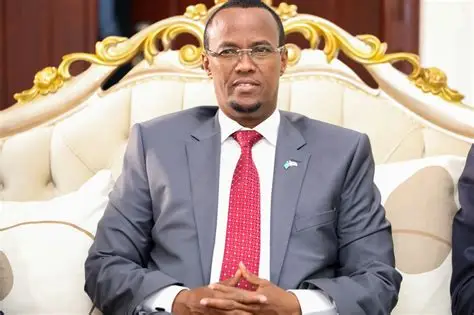
Ali Abdullah Hussein Guudlaawe was elected President of Hirshabelle on November 11, 2020, with his election sparking controversy among segments of the Hiiraan population.
Reports prepared by international organizations and research centers indicated that his election further exacerbated pre-existing disputes over regional power-sharing and an informal agreement reportedly designating the presidency for the Hawadle community while keeping the capital in Jowhar.
Hirshabelle was formally established in 2016, rooted in the amalgamation of Hiiraan and Middle Shabelle.
Nonetheless, ever since the conferences that formulated the administration, certain politicians and figures from Hiiraan maintained that their region possessed distinct administrative requirements and dynamics that warranted a different management approach.
The Rift Valley Institute noted that Hirshabelle’s formation was a rushed process, with factions within the Hiiraan community advocating for a separate regional administration rather than integration with Middle Shabelle.
The report further stated that power-sharing issues were never sustainably resolved, causing the administration to contend for extended periods with political friction and dysfunctional institutions across both regions.
One of the most consequential events during Ali Guudlaawe’s tenure occurred in June 2023, when he dismissed the Governor of Hiiraan, Ali Jeyte Osman.
The dispute stemmed from issues including revenue administration and institutional authority over regional tax collection.
Ali Jeyte opposed plans granting the Hirshabelle administration expanded leverage over taxation in Hiiraan, ultimately resulting in his dismissal.
Jeyte refused to vacate his position, transforming the dispute into a broader political crisis by declaring that Hiiraan had seceded from Hirshabelle.
This friction was not merely a disagreement between two officials.
It touched upon core structural tensions regarding the representation of local clans and the fractured relationship between Hiiraan and the central authorities of Hirshabelle.
The situation similarly impacted the campaign against Al-Shabaab, as certain local forces and militias participating in the offensive distanced themselves from previous cooperative arrangements.
ACLED noted that the political rift undermined collaboration between state forces and Hawadle militias, providing Al-Shabaab an opening to recapture territories it had previously vacated.
Hirshabelle stood as one of the primary theaters where the state and local militia offensive against Al-Shabaab heavily materialized, dislodging the group from numerous areas across Hiiraan and Middle Shabelle.
However, those initial victories did not prove enduring.
Government forces backed by the Macawiisley drove Al-Shabaab out of vast sectors of Hiiraan and Middle Shabelle during that period.
Yet those early gains were not consistently maintained or secured.
A recent report published by the European Union Agency for Asylum (EUAA) stated that in 2025 Al-Shabaab reoccupied strategic locations in Hiiraan, including Aborey, Moqokori, Tardo, and Maxaas.
The group additionally seized territory spanning between Maxaas and Matabaan alongside the roadway linking Maxaas to Beledweyne.
This illustrates that the fundamental dilemma extends far beyond whether Hirshabelle forces nominally control urban centers.
The core crisis lies in what occurs subsequent to driving Al-Shabaab out of a locality.
Without deploying standing forces, municipal administration, judicial systems, public services, and governance structures responsive to the local populace, armed insurgents remain capable of staging a resurgence.
Research reports indicate that the friction between the Hawadle and Abgaal communities is fundamentally linked to power-sharing, regional administrative capital disputes, political representation, and resource governance.
Inter-clan conflicts have likewise erupted along the borders of Hiiraan and Middle Shabelle.
The EUAA has documented armed confrontations between the Hawadle and Abgaal occurring in Jalalaqsi, Moqokori, and other settlements.
The report noted that certain conflicts were rooted in land disputes, resource competition, and grievances surrounding local administration.
This dynamic directly impacts the campaign against Al-Shabaab. When clans and administrations clash over authority and security, coordinating a united local force to prosecute the war against the group becomes exceedingly difficult.
Critics of Ali Guudlaawe’s administration frequently point out that the regional government has yet to achieve a lasting resolution to the disputes dividing Hiiraan and Middle Shabelle.
They similarly question the administration’s capacity to reclaim territories governed by Al-Shabaab and whether sustainable governance and security structures have been instituted in areas cleared of insurgents.
Additional criticism targets the failure of regional institutions to operate effectively across both provinces, resulting in pockets of Hiiraan and Middle Shabelle maintaining fragmented administrative systems or operating entirely autonomously from Jowhar.
A 2025 Heritage Institute report stated that inter-clan disputes, armed factions, and limited resources have severely undermined Hirshabelle’s institutions, leaving certain districts operating independently or remaining under Al-Shabaab control.
When evaluating Hirshabelle, it is equally important not to overlook the administration’s tangible achievements.
Throughout 2025 and 2026, the Hirshabelle Ministry of Interior and Local Governments spearheaded initiatives concerning local government formation, training municipal personnel and local committees, registering residents, and reinforcing district institutions.
For instance, the ministry reported conducting local governance programs and training sessions across Jowhar, Balcad, Buloburde, and other districts.
The Core Challenge: The administration has yet to achieve a lasting political agreement. The predicament of Hirshabelle appears to run far deeper than the fight against Al-Shabaab.
If the two regions fail to reach a complete consensus on power-sharing, leadership succession, the designation of the capital, and revenue management, the campaign against Al-Shabaab will continually encounter severe political obstacles.
The Heritage Institute characterized Hirshabelle’s crisis as stemming from a foundational political settlement that remains unresolved.
The institute recommended initiating renewed dialogue regarding power-sharing, the capital, community reconciliation, and a unified security architecture.
This implies that the solution for Hirshabelle cannot be reduced to merely deploying troops to areas held by Al-Shabaab.
It requires first securing a settlement endorsed by the local community, followed by establishing institutions capable of sustaining security and public services.
Hirshabelle approaches a decade since its inception. Throughout that span, presidents, councils, and politicians have rotated through office, yet several of the structural disputes accompanying the administration’s founding persist.
As recent 2026 data indicates, Guudlaawe remains actively engaged in the regional administration’s electoral politics, amid ongoing disputes and political negotiations concerning Hirshabelle’s trajectory.
A September 2026 report stated that Guudlaawe met with a Hawadle political council that expressed support for his leadership and for one-person-one-vote elections.
This demonstrates that Hirshabelle’s political rift has not yet concluded, even as the various factions continue seeking a functional framework for mutual understanding.