

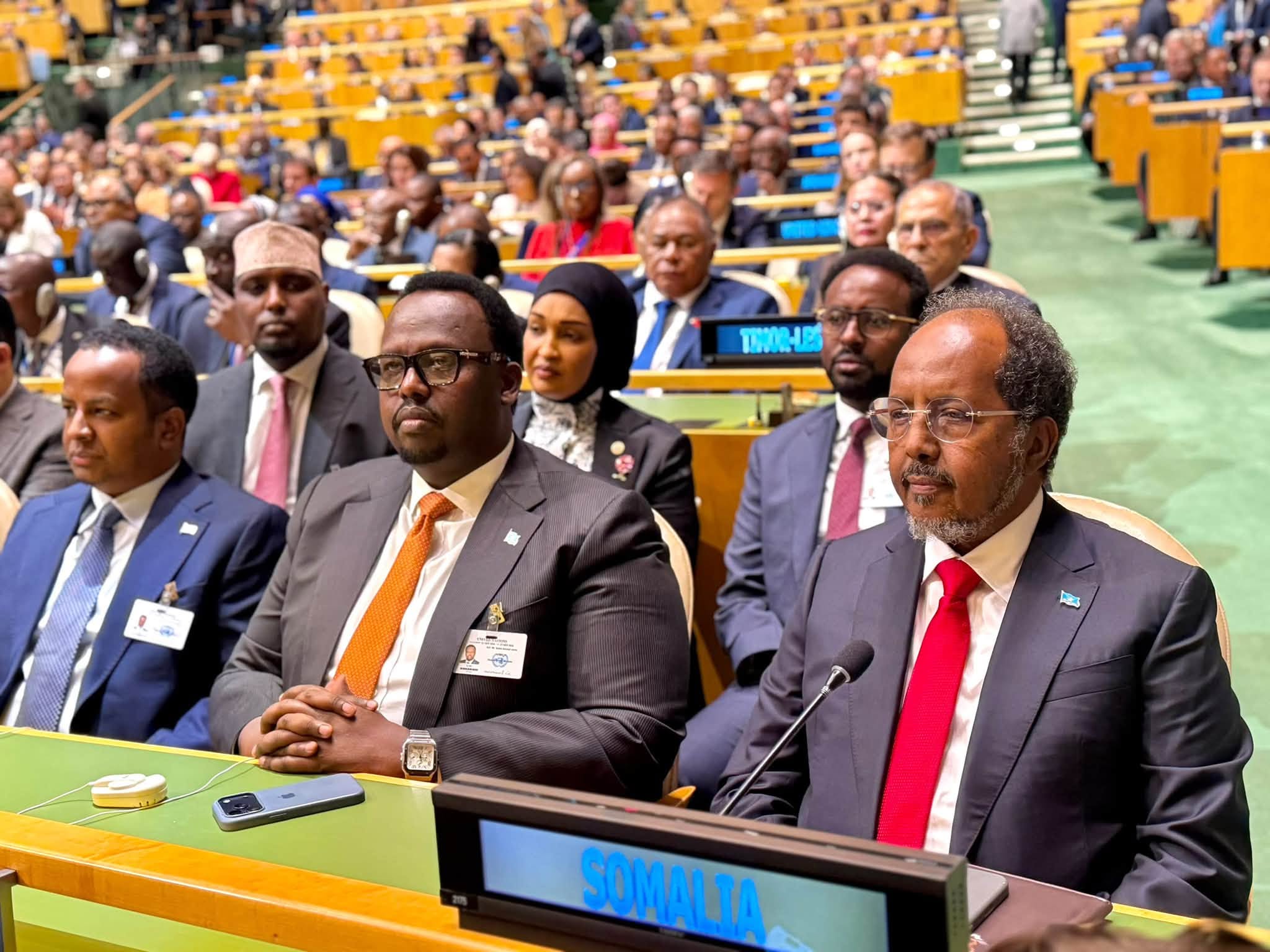

Hassan Sheikh’s visit to the United States during the 81st Session of the United Nations General Assembly has sparked political discussion in Somalia after no meeting was confirmed between the Somali leader and senior U.S. officials, including Secretary of State Marco Rubio.
According to reports circulating in Somalia, Villa Somalia had sought to arrange a meeting between President Hassan Sheikh and Rubio during the UN General Assembly gatherings in New York.
However, no such meeting was announced by either the Somali or U.S. governments, and there has been no official confirmation that the two leaders met.
The highest-ranking publicly confirmed U.S. official to meet the Somali president during the visit was Frank Garcia, the U.S. Assistant Secretary of State for African Affairs.
The meeting took place in New York on September 23 and focused on bilateral relations and regional issues, according to official statements.
The absence of a publicly confirmed meeting with Washington’s top diplomatic leadership has fueled debate among Somali political observers, particularly at a time when Somalia is facing significant political and constitutional challenges at home.
The discussions surrounding the visit come against the backdrop of ongoing disagreements over Somalia’s constitutional reforms, electoral framework, and the tenure of state institutions.
In March 2026, Somalia’s parliament approved constitutional amendments that critics argued could extend the mandates of key government institutions and delay future elections.
The changes triggered sharp political reactions from opposition groups and several political figures, who questioned both the process and the implications of the amendments.
President Hassan Sheikh has maintained that the constitutional changes are part of broader state-building reforms and has stated that the mandates of the presidency and parliament continue until May 15, 2027.
Opposition figures, however, have disputed that interpretation.
Another issue that has generated public debate in recent years concerns urban redevelopment projects and forced evictions in Mogadishu.
Government authorities have defended demolition and relocation operations as necessary for infrastructure development, road expansion, and the recovery of public land.
Critics, including affected residents and opposition politicians, have argued that some evictions were carried out without sufficient transparency, compensation, or alternative housing arrangements.
The controversy has raised broader questions about property rights, urban planning, and public trust in government institutions.
Concerns have also been raised over support programs for the families of soldiers killed in the fight against Al-Shabaab.
Recent reports alleging reductions in financial assistance for children of fallen soldiers have drawn criticism from some politicians and members of the public.
The issue has revived longstanding discussions about the welfare of wounded veterans, retired service members, and the families of those who died in military operations.
Supporters of the government argue that the administration is pursuing essential reforms aimed at strengthening security, governance, and constitutional institutions.
Critics, however, contend that greater transparency and broader political consensus are needed on issues ranging from elections and constitutional amendments to land disputes and social welfare programs.
Against this backdrop, President Hassan Sheikh’s visit to the United States was closely watched as an opportunity to reinforce Somalia’s international partnerships.
While the president addressed the UN General Assembly and held several diplomatic engagements, the lack of a publicly confirmed meeting with Washington’s most senior officials has become a focal point of political discussion back home.
As debate continues, analysts say the broader significance of the visit may ultimately be judged not by protocol or meeting schedules, but by whether Somalia can translate its international engagement into tangible progress on governance, security, economic development, and public confidence in state institutions.