


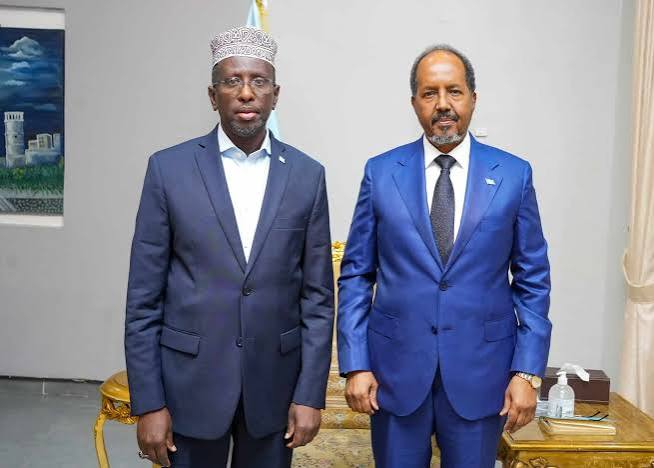


Hassan Sheikh Mohamud is facing mounting political pressure linked to the ongoing dispute between the federal government and opposition factions, rooted in constitutional amendments, the electoral framework, and the future governance of the country.
Hassan Sheikh, who has served two non-consecutive terms as President of Somalia, currently navigates a sensitive political juncture as the opposition actively rejects government measures concerning constitutional revisions and electoral protocols.
This impasse has heightened concerns that the political rivalry could devolve into security confrontations in Mogadishu, particularly if the parties fail to reach a negotiated consensus on contested issues.
The opposition contends that major national decisions must be determined through inclusive political consensus, whereas the federal government insists on proceeding with its political reform and electoral roadmap.
Tensions are further compounded by a deficit of trust between the central government, opposition figures, and key Federal Member States, who remain sharply divided over administrative governance and electoral modalities.
Observers monitoring the political landscape warn that if the dispute is not resolved through dialogue, the risk of armed clashes threatening capital security and daily civilian life will increase.
Mogadishu serves as Somalia’s political epicenter, hosting federal institutions, key political leaders, and core administrative headquarters.
Consequently, any security breakdown in the capital would severely disrupt commerce, public mobility, and essential public services.
The primary solution lies in the government and opposition returning to dialogue to reach a consensus on the constitution, elections, and mechanisms for managing political disputes.
The future of Somali statehood depends heavily on how the country’s leaders manage the current dispute while safeguarding stability, national unity, and public safety.