


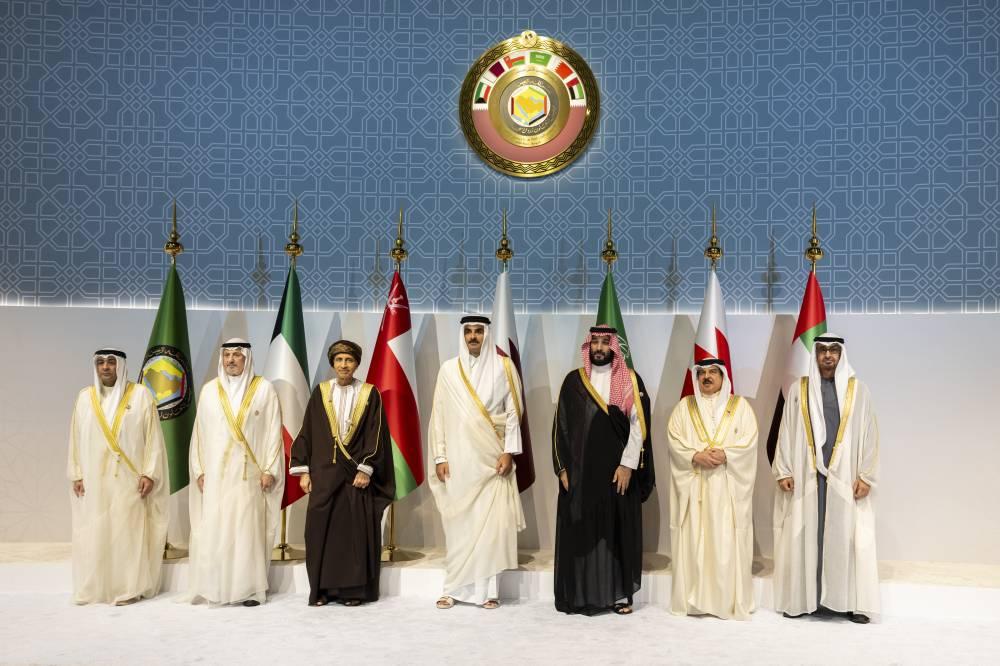


The Gulf Cooperation Council (GCC) has strongly reacted to the statements and accusations directed at the United Arab Emirates by officials of the Federal Government of Somalia, at a time when the diplomatic dispute between the two sides has reached a new level.
The Secretary-General of the Gulf Cooperation Council, Jasem Mohamed Albudaiwi, issued a statement on November 19, 2026, condemning the remarks by Somali government officials against the UAE, describing them as irresponsible and a media campaign that he said falsely targets the UAE.
“Mr. Jasem Mohamed Albudaiwi, Secretary General of the Gulf Cooperation Council (GCC), expressed his condemnation and denunciation of the irresponsible statements and malicious media campaigns directed against the United Arab Emirates by officials within the Federal Government of Somalia,” the statement added.
The Secretary-General stated that the United Arab Emirates plays a vital role in strengthening regional security and stability, and supports dialogue and cooperation among nations of the world.
He cited the recent Russia-Ukraine talks hosted in the UAE as an example, stating that this step demonstrates Abu Dhabi’s role in regional and international peace and security efforts.
Albudaiwi also said that the accusations against the UAE undermine the country’s efforts to strengthen international dialogue and cooperation.
The Secretary-General affirmed that the member states of the Gulf Cooperation Council remain committed to their policy of promoting regional security, stability, and development.
He added that the member states of the council categorically reject any media campaign aimed at attacking or damaging the reputation of the organization’s member states.
The Gulf Cooperation Council comprises six member states: Saudi Arabia, the United Arab Emirates, Qatar, Kuwait, Bahrain, and Oman.
The Secretary-General’s statement indicates that the dispute between Somalia and the UAE now carries implications beyond bilateral relations, having drawn the attention of other Gulf states.
The GCC statement was issued after the Somali government took diplomatic measures against the UAE.
On November 19, the Federal Government of Somalia ordered the UAE ambassador to leave the country within 72 hours, while also recalling its own ambassador from Abu Dhabi for consultations.
This step was preceded by a speech delivered by Somali President Hassan Sheikh Mohamud, in which he accused the UAE of interfering in Somalia’s internal affairs, providing support to certain administrations, and establishing relations and agreements with the administrations of Somaliland, Puntland, and Jubaland.
The President also expressed concern over port agreements in Berbera, Bosaso, and Kismayo, as well as security cooperation issues, stating that these matters infringe upon Somalia’s sovereignty and unity.
The UAE rejected the Somali government’s accusations, describing the expulsion of its ambassador as an action that fuels the dispute and could harm relations between the two peoples.
The dispute between the two countries is not new. In January 2026, the Somali government announced the annulment of its agreements with the UAE related to ports, security, defense, and economic cooperation.
The Somali government justified that decision on the grounds of protecting the country’s sovereignty and unity. However, the administrations of Puntland, Jubaland, and Somaliland rejected the notion that the Federal Government’s decision could invalidate the agreements they had independently entered into with the UAE.
Meanwhile, the UAE closed its embassy in Mogadishu in January and withdrew its diplomatic staff, accusing the Somali government at the time of taking what it described as hostile actions.
The stance now taken by the Gulf Cooperation Council could further complicate the diplomatic situation between Somalia and the UAE, as the matter will no longer be confined solely to the two governments.
Somalia maintains historic, commercial, economic, and social ties with Gulf countries. Thousands of Somali citizens reside in those nations, while trade and remittances play a major role in the economy of the Somali community.
Therefore, it is vital that the political dispute between Somalia and the UAE does not negatively impact Somalia’s broader relations with other Gulf states.
On the other hand, the Somali government maintains that issues concerning the country’s sovereignty, unity, and security are non-negotiable, while the UAE rejects the allegations leveled against it.
The GCC statement represents a significant diplomatic position, as observers await the Somali government’s response and the next steps to be taken by both sides.
It will also be important to see whether other Gulf nations comment individually on the dispute or adhere strictly to the collective stance presented by the GCC Secretary-General.
So far, the Secretary-General’s statement neither resolves the dispute nor clarifies whether all member states of the council have taken specific measures against Somalia.
Ultimately, the dispute between Somalia and the UAE has entered a sensitive phase, with all eyes on how Mogadishu will respond to the GCC’s stance and whether diplomacy will succeed in bringing both sides back to the negotiating table.