


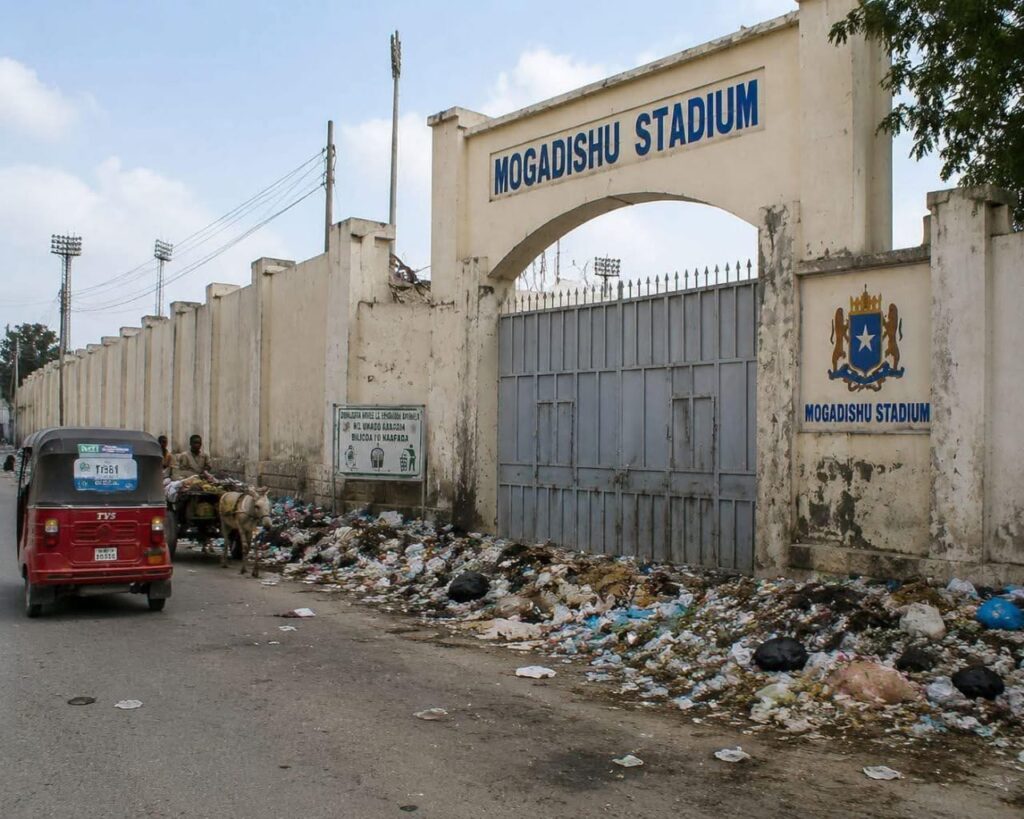


Mogadishu (Kaab TV) – Large amounts of garbage have piled up between the Halane area and the western entrance of Mogadishu Stadium, particularly on the northern side of the road, raising growing concerns over public health, sanitation, and environmental neglect in one of the capital’s busiest areas.
Residents say the waste appears to have been dumped over time by garbage trucks, donkey carts, and private individuals, turning the area into an unofficial dumping site despite its proximity to government facilities and security checkpoints.
The situation is especially alarming because security personnel from several branches of Somalia’s security forces are stationed only a short distance away. The area is frequently used by civilians, public transport vehicles, and people travelling to and from Mogadishu Stadium, making the pollution highly visible to the public.
Local residents and motorists say the foul smell from the garbage has become unbearable, particularly during hot weather, forcing pedestrians to cover their noses while passing through the area.
Some residents also fear that the accumulation of waste could lead to the spread of diseases, insects, and environmental contamination if immediate action is not taken.
The problem also highlights broader challenges facing Mogadishu’s waste management system, including weak enforcement of sanitation regulations, limited public awareness, and the lack of designated dumping sites in some districts. Illegal dumping of garbage along roadsides and public areas has become increasingly common in parts of the capital, especially in overcrowded neighborhoods.
Environmental activists and community members argue that the issue reflects a wider failure of coordination between local authorities, sanitation services, and security agencies responsible for maintaining order around important public facilities.
Environmental protection remains a shared responsibility, with local authorities, security forces, and residents all expected to contribute to maintaining public cleanliness. The district administration is being urged to increase regular cleaning operations, strengthen monitoring systems, and prevent illegal dumping in undesignated areas.
It is reported that Security forces stationed near the area are also being encouraged to take a more active role in protecting the environment around their bases and stopping individuals who continue to dump waste there, while residents and businesses are being called upon to avoid disposing of garbage on roadsides and in public spaces.
The growing piles of waste are not only an environmental and health hazard but also damage the image of the capital and reflect ongoing concerns about urban management and public accountability in Mogadishu.
The worsening garbage crisis around Muqdisho Stadium has also fueled criticism of President Hassan Sheikh Mohamud’s administration, with residents and activists accusing the federal government of failing to maintain environmental cleanliness and basic sanitation standards in the capital.
Critics argue that despite repeated promises to improve public services and the image of Mogadishu, illegal dumping, poor waste management, and weak enforcement of sanitation regulations continue to plague key areas of the city, including locations close to government institutions and heavily guarded security zones.