


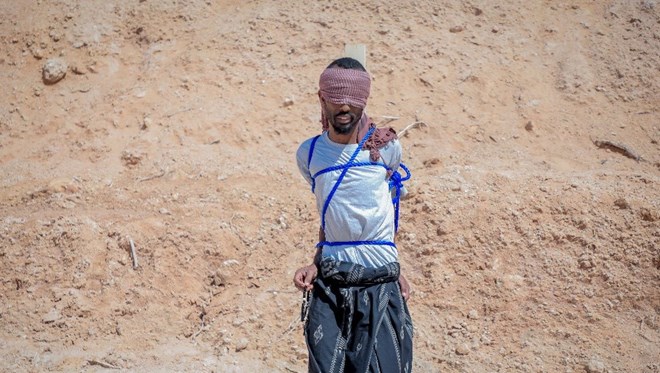


Galmudug (KAAB TV) – The regional government of Galmudug has today officially carried out a death sentence against Nur Hirsi Warsame, who was convicted of the premeditated murder of Ahmed Wali Mohamed Salad.
The execution took place in the Dhagaxbur area, located within the Guriceel district of the Galgaduud region.
The case stems from a violent incident that occurred in July 2025, where Nur Hirsi was found to have intentionally killed the victim, Ahmed Wali Mohamed Salad.
Following extensive investigations and legal proceedings, the Galmudug High Court rendered a guilty verdict, sentencing the accused to death in accordance with the Somali Penal Code.
The legal process was conducted over several weeks, involving detailed examinations of evidence, witness testimonies, and judicial reviews to ensure a fair and thorough trial.
The court ultimately concluded that the act was deliberate and constituted a serious criminal offense under Somali law.
The execution was conducted in the presence of various officials and community representatives. Among those in attendance were members of the Galmudug judiciary, security personnel, religious scholars, and relatives of both the victim and the convicted.
The presence of these groups was intended to emphasize the transparency of the legal process and to demonstrate the community’s endorsement of the judicial outcome.
A spokesperson from the Office of the Attorney General of Galmudug addressed the media shortly after the execution.
The official affirmed that the enforcement of the sentence aligns strictly with national legislation, specifically the Somali Penal Code, which provides for capital punishment in cases of intentional and aggravated murder.
“This execution sends a strong and unequivocal message to anyone who considers engaging in heinous crimes such as intentional murder,” the spokesperson stated.
“Galmudug remains firmly committed to upholding the rule of law, ensuring public safety, and delivering justice to all citizens.”
Human rights organizations and legal analysts have frequently called for transparency and due process in Somalia’s judicial system.
In this case, Galmudug officials emphasized that all legal procedures were meticulously followed, and the execution was carried out only after the completion of the appeals process and final confirmation of the sentence.
While capital punishment remains legal in Somalia for the most severe crimes, including intentional homicide, its application continues to raise important debates around justice, deterrence, and human rights in the country’s evolving legal landscape.
This incident underscores the Galmudug administration’s stated commitment to law enforcement and the prevention of violent crime, amid broader efforts to stabilize and strengthen governance across the region.