


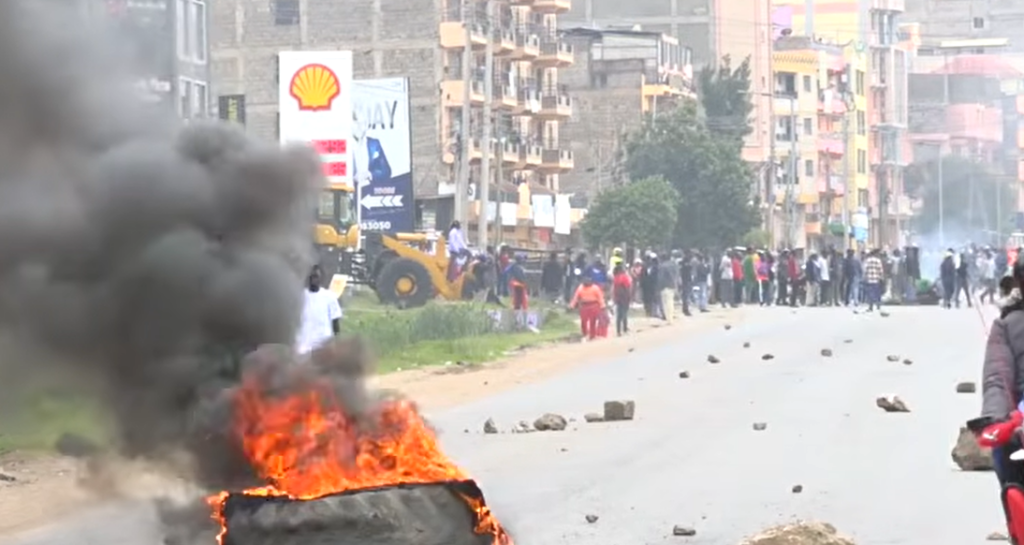


Nairobi (Kaab TV) – At least four people were killed, more than 30 injured, and hundreds arrested during nationwide protests in Kenya on Monday, after a sharp rise in fuel prices sparked unrest across major towns and cities.
The demonstrations, which coincided with a nationwide public transport strike, brought parts of the country to a standstill as protesters blocked roads, burned tires, and clashed with police in several areas, including the capital, Nairobi, and the coastal city of Mombasa.
Kenya’s Interior Minister, Kipchumba Murkomen, confirmed the deaths and injuries during a televised press conference, saying authorities had arrested at least 348 people linked to what the government described as violent protests.
However, a later statement from Kenya’s Directorate of Criminal Investigations (DCI) said the number of arrests had risen to 710 nationwide, with the highest number recorded in the Rift Valley and Nairobi regions.
The protests erupted after Kenya’s Energy and Petroleum Regulatory Authority increased retail fuel prices by up to 23.5 percent last week, following another major increase the previous month. The hikes have sharply raised transport and food costs, worsening the economic pressure on many households already struggling with the high cost of living.
Thousands of commuters were stranded after privately owned matatus — the country’s main form of public transport — stopped operating in protest against the higher fuel costs. Schools and businesses in several areas were also forced to close as unrest spread.
Police used tear gas to disperse crowds in parts of Nairobi, while witnesses reported gunfire during clashes between protesters and security forces. Protesters also erected barricades and set bonfires on major highways, causing severe traffic disruptions.
The Kenyan government defended the fuel price increase, blaming global oil market instability linked to tensions in the Middle East and disruptions affecting fuel imports through the Strait of Hormuz.
Opposition leaders, including former Deputy President Rigathi Gachagua, accused President William Ruto’s administration of exploiting the crisis and failing to protect ordinary citizens from rising living costs.
Human rights organizations also condemned the use of force against demonstrators, calling for investigations into the deaths and injuries reported during the protests.