

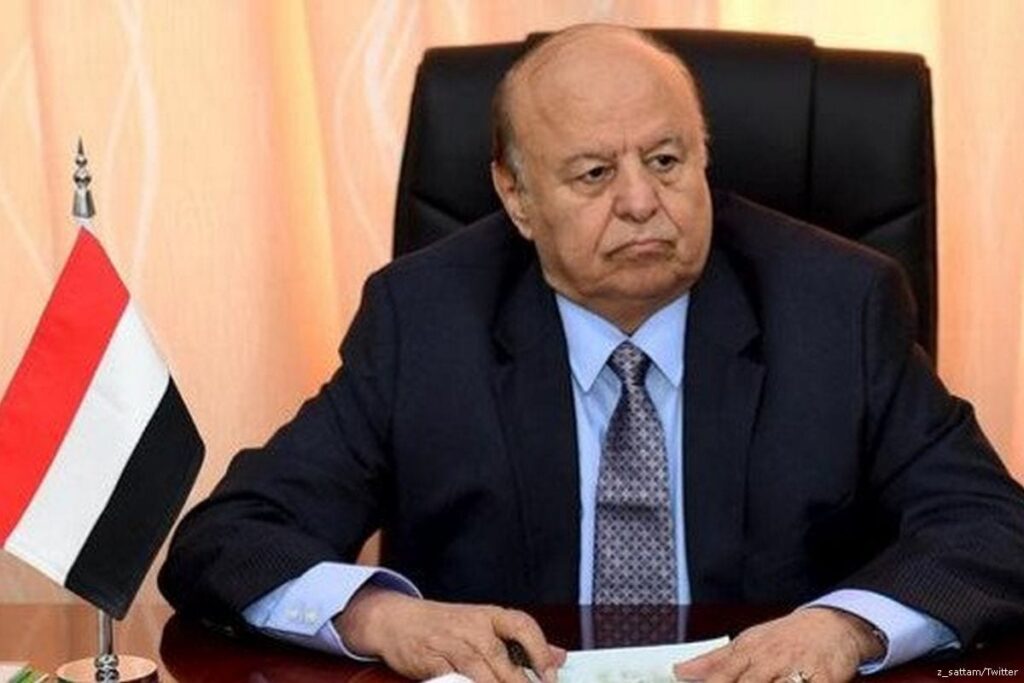

RIYADH (Kaab TV) – Former Yemeni President Abdrabbuh Mansur Hadi has died at the age of 81 in a hospital in Riyadh after years of declining health, according to sources close to his family and senior Yemeni officials.
Hadi had reportedly been suffering from chronic health complications, particularly heart-related illnesses, and had undergone several medical treatments abroad over the years, including specialized care in Cleveland in the United States.
The former Yemeni leader had lived in Riyadh since 2015 after the Houthis seized control of the Yemeni capital, Sanaa, forcing his internationally recognized government into exile during the country’s escalating civil war.
Hadi’s death marks the end of a major chapter in Yemen’s modern political history, as he led the country through one of the most turbulent periods following the Arab Spring uprising and the outbreak of the Yemeni civil conflict.
Born on September 1, 1945, in the Al-Wadi’a district of Abyan province in southern Yemen, Hadi built a long military and political career after joining the armed forces at a young age. He later rose through Yemen’s military establishment and eventually became vice president under longtime Yemeni leader Ali Abdullah Saleh.
Hadi assumed the presidency in 2012 following Saleh’s resignation under a Gulf Cooperation Council-backed transition agreement that sought to stabilize Yemen after months of nationwide protests during the Arab Spring movement.
At the time, many regional and international powers viewed Hadi as a compromise figure capable of guiding Yemen through political reform and national reconciliation. However, his presidency soon became overshadowed by deepening political divisions, economic collapse, militant violence, and the growing strength of the Houthi movement.
In 2014, Houthi fighters captured Sanaa and later expanded their control across large parts of the country, triggering a wider conflict that pushed Hadi’s government out of the capital and eventually into exile in Saudi Arabia.
The conflict escalated further in 2015 after a Saudi-led military coalition intervened in support of Hadi’s government against the Houthis, who were widely seen as being backed by Iran. The war transformed Yemen into one of the world’s worst humanitarian crises, with hundreds of thousands killed or displaced and millions facing hunger, disease, and economic devastation.
Despite remaining internationally recognized as Yemen’s president for years, Hadi faced criticism from both supporters and opponents who accused his administration of weak governance, political fragmentation, and failure to unify anti-Houthi factions.
In April 2022, under significant regional and international pressure, Hadi formally transferred his presidential powers to the Presidential Leadership Council, a body created to unite rival anti-Houthi groups and restructure Yemen’s political leadership amid stalled peace efforts.
Even after stepping down, Hadi remained an influential political figure and maintained close relations with Gulf Arab states supporting the anti-Houthi coalition, particularly Saudi Arabia and the United Arab Emirates.
News of his death prompted condolences from Yemeni politicians, Arab leaders, and international organizations, many of whom described him as a central figure in Yemen’s modern political era despite the controversies surrounding his rule.
Political observers say Hadi’s legacy will likely remain deeply divisive in Yemen, where some view him as a leader who attempted to preserve state institutions during a national collapse, while others blame his administration for failing to prevent the country’s descent into prolonged war and instability.