

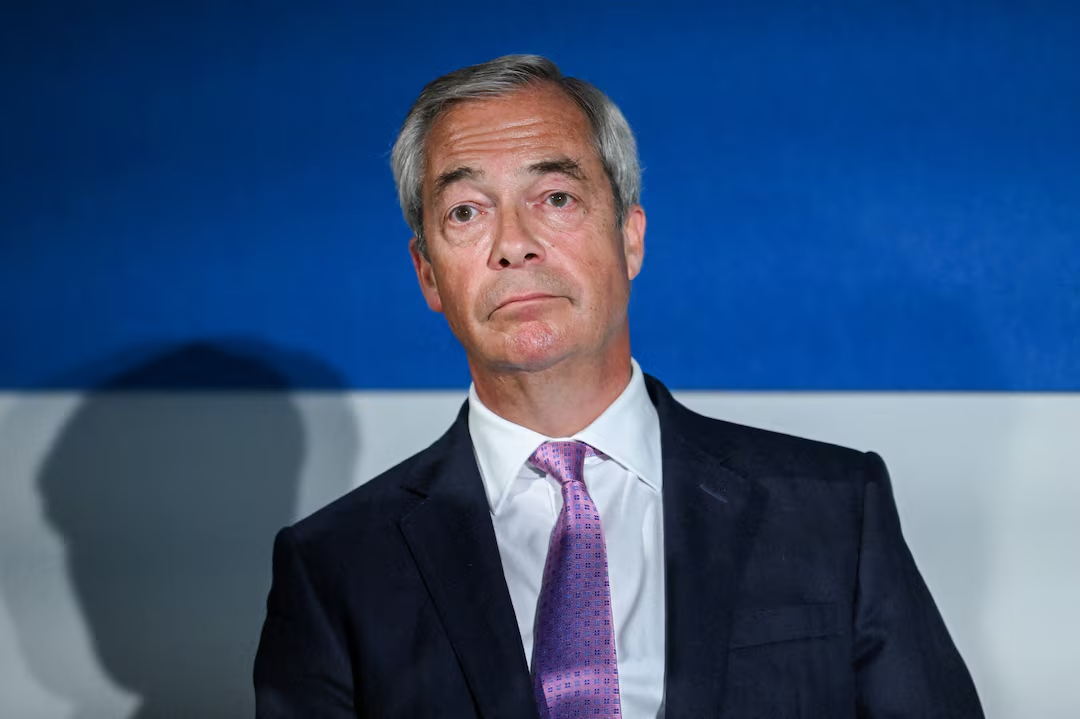

LONDON (KAAB TV) – Nigel Farage, leader of the Reform UK party, has launched a sweeping and controversial immigration policy, pledging to deport asylum seekers en masse should his party win the upcoming general election.
The strategy, dubbed Operation Restoring Justice, is rooted in nationalist rhetoric and aims to overhaul the UK’s legal and humanitarian framework.
Core Policy Pillars
Farage’s plan includes several radical measures:
Reform UK intends to scrap the Human Rights Act and withdraw the UK from the European Convention on Human Rights, effectively removing legal hurdles to rapid deportations.
Proposed laws would deny asylum claims to those arriving via so-called “small boats” and prevent them from challenging deportation.
The plan proposes building detention centers on military air bases capable of holding up to 24,000 people within 18 months—at a projected cost of £2.5 billion.
A bold target of five deportation flights per day aims to remove hundreds of thousands of migrants over a short period.
Farage floated the use of third countries such as Rwanda, Albania—or even the remote Ascension Island—as locations for deportation or holding centers.
Supportive Incentives and Strategic Messaging
A unique component of the plan involves offering a voluntary return program: migrants would receive £2,500 plus travel costs via a digital “self‑deportation” app if they agree to leave the UK voluntarily.
Farage frames the measure as a citizen-first initiative, stating that the safety of British women and girls outweighs international human rights obligations. He stressed, “I can’t be responsible for despotic regimes all over the world,” emphasizing domestic security over humanitarian concerns.
Cost and Claimed Savings
Reform UK estimates the total cost at around £10 billion over five years, arguing that long-term savings—up to £7 billion annually—will be realized by eliminating current asylum accommodation expenses.
Rising Tensions and Public Backdrop
The plan emerges amid mounting anti-immigration protests and a tense domestic landscape. Hotels housing asylum seekers have become focal points for demonstrations across towns like Epping, Exeter, and Bolton. Many protesters cite safety, overcrowding, and lack of local input as major grievances.
Since mid-July, these protests have expanded nationwide, met with significant police deployments and counter-demonstrations organized by groups like Stand Up to Racism. The unrest has triggered court rulings blocking asylum placements, such as the injunction against housing migrants at the Bell Hotel in Epping.
Legal, Diplomatic & Practical Criticisms
Legal experts and human rights organizations have condemned Farage’s proposals as dangerously extreme, likely illegal under international and U.K. law. Withdrawal from treaties and termination of judicial oversight would invite severe diplomatic and institutional backlash.
Further challenges include the enormous logistical cost and feasibility of scaling such deportations, particularly amid political opposition and infrastructure constraints.
Political Impact and Reform UK’s Positioning
Farage has seized on public discontent over immigration and asylum bottlenecks to boost Reform UK’s visibility—they have topped recent polls, capitalizing on voter frustration.
By branding the immigration situation as a “massive crisis,” Farage is positioning his party as the only serious solution to perceived threats to national security and cohesion.
Farage’s “Operation Restoring Justice” is a provocation and a policy statement, flouting established human rights norms and raising serious legal, diplomatic, and ethical questions. With the UK’s political center fracturing and public disquiet simmering, the proposal could yet redefine the national debate—or crumble against institutional and popular resistance.