


Ethiopia is facing an increasingly complex security and political crisis, with armed conflicts spreading across several regions, rising tensions between the federal government and insurgent groups, and worsening diplomatic relations with neighbouring Eritrea.
The developments have raised concerns that the Horn of Africa could be heading towards a new period of instability and wider confrontation.
The renewed fighting in northern Ethiopia has attracted growing international concern, particularly following reports of military deployments along the Ethiopian-Eritrean border.
There are fears that the internal conflict could escalate into a direct confrontation between the two countries, potentially drawing other regional powers into a wider crisis.
Such an escalation would have serious implications for neighbouring states, especially Somalia, which shares a border with Ethiopia and maintains close security, economic and political ties with Addis Ababa.
Throughout 2026, Ethiopia has faced armed conflicts in several regions, placing significant pressure on the government of Prime Minister Abiy Ahmed.
The most prominent confrontation has been in the northern Tigray region, where federal forces and fighters aligned with the Tigray People’s Liberation Front (TPLF) have again faced tensions and clashes following the breakdown of the Pretoria peace agreement, which brought an end to the devastating war in 2022.
In the Amhara region, federal troops continue to fight Fano militias, while Oromia remains affected by an insurgency involving the Oromo Liberation Army (OLA).
The simultaneous conflicts have forced the government to deploy troops and resources across multiple fronts, raising questions about its ability to contain insecurity throughout the country.
A report published by the Council on Foreign Relations on November 18 described Ethiopia’s conflicts as entering a new phase, with different armed groups reportedly forming alliances against the federal government.
Such developments could further complicate efforts to restore stability and increase pressure on the country’s security institutions.
Of particular concern to regional governments is the deteriorating relationship between Ethiopia and Eritrea. The two countries fought a devastating border war between 1998 and 2000, resulting in heavy casualties and economic destruction.
Relations improved following the 2018 peace agreement, which formally ended years of hostility and restored diplomatic ties.
However, tensions have resurfaced over security concerns, border disputes and Ethiopia’s pursuit of access to the sea.
A Reuters report published on November 18 said both countries had deployed forces near their shared border, while reports also pointed to exchanges of artillery fire and drone attacks around Badme.
Eritrea has denied allegations that it sent troops into Ethiopian territory, while Addis Ababa has accused Asmara of interfering in its internal affairs.
If the confrontation develops into open warfare, the consequences could extend well beyond the two countries, threatening stability across the wider Horn of Africa.
Ethiopia’s security challenges are not limited to the northern regions. Fighting and territorial disputes have also affected parts of the south, particularly areas inhabited by Somali and Oromo communities.
Clashes involving security forces and armed groups linked to the Oromia regional administration and the Somali Regional State have been reported around Moyale and other neighbouring areas.
The disputes are rooted in competing claims over territory, local administration and access to natural resources.
An Al Jazeera report published on November 17 said fighting around Moyale had disrupted trade, transport routes and the daily lives of civilians.
The violence has also raised concerns about displacement and the humanitarian consequences for communities living along the border.
The United Nations refugee agency, UNHCR, has separately reported that regional authorities estimated approximately 50,000 people had crossed into Kenya since October 22 to escape the fighting.
The figure was described as an initial estimate that was still being verified, highlighting the scale of the potential displacement crisis.
Ethiopia has also long played an important role in Somalia’s security arrangements.
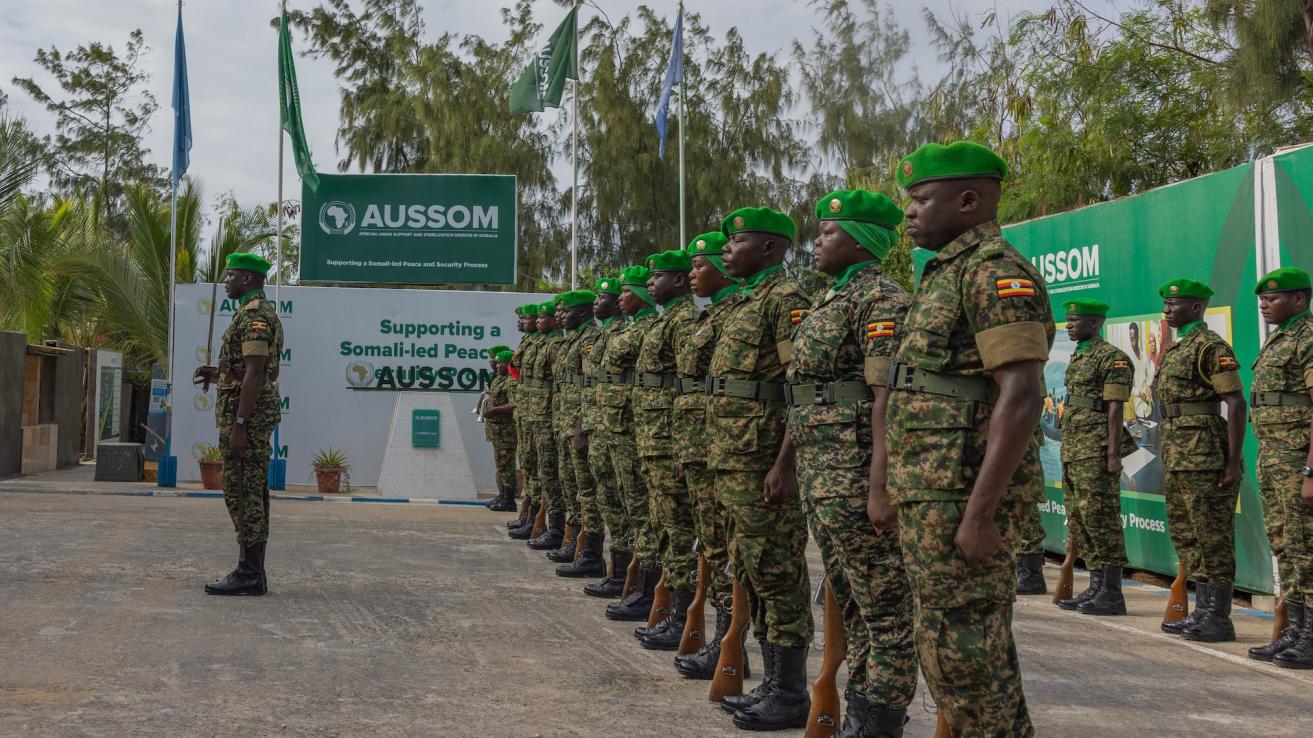
Ethiopian troops operate in parts of the country under the African Union Support and Stabilization Mission in Somalia (AUSSOM), as well as through bilateral security agreements with the Federal Government.
A further deterioration in Ethiopia’s internal security could force Addis Ababa to prioritise domestic military requirements, potentially prompting a reassessment of its forces deployed in Somalia.
Such a development would create additional concerns for Mogadishu, given the role Ethiopian troops play in operations against Al-Shabaab.
Somalia’s State Minister for Foreign Affairs, Ali Mohamed Omar, widely known as Ali Balcad, has previously warned that instability in Ethiopia could affect security operations in Somalia, particularly if Ethiopian forces were required to return home.
A major escalation in Ethiopia could therefore complicate Somalia’s efforts to strengthen its national security forces and sustain the campaign against Al-Shabaab.
This would come at a time when the Federal Government continues to rely on regional and international partners to support military operations and stabilisation efforts.
Another major factor shaping Ethiopia’s relations with its neighbours is its pursuit of access to the sea, which Addis Ababa considers a strategic national interest.
Since Eritrea gained independence in 1993, Ethiopia has been a landlocked country and has depended heavily on neighbouring states for access to maritime trade routes and international ports.
Ethiopian leaders have repeatedly stressed the importance of securing reliable access to the sea, while other countries in the region have maintained that any arrangements must be based on agreements that respect national sovereignty and territorial integrity.
Somalia is particularly sensitive to this issue following the diplomatic crisis triggered by Ethiopia’s memorandum of understanding with Somaliland.
The agreement, announced in January 2024, was strongly opposed by Mogadishu, which considered it a violation of Somalia’s sovereignty and territorial integrity.
If tensions surrounding Ethiopia’s maritime ambitions continue to rise, competition over ports, strategic infrastructure and access to the Red Sea and Gulf of Aden could intensify.
This could also attract greater involvement from regional and international powers seeking to protect their economic and security interests.
Ethiopia’s diplomatic challenges extend beyond its relations with Eritrea. Its complicated ties with Egypt and Sudan are another source of tension affecting the wider region.
The dispute over the Grand Ethiopian Renaissance Dam (GERD), built on the Blue Nile, has remained a major point of disagreement between Addis Ababa and Cairo.
Egypt has repeatedly expressed concerns about the dam’s potential impact on its water security, while Ethiopia maintains that the project is essential to its development and electricity generation.
Meanwhile, the war in Sudan has created another layer of regional competition, with neighbouring countries holding differing positions over the conflict and the parties involved. The overlapping disputes have increased the risk that developments in one country could affect security and diplomatic relations across the region.
The Council on Foreign Relations has warned that conflicts in Ethiopia, the war in Sudan and rising tensions between neighbouring states could combine into a broader regional security crisis.
There are also growing concerns that foreign powers could become more deeply involved by providing political, financial or military support to competing sides. Such involvement could make diplomatic efforts more difficult and prolong existing conflicts.
The worsening situation in Ethiopia is therefore increasing pressure on the international community to prevent another war between Addis Ababa and Asmara.
The African Union, United Nations, United States and other influential international partners face the challenge of encouraging dialogue and preventing the current tensions from developing into a wider regional confrontation.
For Somalia, the stakes are particularly high. Any major escalation could affect its security cooperation with Ethiopia, military operations against Al-Shabaab, cross-border trade and the broader balance of power in the Horn of Africa.
The extent of these consequences will depend largely on whether Ethiopia’s internal conflicts can be contained and whether diplomatic efforts succeed in easing tensions with its neighbours.