


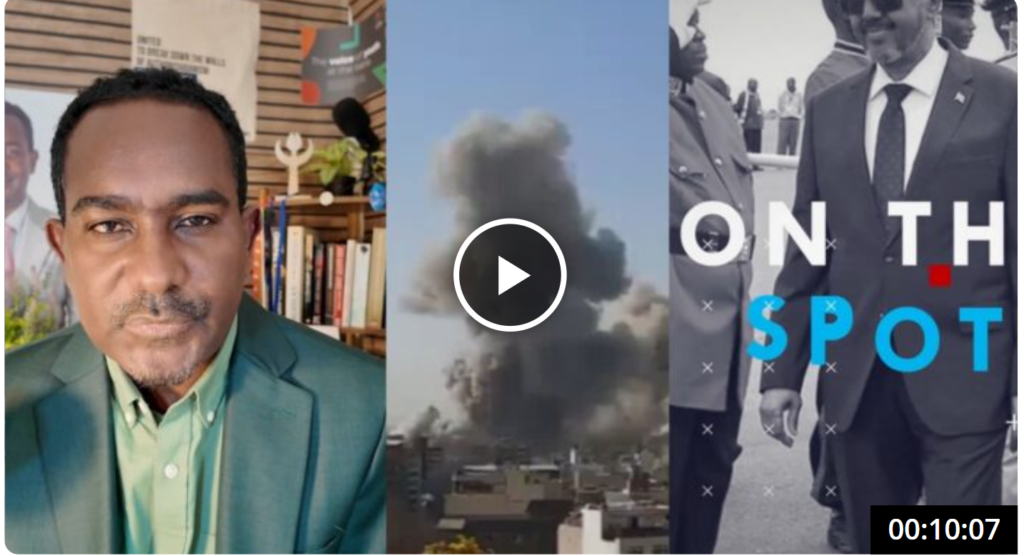



LONDON (Kaab TV) – Early this Saturday, U.S. and Israeli forces carried out airstrikes inside Iran.
So far, nearly 30 locations have reportedly been targeted. Among them were the residence and office of Ali Khamenei. His current whereabouts remain unknown.
The strikes also targeted the central intelligence command headquarters and offices belonging to the leadership of the Quds Force of Iran’s Islamic Revolutionary Guard Corps (IRGC), which the United States designates as a foreign terrorist organization.
Senior IRGC officials are reported to have been killed or wounded. However, it remains difficult to obtain verified information from inside Iran.
Although the operation had reportedly been prepared earlier, it was delayed until Saturday — a day when senior intelligence and government officials under Khamenei typically report to their offices — in an apparent effort to weaken operational capacity and target high-ranking leadership.
The offensive began in the southern city of Chabahar, where air defense missile systems were reportedly stationed. These systems were said to have been destroyed.
Subsequently, strikes were carried out on bases in the capital, Tehran, as well as in other cities.
Iran is now facing the loss of portions of its air defense systems and reportedly has a significantly reduced supply of surface-to-air missiles.
According to reports, the U.S. and Israel appear to be pursuing a strategy aimed at weakening Iran’s overall military capabilities through sustained airstrikes, potentially followed by limited ground operations targeting senior regime leadership.
In the past, Iran’s responses to such attacks have often been delayed by several days. However, this morning the Iranian government reportedly launched missiles within hours toward Gulf Arab states and even toward Israel. This suggests that Tehran may no longer be exercising restraint, particularly regarding civilian areas allegedly struck by missiles launched from Iran.
This operation differs from previous ones, which were typically limited in duration and focused mainly on nuclear and military facilities before forces withdrew.
Although the Vice President of the United States stated that Washington does not seek a “prolonged war,” Donald Trump told The Washington Post this morning that the operation aims to bring “freedom” and “security” to Iran.
